

Key points
- Thailand’s hotel industry is facing a fresh and increasingly worrying challenge as revenues from banquets, meetings, conferences, exhibitions and corporate events continue to decline amid a weakening domestic economy and an uncertain global financial outlook.
- The downturn has become evident across hotels and resorts of every category, from luxury city properties to beach resorts and provincial hotels that once relied heavily on conference delegates, corporate gatherings and social functions to generate consistent income throughout the year.
- This reduction in public sector demand has been particularly challenging for hotels located in provincial cities, where government meetings previously represented a significant share of banquet and conference business.
Thailand Hotel News: Thailand’s hotel industry is facing a fresh and increasingly worrying challenge as revenues from banquets, meetings, conferences, exhibitions and corporate events continue to decline amid a weakening domestic economy and an uncertain global financial outlook. While international tourism has remained one of the country’s strongest economic pillars, many hotels are now reporting that one of their traditionally most profitable business segments—the Meetings, Incentives, Conferences and Exhibitions (MICE) sector—is experiencing one of its toughest periods in recent years.
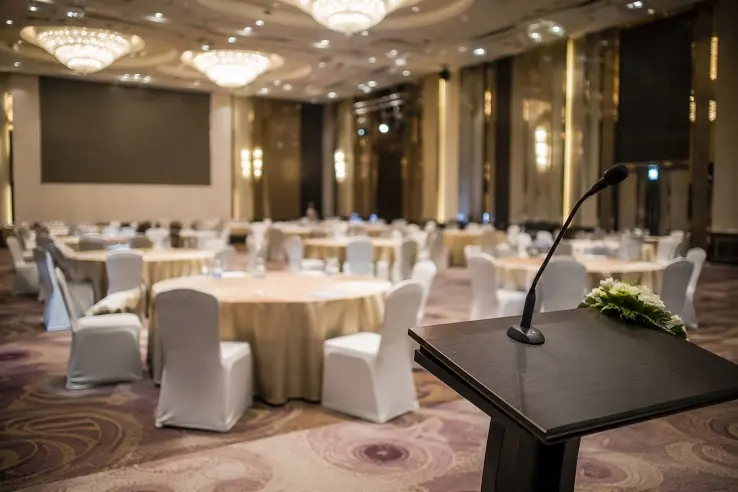
Image Credit: Thailand Hotel News
The downturn has become evident across hotels and resorts of every category, from luxury city properties to beach resorts and provincial hotels that once relied heavily on conference delegates, corporate gatherings and social functions to generate consistent income throughout the year. This Thailand Hotel News report found that many hotel operators are now struggling with large ballrooms and meeting spaces that remain vacant for extended periods, while catering departments that previously handled multiple functions every week are now operating far below capacity. Industry insiders say the slowdown has become particularly noticeable since many organizations have fundamentally changed how they conduct meetings and events in an effort to reduce operating costs.
Corporate Cost-Cutting Reshapes Business Events
One of the primary reasons behind the decline is the widespread adoption of virtual meetings and hybrid conferencing. Corporations across Thailand are increasingly replacing traditional hotel-based meetings with online platforms that allow executives and employees to participate remotely while significantly reducing travel, accommodation, venue rental and catering expenses.
Annual shareholders’ meetings, board meetings, management retreats and regional conferences that were once routinely hosted in hotel function rooms have increasingly moved online. Even when physical meetings are held, companies are opting for smaller venues, shorter schedules and more modest catering packages instead of the elaborate events that previously generated substantial revenue for hotels.
Corporate belt-tightening has also affected staff appreciation events, annual dinners, awards ceremonies, festive celebrations and employee gatherings. Many companies, particularly small and medium-sized enterprises (SMEs), have either cancelled these functions entirely or scaled them down considerably in response to continuing economic pressures.
Product Launches and Training Sessions Continue to Decline
Hotels have also experienced a significant reduction in bookings for product launches, sales conferences, training seminars and customer engagement events. Marketing budgets have been trimmed across numerous industries, leading businesses to seek more economical alternatives or conduct events internally rather than renting hotel facilities.
Training sessions that once required conference rooms, accommodation and catering are increasingly being delivered through digital platforms, enabling companies to cut operational expenses while maintaining employee development programs. This structural shift has had a noticeable impact on hotels that historically relied on weekday corporate events to maintain healthy occupancy and food-and-beverage revenues.
Industry observers note that while leisure tourism often peaks during weekends and holiday periods, corporate meetings traditionally helped hotels maintain stable revenue during weekdays. The reduction in business events has therefore created a noticeable gap in overall revenue streams.
Government Spending Cuts Add Further Pressure
Another major contributor to the slowdown has been reduced government expenditure. Public sector agencies were historically among the largest organizers of meetings, seminars, workshops and conferences held at hotels throughout Thailand.
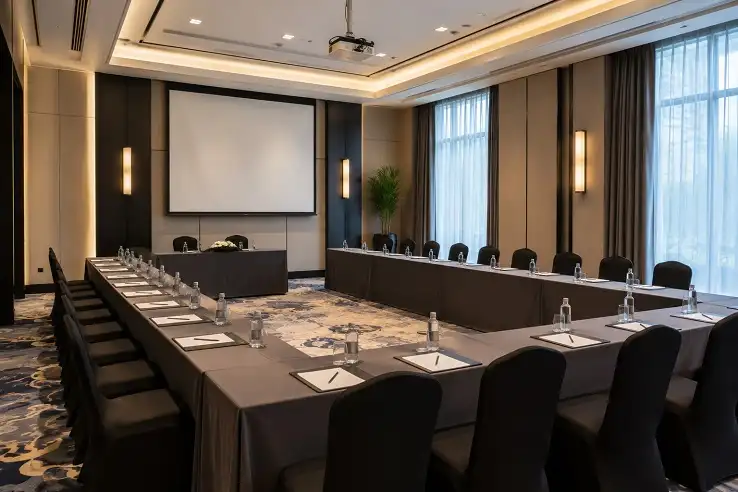
Image Credit: Thailand Hotel News
However, ongoing budget constraints, fiscal tightening measures and government austerity initiatives have resulted in fewer official functions being staged at hotels. Numerous ministries, departments and state agencies have significantly reduced external event spending, while others have shifted meetings to government-owned facilities or adopted online alternatives.
This reduction in public sector demand has been particularly challenging for hotels located in provincial cities, where government meetings previously represented a significant share of banquet and conference business.
Convention Centers Intensify Competition
Hotels are also facing increasing competition from dedicated convention and exhibition centers that have expanded their offerings beyond large-scale exhibitions and trade fairs. Many convention facilities are now aggressively marketing smaller meeting rooms, seminar venues and catering services at highly competitive prices.
These specialized venues often possess greater flexibility in accommodating different event sizes while offering attractive pricing packages that appeal to budget-conscious corporate clients.
Large event organizers are also becoming more selective about the scale and frequency of conferences they organize, with some postponing events while others reduce attendance or consolidate multiple gatherings into a single annual event.
Many of these event organizers also mentioned that its harder getting corporate sponsors for certain events as due to ethe struggling economy, many are cutting down their budget allocations for sponsorships or events.
The intensified competition has forced many hotels to review their pricing strategies and promotional packages in an attempt to attract corporate customers without significantly eroding profit margins.
Wedding Celebrations Become More Modest
Thailand’s once-booming hotel wedding market has also experienced notable changes. Economic uncertainty has prompted many couples to reduce wedding budgets, with lavish hotel receptions becoming less common than in previous years.
While luxury weddings continue among wealthy families, celebrities and high-net-worth individuals, these represent only a small segment of the overall market. Middle-income families are increasingly choosing smaller celebrations, community venues, restaurants or private residences instead of expensive hotel ballrooms.
Wedding planners note that couples are placing greater emphasis on financial prudence rather than extravagant celebrations, reflecting broader changes in consumer spending patterns.
International MICE Competition Intensifies
Thailand’s international MICE industry is simultaneously facing stronger regional competition. Countries such as Singapore continue to secure many prestigious global conferences, corporate conventions and technology events due to their well-established business infrastructure, connectivity and international reputation.
Dubai has further strengthened its position as a leading global destination for major international conferences, exhibitions and corporate gatherings, attracting event organisers from around the world through substantial investments in convention infrastructure and global marketing.
Vietnam is also emerging as an increasingly formidable competitor within Southeast Asia. Cities such as Ho Chi Minh City, Hanoi and Da Nang are investing heavily in convention facilities, hospitality infrastructure and international promotion campaigns aimed at attracting regional and global business events.
Several high-profile international conferences and technology gatherings, including major blockchain and digital asset events such as Token2026, continue to illustrate the fierce competition among destinations seeking to capture lucrative international business tourism.
So far Thailand has been beating its drums and making exaggerated claims about a few events to be held in the second half of the year including the IMF and World Bank Group Annual Meetings in Bangkok from October 12–18, 2026, at the Queen Sirikit National Convention Center (QSNCC), and the Global Wellness Summit in Phuket and the Tomorrowland Music Concert in Pattaya. In reality, these events are not really helping the whole hotel industry with only a few to really benefit.
Newer Competitors
Hotels are also facing new competitors such as shopping malls, serviced offices and even restaurants offering meeting room facilities along with catering at rates far much cheaper than hotels.
Even Starbucks has come up with meeting rooms that can be used if one simply guarantees a minimum of purchases
Hotels Search for New Revenue Opportunities
Faced with these mounting challenges, many Thai hotels are actively exploring new ways to diversify revenue sources. Some properties are introducing flexible co-working spaces, subscription-based meeting packages, wellness retreats, community events and lifestyle experiences designed to attract both corporate and leisure customers.
Others are investing in upgraded technology that supports hybrid meetings, enabling organizations to combine physical attendance with virtual participation. Hotels are also developing customized event packages targeted at SMEs, educational institutions, healthcare organizations and local associations that continue to require physical meeting facilities.
Industry analysts believe that while leisure tourism remains an important growth driver, strengthening the country’s competitiveness in the MICE sector will require coordinated efforts involving both government agencies and the private sector. Continued investment in infrastructure, competitive pricing, improved international connectivity and proactive destination marketing will be essential if Thailand hopes to regain momentum in an increasingly competitive regional marketplace.
The prolonged slowdown in banquet, meeting and event revenues serves as a reminder that Thailand’s hospitality industry cannot rely solely on traditional business models in an evolving economic landscape. Hotels that successfully adapt to changing corporate behavior, embrace digital transformation and diversify their offerings are likely to be better positioned to withstand future market uncertainties. Nevertheless, until both domestic business confidence and the global economy recover more convincingly, many hotels are expected to continue facing significant pressure on one of their historically most profitable business segments.
For the latest on the state of the hospitality industry in Thailand, keep on logging to Thailand Hotel News.