

Key points
- Japan is experiencing an unprecedented tourism boom as growing numbers of affluent travelers from Europe, North America and Australia increasingly choose the country over Thailand, sending hotel occupancy levels soaring and pushing accommodation rates to record highs across major cities and tourist regions.
- Western travelers fuel a tourism boom in Japan as soaring demand pushes hotel occupancy and room rates to record highs and many abandon Thailand due to the large presence of cheap Indian touristsImage Credit.
- They said that places like Pattaya in Thailand is slowing resembling an Indian slum and Phuket too is on its way to become like that coupled with the presence of Russian, Chinese, Israeli and South American mafia operating in many tourism destinations in Thailand along with Fillipino scammers and African drug dealers.
Hotel News: Japan is experiencing an unprecedented tourism boom as growing numbers of affluent travelers from Europe, North America and Australia increasingly choose the country over Thailand, sending hotel occupancy levels soaring and pushing accommodation rates to record highs across major cities and tourist regions.
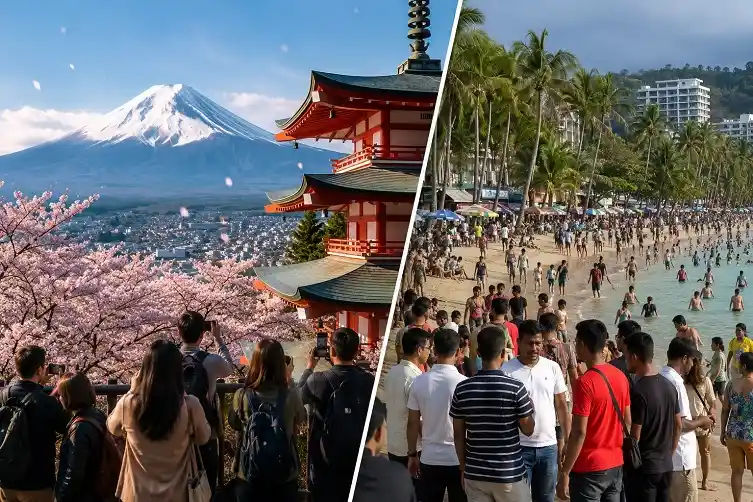
Image Credit: Thailand Hotel News
According to hospitality industry data cited by Nikkei Asia and analytics firm STR, the average hotel room rate in Japan reached 23,397 yen in April, reflecting exceptionally strong demand from international visitors. Hotels in Tokyo, Kyoto, Osaka, Hiroshima and other major destinations have reported near-capacity occupancy levels during peak periods, with some tourism operators claiming that demand has become so intense that available rooms are frequently sold-out months in advance. As Western travelers continue to flock to Japan in growing numbers, this Hotel News report examines the changing dynamics that are reshaping Asia’s tourism landscape and creating winners and losers across the region.
Japan Emerges as the Preferred Destination for Western Travelers
Tour operators working with international clients say that demand from the United States, Canada, Britain, Germany, France, the Netherlands, Scandinavia and Australia has surged dramatically over the last two years.
Many visitors are now booking extended holidays lasting two to three weeks, exploring destinations such as Tokyo, Kyoto, Hiroshima, Hokkaido and Osaka. These tourists are generally higher spenders who allocate significant budgets toward luxury accommodation, fine dining, premium transportation and cultural experiences.
The cherry blossom season provided another powerful catalyst for tourism growth. Combined with Easter holidays across Europe and North America, Japan witnessed one of its strongest spring tourism seasons on record. Hotel operators reported exceptionally strong bookings throughout April, while many popular attractions required reservations months ahead of travel dates.
The weaker Japanese yen has also made the country increasingly attractive to Western tourists, allowing visitors to enjoy luxury experiences at prices that remain competitive compared to many destinations in Europe and North America.
Thailand Faces Growing Competition for Affluent Visitors
While Japan has emerged as one of the biggest winners in Asia’s tourism race, Thailand is increasingly facing challenges in retaining many of its traditional high-spending visitors from Europe and North America.
Many repeat visitors have expressed concerns that some of Thailand’s most famous tourism destinations have undergone significant changes over the past decade. Travel forums, social media discussions and tourism groups frequently feature complaints from Western tourists who say that destinations such as Pattaya and Phuket have become overcrowded, excessively commercialized and less reflective of traditional Thai culture.
Some European travelers claim that Thailand’s tourism strategy has become overly focused on attracting large volumes of visitors from India, Russia and China, often at the expense of maintaining the unique atmosphere that originally attracted Western tourists to the country.
A growing number of visitors have complained that parts of Pattaya now contain large concentrations of Indian-owned businesses, restaurants, retail outlets and tourism-related enterprises. Some Western tourists argue that they travel thousands of kilometers to experience Thai traditions, Thai cuisine and Thai hospitality and not Indian culture. They said that places like Pattaya in Thailand is slowing resembling an Indian slum and Phuket too is on its way to become like that coupled with the presence of Russian, Chinese, Israeli and South American mafia operating in many tourism destinations in Thailand along with Fillipino scammers and African drug dealers.
Several European travel bloggers have also noted that some long-time visitors now prefer alternative destinations where they believe local culture remains more visible and authentic.
Concerns Over Organized Crime and Destination Image
Another factor frequently cited by travelers involves concerns about criminal activity and the influence of foreign organized crime networks.
Industry observers and local residents have repeatedly raised concerns regarding alleged Russian criminal groups operating in parts of Phuket, while reports regarding Chinese criminal syndicates and gray-business operations have also generated negative international publicity in recent years. There is now also a lot of South American and Fillipino Scammers operating in many of these Thai destinations.
Although Thai authorities have periodically launched crackdowns targeting illegal activities, negative perceptions often persist long after enforcement operations have ended.
Tourism experts note that destination image plays a crucial role in attracting affluent travelers. Even isolated reports can influence travel decisions among visitors who have numerous alternative destinations available.
Vietnam, Malaysia and Indonesia Also Benefiting
Japan is not the only country benefiting from changing travel preferences.
Vietnam has experienced significant growth among European tourists seeking cultural experiences, historical attractions and competitive pricing. Malaysia continues attracting visitors looking for modern infrastructure combined with diverse cultural offerings, while Indonesia remains a strong draw thanks to Bali and numerous emerging tourism destinations.
Meanwhile, some European travelers are increasingly venturing beyond Asia altogether, choosing destinations across South America for longer and more adventurous holidays.
The growing competition means that travelers now have more choices than ever before when deciding where to spend their vacation budgets.
Luxury Hotels Reap the Benefits
Japan’s luxury hotel sector has emerged as one of the biggest beneficiaries of the influx of Western visitors.
At several leading properties in Tokyo, room rates have climbed sharply compared to previous years. The Palace Hotel Tokyo reported average room rates exceeding 165,000 yen during April, reflecting extraordinary demand from overseas guests.
Industry executives note that Western visitors generally stay longer and spend substantially more per trip than many regional travelers. This shift has helped increase average revenue per guest and strengthened profitability across Japan’s hospitality sector.
Hotel operators also expect prices to continue rising as labor costs, utility expenses and operational expenditures increase.
Analysts believe the trend is likely to continue through the remainder of the year as strong international demand combines with limited room supply in many popular destinations.
A Tourism Shift That Cannot Be Ignored
The surge in Japan’s hotel prices reflects a broader transformation taking place across the global tourism industry. Increasing numbers of affluent travelers are placing greater emphasis on culture, safety, cleanliness, authenticity and overall visitor experience when selecting holiday destinations. While Thailand remains one of Asia’s most important tourism markets, competition from Japan, Vietnam, Malaysia, Indonesia and even South American destinations is intensifying. Unless tourism stakeholders focus on preserving destination quality while balancing visitor numbers with visitor spending, the country risks losing even more high-value travelers to destinations that are increasingly viewed as offering a more rewarding and distinctive holiday experience. The dramatic rise in Japanese hotel occupancy and room rates serves as a powerful reminder that global travelers today have more choices than ever before and are willing to take their spending elsewhere when expectations are not met.
For the latest on the global hospitality and travel industry, keep on logging to Thailand Hotel News.