

Key points
- -based hospitality companies have established an influential presence throughout the Kingdom, earning millions of dollars annually through management agreements, franchise arrangements, technology licensing, reservation systems and loyalty programmes that connect Thai hotels to a vast global customer base.
- Rather than purchasing hotels outright, these corporations have embraced an “asset-light” strategy, allowing Thai companies to finance, build and own the properties while the international brands contribute their operational expertise, globally recognized names, reservation technology and extensive customer loyalty programmes.
- Consider a representative luxury hotel with 300 rooms operating at an average daily room rate of approximately 5,000 baht and maintaining an annual occupancy rate of around 75 percent.
Thailand Hotels: American Brands Continue to Capture a Significant Share of Thailand’s Hospitality Revenue
Thailand’s tourism industry has long been one of the country’s greatest economic success stories, attracting millions of international visitors each year and generating hundreds of billions of baht in revenue. Visitors arriving in Bangkok, Phuket, Pattaya, Chiang Mai, Koh Samui and other leading destinations are welcomed by Thai hospitality, local cuisine and world-renowned service standards. Yet behind many of the country’s best-known luxury hotels lies a sophisticated international business model that quietly channels a substantial portion of tourism income overseas.
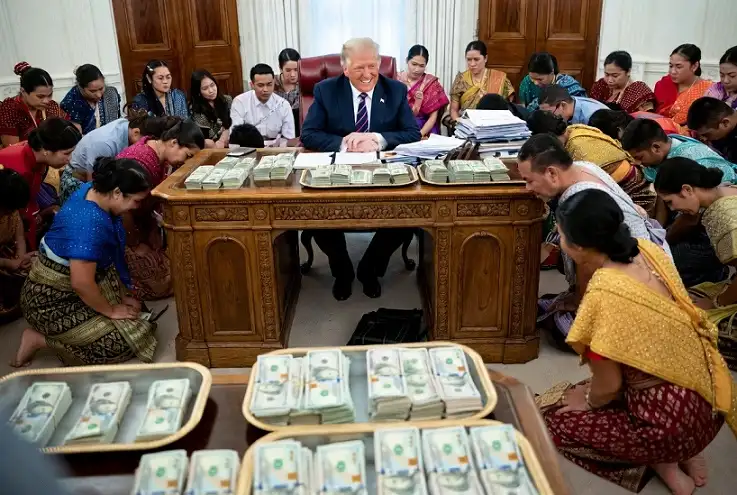
Image Credit: Thailand Hotel News
Many of Thailand’s most prestigious hotels are owned by Thai investors, property developers or institutional investment groups, while their daily operations are managed under contracts with major American hotel corporations. This Thailand Hotels news report examines how the world’s largest U.S.-based hospitality companies have established an influential presence throughout the Kingdom, earning millions of dollars annually through management agreements, franchise arrangements, technology licensing, reservation systems and loyalty programmes that connect Thai hotels to a vast global customer base.
American Hospitality Giants Hold a Powerful Position
The dominance of American hotel companies in Thailand’s premium hospitality market has developed steadily over several decades. Rather than purchasing hotels outright, these corporations have embraced an “asset-light” strategy, allowing Thai companies to finance, build and own the properties while the international brands contribute their operational expertise, globally recognized names, reservation technology and extensive customer loyalty programmes.
Among the most influential companies operating across Thailand are Marriott International, Hilton Worldwide, Hyatt Hotels Corporation, InterContinental Hotels Group (IHG) Wyndham Hotels and Resorts, Best Western, Radisson Hotel Group and Choice Hotels. These companies control a total of 159 hotel brands.
Together, they oversee a significant portfolio of luxury and upper-upscale hotels across Thailand totaling about 387 properties, with additional developments continuing to enter the pipeline.
Marriott International has emerged as the country’s largest international hotel operator, managing many properties across multiple brands including about 40 more in the pipeline while continuing to expand. Its portfolio ranges from large convention hotels in Bangkok to exclusive beachfront resorts such as Phulay Bay, a Ritz-Carlton Reserve.
IHG has strengthened its position with established brands including InterContinental and Holiday Inn while introducing newer luxury and lifestyle concepts such as Kimpton, Hotel Indigo and Vignette Collection. Hilton has maintained a strong presence through landmark properties including Waldorf Astoria Bangkok, Millennium Hilton Bangkok and Conrad Koh Samui, while Hyatt continues to focus on high-end developments including Park Hyatt Bangkok and several Hyatt Regency hotels throughout the Kingdom.
Understanding the Asset-Light Business Model
Unlike traditional property ownership models, American hotel companies generally avoid investing directly in expensive real estate. Instead, they monetize intellectual property, operational expertise, brand recognition and advanced technology.
This approach enables hotel owners in Thailand to benefit from internationally recognized brands without surrendering ownership of their assets. However, it also creates a steady revenue stream flowing from Thailand to corporate headquarters in the United States.
Hotel owners typically enter long-term management or franchise agreements lasting 15 to 30 years. During this period, the international operator receives multiple categories of fees based on hotel performance, occupancy and profitability.
How the Revenue Flows Overseas
The financial mechanics behind these agreements reveal why American hospitality companies continue to report strong earnings from international markets like Thailand.
Consider a representative luxury hotel with 300 rooms operating at an average daily room rate of approximately 5,000 baht and maintaining an annual occupancy rate of around 75 percent. Such a property would generate annual room revenue exceeding 410 million baht, equivalent to roughly US$12 million before including restaurants, bars, conference facilities, spa operations and other ancillary income.
From this revenue, several categories of payments are commonly made to the international hotel operator.
Base management and royalty fees frequently amount to approximately four percent of gross revenue and are payable regardless of whether the property ultimately records substantial profits.
Additional technology, reservation and central services fees are commonly charged for access to global booking systems, mobile applications, corporate websites and worldwide reservation infrastructure. These charges may represent another five percent of room revenue.
Many agreements also include incentive management fees tied to Gross Operating Profit (GOP). These performance-based payments can range between 10 and 15 percent of operating profit once predetermined financial targets have been achieved.
When these various charges are combined, a successful luxury hotel may transfer well over one million US dollars annually to its international management company.
Multiplying the Numbers Across Thailand
While the figures from one hotel appear significant, the larger national picture becomes even more striking.
Thailand now hosts hundreds of internationally branded hotels operating under American management or franchise agreements. These include major city hotels, integrated resorts, conference properties, island retreats and luxury villas spread throughout Bangkok, Phuket, Pattaya, Hua Hin, Krabi, Koh Samui and Chiang Mai.
Industry analysts estimate that collectively these hotels generate several billion dollars in annual revenue. Applying typical management, franchise and technology fee structures across such a large portfolio suggests that total payments flowing from Thailand to American hotel corporations could reasonably reach between US$150 million and US$300 million each year, depending upon occupancy, room rates and overall tourism performance.
Although precise figures vary because management contracts remain confidential, the overall direction of the revenue flow is well understood throughout the global hospitality industry.
The Hidden Technology Costs
The financial relationship extends beyond hotel management contracts. Modern hotels depend upon sophisticated software platforms for virtually every aspect of daily operations, creating another significant stream of overseas payments.
Property Management Systems frequently rely on Oracle OPERA. Revenue management increasingly depends on specialized platforms such as IDeaS.
Customer relationship management often involves Salesforce or Amadeus technologies, while hotels benchmark market performance through data services provided by companies including CoStar and STR. You have companies like SiteMinder providing tech models to hotels etc.
Distribution technology creates additional costs. Hotels use channel management platforms to distribute room inventory simultaneously across numerous booking websites while preventing double bookings. Subscription fees and transaction charges associated with these services accumulate throughout the year.
Collectively, these American technology platforms have become essential operational tools, but they also contribute to an ongoing outflow of tourism-generated revenue through software subscriptions and licensing fees.
American Owned Online Travel Agencies Add Another Layer
American influence extends well beyond hotel management. Many of the world’s largest online travel agencies serving Thailand are owned by American corporations, allowing them to earn commissions on hotel bookings made throughout the Kingdom.
Expedia Group operates Expedia, Hotels.com, Travelocity, Orbitz, Hotwire and Vrbo, while also maintaining majority ownership of Trivago.
Booking Holdings, headquartered in the United States, owns Priceline, Kayak, Booking.com and Agoda, despite some of those brands maintaining international headquarters outside America.
Additional American companies including Airbnb and Tripadvisor also play influential roles in Thailand’s accommodation sector.
Every reservation processed through these global platforms typically generates commission payments, adding another layer of revenue flowing overseas before guests even arrive at their hotels.
American Credit Card Companies and Payment Gateways also Earn from Thailand’s Hotel and Tourism Business
Credit card companies and charge card companies like Visa, Mastercard and American Express also generate a lot of profits from Thailand’s Hotel and Tourism Industry along with various other American owned payment gateways.
Why Thai Owners Continue the Partnership
Given these substantial financial outflows, many observers naturally ask why Thai developers continue partnering with American brands.
The answer largely lies in market access and financing. International loyalty programmes such as Marriott Bonvoy, Hilton Honors and IHG One Rewards collectively include hundreds of millions of members worldwide. Business travellers and affluent leisure tourists often choose hotels based primarily on loyalty benefits, elite status recognition and reward point accumulation.
By affiliating with an established international brand, Thai hotel owners immediately gain access to these enormous customer databases, significantly reducing marketing costs while increasing international visibility.
The partnerships also improve financing opportunities. Banks and financial institutions frequently view internationally branded hotels as lower-risk investments because recognized operators provide established operational standards, predictable reservation channels and globally accepted management systems. This often enables developers to obtain more favorable lending terms for multi-billion-baht projects.
A Growing Focus on Keeping More Revenue in Thailand
Despite these advantages, the Thai hospitality industry is increasingly exploring ways to retain a larger share of tourism income within the country.
Some developers are negotiating revised management agreements that reduce incentive fees or introduce hybrid operating structures allowing local management companies to oversee daily operations while retaining international branding.
At the same time, Thai hotel groups including Minor Hotels, Centara Hotels & Resorts and others continue expanding both domestically and internationally. Their growing brand recognition, proprietary reservation systems and developing loyalty programmes demonstrate that Thai hospitality companies are becoming increasingly competitive on the global stage.
As these domestic brands strengthen their international presence, they may gradually reduce Thailand’s dependence on overseas operators while ensuring a greater proportion of tourism-generated wealth remains within the national economy.
Thailand’s hospitality sector continues to benefit enormously from partnerships with international hotel companies through increased visitor confidence, global marketing exposure, operational expertise and access to worldwide distribution networks. Nevertheless, the industry’s financial structure also illustrates how a considerable share of tourism earnings ultimately leaves the country through management fees, technology licensing, reservation systems and online booking commissions. As Thai hotel groups continue expanding internationally and refining their own competitive capabilities, the balance between global collaboration and domestic value retention is likely to become one of the industry’s defining strategic issues over the coming decade, shaping investment decisions and the future direction of Thailand’s tourism economy.
For the latest on the local Thai hospitality industry, keep on logging to Thailand Hotels News.