

Key points
- Thailand’s tourism and hospitality industry is facing a serious credibility problem as questions grow over the accuracy, transparency, and reliability of statistics being circulated by government agencies, financial institutions, real estate consultancies or brokerages, industry associations, and self-proclaimed tourism experts (mostly some “old farts” who conned their way after staying in Thailand for decades.
- With billions of baht in investments and business decisions depending on these figures, the country urgently needs an independent organization capable of auditing tourism data and challenging questionable claims.
- A credible solution would involve appointing a respected Thai public or private university, preferably through a consortium combining tourism, economics, statistics, and data science expertise.
Thailand’s tourism and hospitality industry is facing a serious credibility problem as questions grow over the accuracy, transparency, and reliability of statistics being circulated by government agencies, financial institutions, real estate consultancies or brokerages, industry associations, and self-proclaimed tourism experts (mostly some “old farts” who conned their way after staying in Thailand for decades!). With billions of baht in investments and business decisions depending on these figures, the country urgently needs an independent organization capable of auditing tourism data and challenging questionable claims.
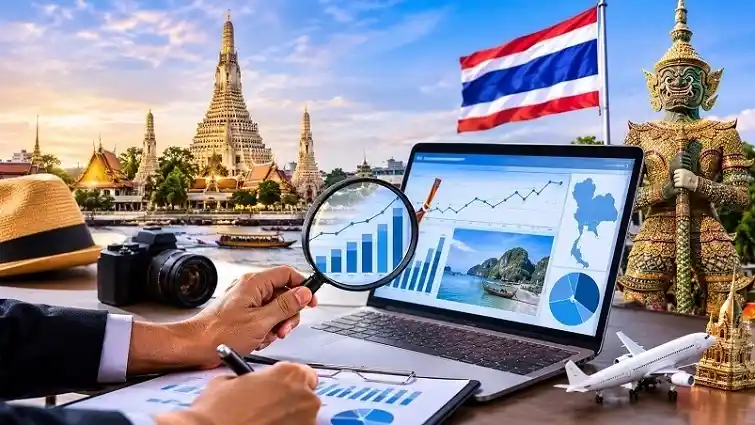
Image Credit: Thailand Hotel News
The problem extends beyond occasional statistical discrepancies. Conflicting reports about international arrivals, hotel occupancy, average daily room rates, and revenue per available room (RevPAR) frequently create confusion about actual market conditions. As this Thailand Hotel News report highlights, the absence of independent verification allows selective interpretations of data to influence public perceptions, investment decisions, and government policies.
Questionable Tourism Statistics Are Becoming a Serious Problem
Some tourism commentators and industry veterans continue presenting optimistic forecasts without adequately explaining their methodologies. Financial research departments and property consultancies also publish market assessments that may reflect commercial interests or selective datasets.
Government agencies, meanwhile, face pressure to demonstrate that tourism promotion campaigns and economic policies are delivering positive results.
Although these competing interests do not automatically invalidate published statistics, they create legitimate concerns about potential bias.
Media organizations compound the problem when journalists reproduce figures from banks, chambers of commerce, brokerages, or official announcements without independently examining the underlying evidence.
Recent Arrival Claims Raise Questions
Over the past 48 hours, several media reports have suggested improving tourist arrivals. However, preliminary comparisons involving individual airline data and combined aviation indicators have raised questions about whether these optimistic interpretations accurately reflect broader arrival trends.
Such comparisons require careful verification because airline capacity, passenger movements, load factors, and actual international visitor arrivals measure different things.
Nevertheless, discrepancies deserve investigation rather than unquestioning acceptance of favorable headlines.
Similar concerns surround reported hotel occupancy and RevPAR figures in certain destinations, where differing samples, reporting periods, and calculation methods can produce dramatically different market assessments.
Without transparent methodologies, businesses cannot reliably determine whether reported improvements represent genuine demand growth or statistical distortions.
Thailand Needs Real-Time Tourism Dashboards
Modern technology makes developing comprehensive tourism monitoring systems increasingly practical.
An independent national tourism intelligence platform could integrate verified information from airlines, airports, immigration authorities, accommodation operators, and other relevant stakeholders.
Participating hotels could submit daily occupancy, room-rate, and revenue information through secure automated systems, with individual property data remaining strictly confidential.
Public dashboards could then display aggregated destination-level trends, historical comparisons, and standardized performance indicators.
Importantly, participation would require strong privacy safeguards, consistent reporting definitions, independent technical oversight, and procedures preventing commercially sensitive information from being exposed.
Such infrastructure would allow authorities and businesses to identify emerging weaknesses, adjust promotional campaigns, and respond more quickly to changing visitor demand.
Universities Could Provide Independent Oversight
A credible solution would involve appointing a respected Thai public or private university, preferably through a consortium combining tourism, economics, statistics, and data science expertise.
Funding could come jointly from government agencies and private-sector stakeholders, provided financial contributors have no authority to influence findings.
The institution should independently audit published statistics, disclose methodologies, investigate material discrepancies, and issue regular assessments of Thailand’s tourism performance.
An external supervisory board comprising academic specialists, independent statisticians, and industry representatives could strengthen accountability.
Accurate Information Must Come Before Positive Publicity
Thailand cannot develop effective tourism policies while businesses and investors remain uncertain about the reliability of fundamental market indicators. Inflated expectations can encourage excessive hotel development, misdirect marketing expenditure, and conceal emerging weaknesses in important destinations.
An independent auditing institution would not exist to undermine tourism confidence but to strengthen it through credible, consistently verified information. Transparent statistics would help hotels, investors, policymakers, and tourism operators make better decisions while ensuring that genuine industry achievements receive recognition based on evidence rather than publicity.