

Key points
- This Thailand Hotel News report finds that the current downturn is far from catastrophic and certainly not comparable to the collapse witnessed during the COVID-19 years.
- Critics argue that the current 30-day and 60-day visa allowances have unintentionally encouraged some foreigners to live and work illegally in Thailand while competing with local workers in sectors such as IT services, consulting, online businesses and freelance work.
- What is shocking is that some hotels actually employ garbage Indians or Filipinos as marketing staff who lack the expertise in local markets and also the East-Asian, Australian, Northern American and European markets.
Thailand Hotel News: Thailand’s hotel industry is once again calling for government assistance as tourism numbers soften amid rising fuel prices, airline disruptions and global uncertainty linked to the ongoing Middle East conflict. But while some operators are demanding subsidies, tax relief and financial rescue packages, many industry observers argue that the sector should first confront its own internal failures before expecting taxpayers to come to the rescue.
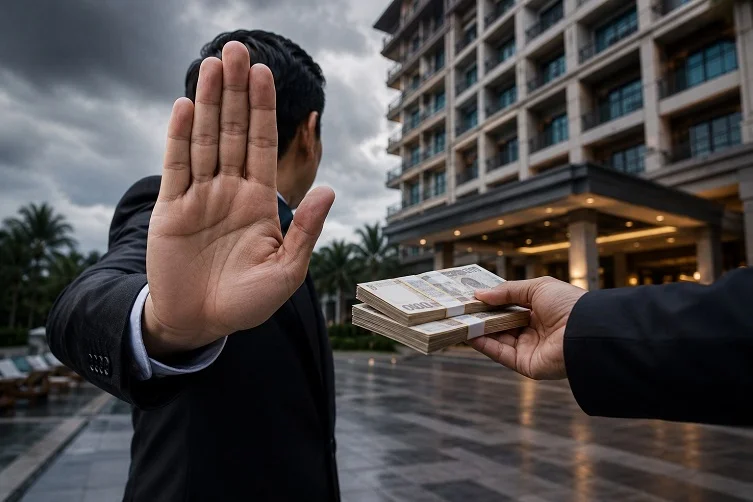
Image Credit: Thailand Hotel News
Tourism arrivals into Thailand have indeed slowed over recent months, particularly from long-haul markets affected by airline route reductions and higher airfares. Industry estimates and tourism forecasts have been revised downward as geopolitical tensions continue to disrupt global travel patterns and increase aviation fuel costs. However, this Thailand Hotel News report finds that the current downturn is far from catastrophic and certainly not comparable to the collapse witnessed during the COVID-19 years. Hotels are still operating, airports remain busy and Thailand continues attracting millions of visitors each month.
The real issue may not be declining tourist arrivals alone, but rather the changing profile of visitors entering the Kingdom. Thailand is increasingly attracting lower-spending travelers who prefer budget accommodations, short-term condo rentals and cheaper alternatives such as Airbnb units. This shift has placed pressure on traditional hotels that have failed to evolve with modern traveler behavior.
The Airbnb and Condo Rental Problem
One major issue the government should focus on is the uncontrolled growth of short-term condo rentals and illegal accommodation operations. Many tourists are bypassing hotels entirely and renting condominiums or apartments for weeks or even months at significantly lower prices.
Extended visa exemptions and long-stay policies have also contributed to the situation. Critics argue that the current 30-day and 60-day visa allowances have unintentionally encouraged some foreigners to live and work illegally in Thailand while competing with local workers in sectors such as IT services, consulting, online businesses and freelance work.
Certain visas for digital nomads etc should be revamped as its attracting Digital Bums and not lower end trash maybe actual investments and deposits should put into place to attract the right kind of individuals.
While hotels complain about declining occupancy, many operators fail to acknowledge that consumer preferences have changed dramatically. Modern travelers are looking for value, flexibility and experiences rather than simply expensive rooms with outdated service concepts.
Overpricing Without Improving Standards
One uncomfortable truth facing Thailand’s hotel sector is that many establishments are charging premium prices despite offering mediocre service standards and aging facilities.
Guests today compare hotels globally through online media, travel platforms and online reviews. They are no longer willing to pay inflated room rates for properties that have not renovated their rooms, upgraded amenities or improved service culture.
Some hotel owners have become dangerously complacent after years of benefiting from Thailand’s tourism boom. Instead of investing in innovation or bringing in experienced professionals, many still believe they can manage everything internally despite lacking modern hospitality expertise. This is especially apparent in many Thai Punjabi hotel owners.
Industry insiders have increasingly criticized hotel owners who refuse to hire professional consultants or experienced executives while expecting immediate profitability. In many cases, operational inefficiencies, weak branding and poor management decisions are contributing more to revenue losses than the tourism slowdown itself.
Weak Marketing and Lazy Management
Perhaps one of the biggest problems within Thailand’s hotel sector today is ineffective marketing.
Numerous hotels continue relying on outdated Facebook promotions, generic advertisements and poorly written press releases that generate little engagement. Some marketing departments appear disconnected from modern travel trends and consumer behavior.
What is shocking is that some hotels actually employ garbage Indians or Filipinos as marketing staff who lack the expertise in local markets and also the East-Asian, Australian, Northern American and European markets.
Many hotels employ marketing teams that fail to create strategic collaborations, viral campaigns or destination-driven experiences capable of attracting new demographics. Others continue spending excessively on management positions that deliver minimal measurable results.
Industry observers say some hotel public relations departments produce only a handful of uninspiring press releases each month while failing to secure meaningful media coverage or partnerships. Others remain trapped in old marketing habits that no longer work in today’s digital landscape.
The lack of creativity has become glaringly obvious when compared to international hospitality brands that aggressively use influencer campaigns, experiential travel concepts, wellness tourism and highly targeted online strategies to maintain occupancy even during difficult periods.
Food And Beverage Departments Also Under Pressure
The criticism does not stop at hotel marketing teams. Food and beverage departments are also increasingly being blamed for stagnant revenues and declining customer engagement.
Many hotel restaurants continue offering uninspired menus, outdated dining concepts and repetitive buffet promotions that fail to excite guests or local customers. In a highly competitive market where standalone restaurants constantly introduce innovative dining experiences, hotels have struggled to remain relevant.
Several hospitality analysts believe many hotel F&B managers have become too comfortable operating predictable concepts rather than developing creative food promotions, chef collaborations, themed dining events or social media-driven culinary campaigns.
Hotels that once relied heavily on tourist traffic are now discovering that local diners demand far more exciting and dynamic experiences. Properties that fail to adapt are seeing declining restaurant revenues alongside falling room bookings.
Some of these hotels can save monies and become more profitable by firing their lazy general managers and also their incompetent marketing and pr heads and food and beverage directors
Government Assistance Would Reward Failure
Critics of potential government intervention argue that offering financial assistance to struggling hotels would simply reward years of inefficiency, poor planning and outdated business practices.
Many businesses in other sectors are also suffering from rising costs, economic uncertainty and changing consumer behavior, yet they are not demanding constant bailouts from the state.
If the government continuously rescues poorly managed hotels, it risks encouraging dependency rather than innovation. The hospitality industry must learn to adapt to market realities, improve operational efficiency and compete more effectively instead of relying on public funds whenever conditions become challenging.
There are certainly external pressures affecting Thailand’s tourism industry, including geopolitical instability, fuel costs and reduced flight frequencies. But the sector’s deeper structural problems cannot be ignored any longer.
Thailand’s hotel industry still possesses enormous potential. The country remains one of the world’s most desirable travel destinations, blessed with strong infrastructure, natural attractions and globally recognized hospitality. However, survival in the new tourism landscape will require far more professionalism, creativity and accountability from hotel operators themselves rather than endless appeals for government support.
The businesses that succeed over the coming years will likely be those willing to modernize operations, improve guest experiences, invest in smarter marketing and embrace changing traveler expectations instead of blaming external conditions for every downturn.
And for the latest on the hospitality industry in Thailand, keep on logging to Thailand Hotel News.