

Key points
- China’s hospitality industry is witnessing stronger hotel occupancy levels across several of its major cities as a growing wave of Indian travelers heads to the country for both leisure and business purposes.
- The renewed momentum follows years of subdued travel between the two Asian giants and reflects a combination of improved diplomatic relations, expanded flight connectivity, easier visa procedures, and changing traveler perceptions driven by digital media.
- Industry observers note that the recovery is not being driven by a single factor but rather by a combination of policy improvements, improved accessibility, and a growing curiosity among Indian travelers who are increasingly viewing China as an attractive destination for both short city breaks and extended multi-city itineraries.
China’s hospitality industry is witnessing stronger hotel occupancy levels across several of its major cities as a growing wave of Indian travelers heads to the country for both leisure and business purposes. The renewed momentum follows years of subdued travel between the two Asian giants and reflects a combination of improved diplomatic relations, expanded flight connectivity, easier visa procedures, and changing traveler perceptions driven by digital media. Hotels in destinations including Beijing, Shanghai, Guangzhou, Shenzhen, and Chongqing are among those benefiting from the increased influx, with tourism stakeholders reporting stronger bookings from Indian visitors seeking everything from business opportunities to cultural experiences and modern urban attractions.
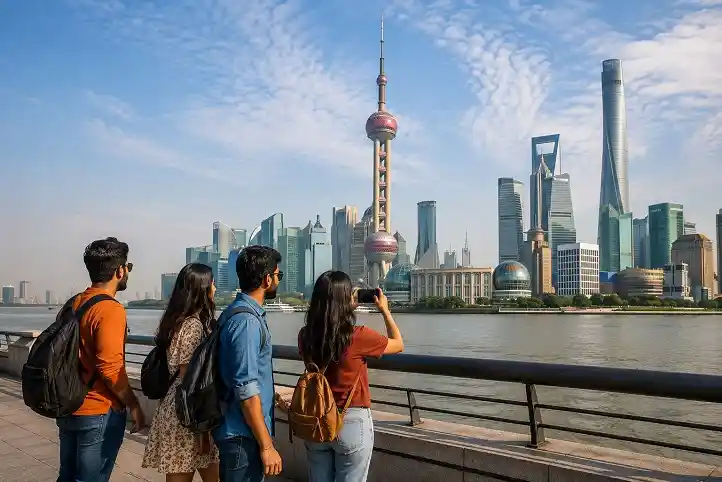
Image Credit: Thailand Hotel News
The resurgence is being welcomed by hotels, airlines, tour operators, and destination management companies that have spent recent years rebuilding international visitor numbers. This Thailand Hotel News report finds that Indian travelers are emerging as one of the fastest-growing source markets for several Chinese cities, particularly those that serve as commercial, technological, and transportation hubs. Industry observers note that the recovery is not being driven by a single factor but rather by a combination of policy improvements, improved accessibility, and a growing curiosity among Indian travelers who are increasingly viewing China as an attractive destination for both short city breaks and extended multi-city itineraries.
Easier Visa Policies Fuel Rising Demand
One of the strongest drivers behind the increase in Indian arrivals has been China’s efforts to simplify its visa application process. Authorities have introduced streamlined digital and online visa procedures that have significantly reduced paperwork and made the application process faster and more convenient. These changes have encouraged both first-time visitors and repeat travelers to consider China as an attractive destination after years of relatively limited travel.
The improved visa framework has also given travel agencies greater confidence in promoting China to Indian holidaymakers and business travelers, helping convert growing interest into confirmed bookings.
Direct Flights Strengthen Travel Recovery
The restoration of direct air connectivity between India and China has played an equally significant role in boosting visitor numbers. After nearly five years of limited services, airlines have resumed and expanded nonstop routes linking major Indian cities with Chinese commercial centers.
The return of direct flights has reduced travel times, lowered overall travel costs by eliminating lengthy transit connections, and provided greater flexibility for passengers. Improved accessibility has made weekend breaks, corporate visits, trade missions, and longer leisure holidays considerably more practical for Indian travelers.
Major Chinese Cities Experience Higher Hotel Occupancy
Hotels across Shanghai have experienced rising demand as the city continues attracting business executives, exhibition delegates, technology professionals, and leisure tourists. Shanghai’s reputation as China’s financial hub, combined with its modern skyline, shopping districts, luxury hotels, and vibrant cultural attractions, continues to appeal to a broad range of Indian visitors.
Beijing is also benefiting from stronger hotel occupancy as travelers combine business meetings with visits to globally recognized attractions including the Forbidden City, the Great Wall, and the Temple of Heaven. The Chinese capital remains a major destination for government delegations, educational exchanges, conferences, and cultural tourism.
Meanwhile, Guangzhou and Shenzhen continue attracting significant numbers of Indian business travelers involved in manufacturing, electronics, wholesale trade, and technology. Hotels located near commercial districts, convention centers, and industrial parks are seeing increasing bookings as companies strengthen cross-border commercial ties.
Chongqing has also begun emerging as an attractive destination for travelers interested in exploring China’s rapidly developing inland cities. Its expanding technology sector, unique landscapes, and growing tourism infrastructure are encouraging visitors to look beyond China’s traditional gateway cities.
Social Media Inspires a New Generation of Travelers
Another important contributor to the tourism boom has been the influence of digital content creators. Indian YouTubers, travel vloggers, and social media influencers have generated millions of views through videos highlighting China’s modern infrastructure, efficient high-speed rail system, advanced technology, clean cities, shopping experiences, and diverse cuisine.
These highly visual travel experiences have significantly changed perceptions among younger Indian travelers, many of whom are now considering China for leisure vacations after previously focusing on destinations in Southeast Asia, Europe, or the Middle East.
Business and Leisure Travel Continue to Expand
Industry analysts note that Indian travel to China is no longer dominated solely by business visitors. While corporate travel remains strong, especially among technology companies, manufacturers, importers, exporters, and trade delegations, leisure tourism is expanding rapidly.
Families, young professionals, and millennial travelers are increasingly seeking cultural experiences, urban exploration, food tourism, shopping, and visits to China’s iconic landmarks. This diversification is creating demand across a broader range of hotels, from luxury properties to mid-scale and budget accommodations.
Official Data Supports Tourism Surge
Recent official statistics reinforce the positive outlook for China’s tourism sector. China’s National Immigration Administration reported approximately 45.9 million inbound trips by foreign nationals during the first half of 2026, representing a year-on-year increase of 20.6 percent.
Although visitors are arriving from many international markets, tourism industry forums have increasingly identified India as one of the fastest-growing emerging source markets contributing to China’s inbound tourism recovery.
Additional figures also highlight the trend. The Chinese Embassy in India issued more than 280,000 visas to Indian citizens during 2024, more than 330,000 in 2025 and almost 570,000 in the first six months of 2026! Industry forecasts further suggest that Indian tourist arrivals to China could increase by more than 400 percent during the current fiscal cycle as improved connectivity and easier visa procedures continue encouraging outbound travel.
Hotels Adapt to Growing Indian Market
Hospitality companies are increasingly adjusting their services to better accommodate Indian guests. Many hotels are introducing multilingual guest assistance, expanding vegetarian and Indian dining options, strengthening partnerships with Indian travel agencies, and developing packages that combine accommodation with sightseeing, shopping, business transportation, and cultural experiences.
These initiatives are expected to enhance guest satisfaction while helping hotels compete more effectively for one of Asia’s fastest-growing outbound travel markets.
A Positive Outlook for China’s Hospitality Industry
The strengthening travel relationship between India and China is generating wider economic benefits across aviation, hospitality, retail, transportation, meetings, events, and tourism services. As airline connectivity continues expanding and travel procedures become increasingly convenient, hotels in China’s leading commercial and tourism cities are well positioned to benefit from sustained growth in Indian visitor arrivals. Although broader geopolitical developments will continue influencing long-term travel trends, the current momentum demonstrates that India has become an increasingly important source market for China’s hospitality sector. Continued investment in visitor services, improved accessibility, and targeted tourism promotion should help maintain higher occupancy levels across many Chinese hotels while supporting broader tourism recovery in the years ahead.