

Key points
- Thailand’s tourism industry is facing renewed uncertainty as fresh safety warnings from the Chinese Embassy in Bangkok (dated 16th of October 2026) raise concerns among Chinese travelers, prompting reported cancellations of hotel reservations and travel arrangements ahead of the approaching high season.
- Numerous Chinese media have recently been covering new kidnapping and extortion cases involving Chinese travellers in Thailand that have not been covered in local Thai media.
- Chinese media have also carried additional allegations involving kidnappings and extortion that have received limited coverage in Thailand, contributing to growing differences in public perceptions of travel safety.
Thailand’s tourism industry is facing renewed uncertainty as fresh safety warnings from the Chinese Embassy in Bangkok (dated 16th of October 2026) raise concerns among Chinese travelers, prompting reported cancellations of hotel reservations and travel arrangements ahead of the approaching high season. The warnings, which highlight kidnapping, human trafficking, and criminal scams targeting Chinese nationals, threaten to undermine efforts to rebuild confidence in one of Thailand’s most important international tourism markets. Numerous Chinese media have recently been covering new kidnapping and extortion cases involving Chinese travellers in Thailand that have not been covered in local Thai media.
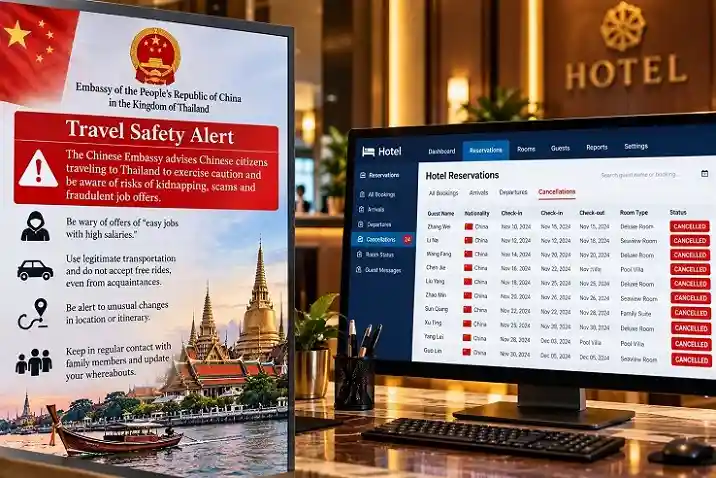
Image Credit: Thailand Hotel News
Travel industry concerns are growing as reports emerge of Chinese visitors reconsidering their holiday plans, particularly those involving advance hotel reservations. As this Thailand Hotel News report examines, the embassy’s latest advisory comes amid disturbing accounts of Chinese citizens being deceived, abducted, or transported across Thailand’s borders into criminal operations. The resulting publicity is reportedly encouraging some travelers to consider alternative destinations, including Vietnam, Japan, and Malaysia.
Chinese Embassy Issues Fresh Warning Over Kidnapping Risks
The Chinese Embassy has urged its citizens to exercise greater caution when visiting Thailand, emphasizing the importance of carefully planning itineraries, using legitimate transportation services, and remaining alert to suspicious employment opportunities.
Particular attention has been directed toward advertisements promising unusually high salaries, especially those targeting social media influencers, performers, and entertainment professionals.
Travelers have also been advised against accepting free transportation, even from acquaintances, and warned to question unexpected changes to travel routes or meeting locations.
The embassy recommends maintaining regular contact with family members and sharing travel information to reduce potential risks.
Hotel Cancellations Raise Concerns Ahead of High Season
The renewed warnings are creating anxiety within Thailand’s hospitality sector, where Chinese tourists represent an important source of revenue for hotels, resorts, restaurants, and tourism businesses.
Reports of cancellations involving online travel agencies and hotel operators have raised concerns about advance reservations for the coming high season, although comprehensive industrywide cancellation figures remain unavailable.
The potential shift toward Vietnam, Japan, and Malaysia presents another challenge, as these destinations compete for Chinese travelers seeking holidays without perceived security concerns.
For Thai hotels, cancellations extending beyond immediate travel dates could affect occupancy forecasts, seasonal pricing strategies, staffing decisions, and anticipated revenue during traditionally profitable months.
Kidnapping Cases Continue Fueling Public Anxiety
Several incidents involving Chinese nationals have intensified public fears, with accounts circulating widely across Chinese news outlets and social media platforms.
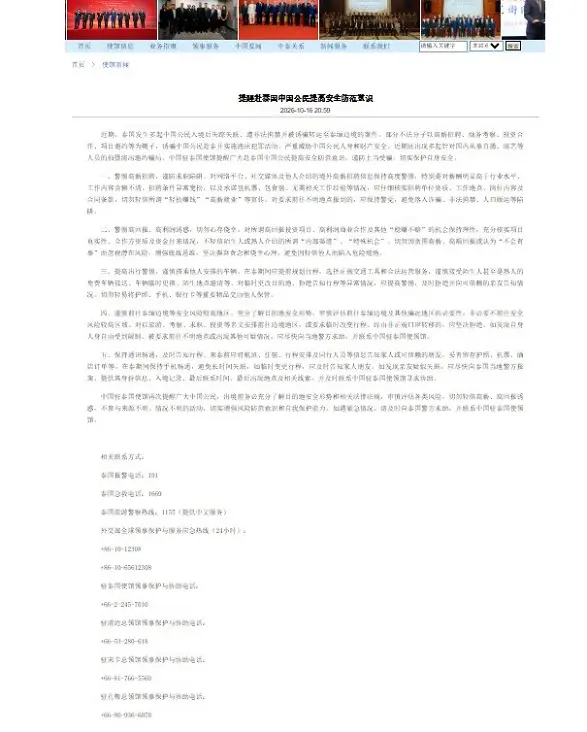
Image Credit: Chinese Embassy of Thailand, Bangkok
In early October, a 34-year-old Chinese photographer reportedly disappeared after arriving in Bangkok. During efforts to locate the missing individual, relatives received a ransom demand and subsequently contacted authorities in Thailand and China.
Another incident reported by The Beijing News in August involved a Chinese female tourist who was allegedly abducted after mistakenly entering a vehicle she believed belonged to her tour guide. She eventually obtained assistance at a police checkpoint.
Chinese media have also carried additional allegations involving kidnappings and extortion that have received limited coverage in Thailand, contributing to growing differences in public perceptions of travel safety.
Criminal Networks Exploit Thailand’s Border Regions
On October 10, Thai authorities arrested a 30-year-old suspect in Tak province over alleged involvement in trafficking three Chinese nationals who had reportedly been recruited through fraudulent employment offers.
Criminal syndicates operating near the Myanmar border have established extensive scam operations involving forced labor, online fraud, and human trafficking.
The widely publicized case of Chinese actor Wang Xing, who was deceived by a fraudulent acting opportunity in early 2025 and trafficked into Myanmar, further damaged confidence among prospective visitors.
Such incidents demonstrate how criminal organizations exploit Thailand as a transit point, even when their operations are based outside the country.
Tourism Recovery Faces Another Difficult Test
Thai tourism industry representatives have previously revised projected Chinese arrivals downward from nine million to approximately seven million, reflecting challenges in restoring visitor confidence.
Further negative publicity could place additional pressure on these expectations, particularly if travelers continue postponing holidays or selecting competing regional destinations.
Thailand’s hospitality industry now faces the difficult task of rebuilding trust while protecting future bookings. Stronger enforcement against trafficking networks, transparent communication, and visible traveler protection measures will be essential to restoring confidence. Without sustained improvements in perceived safety, hotels could face prolonged uncertainty even as Thailand approaches its busiest tourism period.
The Chinese Embassy in Bangkok warning can be found here:
https://th.china-embassy.gov.cn/sgxw/202610/t20261016_12042063.html