

Key points
- Thailand’s hospitality and property sector could be heading toward one of its largest real estate investment trust developments as Asset World Corp Public Company Limited, better known as AWC, prepares a strategy that could eventually place as much as 100 billion baht of property assets into its proposed AWR real estate investment trust while dramatically expanding its hotel portfolio through 2030.
- AWC President and CEO Wallapa Traisorat is leading plans for the proposed AWR REIT as the Thai property group targets a portfolio of 35 hotels and 9,312 rooms by 2030Image Credit.
- AWC is initially considering five properties with a combined value of up to approximately 50 billion baht for AWR, while the longer-term ambition is to expand the trust’s portfolio toward 100 billion baht over the following three to five years.
Thailand’s hospitality and property sector could be heading toward one of its largest real estate investment trust developments as Asset World Corp Public Company Limited, better known as AWC, prepares a strategy that could eventually place as much as 100 billion baht of property assets into its proposed AWR real estate investment trust while dramatically expanding its hotel portfolio through 2030.
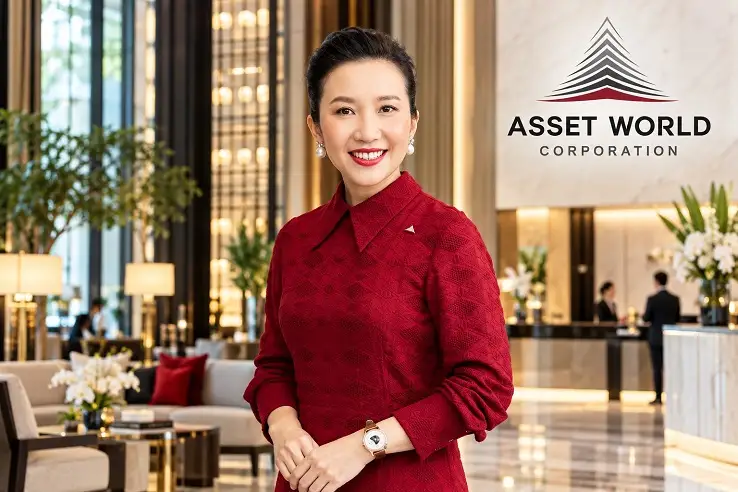
Image Credit: AWC
The scale of the plan is substantial. AWC is initially considering five properties with a combined value of up to approximately 50 billion baht for AWR, while the longer-term ambition is to expand the trust’s portfolio toward 100 billion baht over the following three to five years. At the same time, the company is targeting 35 hotels with 9,312 rooms across 21 brands by 2030.
For Thailand’s tourism industry, the strategy is particularly important because it could provide AWC with a mechanism for repeatedly converting established hotel and commercial properties into capital for new developments. This Thailand Hotel News report examines how the proposed structure could allow the company to develop properties, establish their earnings potential and subsequently recycle capital into another generation of hotels and destination projects.
A New Chapter After AWC’s Massive IPO
AWC is already familiar with large-scale capital market transactions.
In 2019, the company made headlines with an initial public offering that raised approximately 48 billion baht before its shares began trading on the Stock Exchange of Thailand on October 10 of that year. The transaction helped establish AWC as the listed owner of one of Thailand’s largest collections of hospitality and commercial real estate.
Seven years later, President and CEO Wallapa Traisorat is preparing another potentially important step in the evolution of that portfolio.
This time, however, the objective is different. Rather than raising capital principally through the parent company, the proposed AWR structure is intended to provide an investment platform for mature properties that have already progressed through their development phase and are generating operating income.
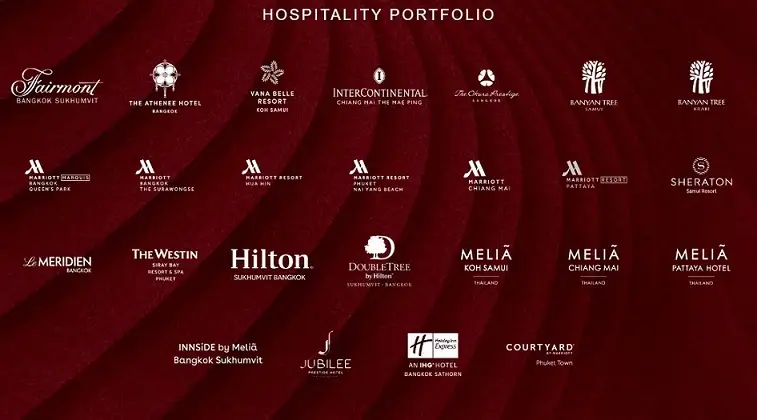
Image Credit: AWC
The initial assets under consideration would have a combined value not exceeding approximately 50 billion baht. Management’s longer-term vision is for AWR to potentially double in size toward 100 billion baht as additional AWC properties mature and become suitable for inclusion.
A Strategy Built Around Making Land Work Harder
The philosophy behind the strategy originates partly from AWC’s approach toward land ownership.
Wallapa has explained that an important principle inherited from her father, Charoen Sirivadhanabhakdi, was to retain land and allow it to create long-term value. She has characterized the previous generation as accumulators of assets while describing her own role as developing those assets into productive properties.
That distinction helps explain AWC’s rapid development of hotels, offices, lifestyle properties and large destination projects.
Land may appreciate over time, but transforming it into a major hotel or mixed-use destination requires considerable additional capital. Design, construction, infrastructure, international partnerships and the establishment of hotel operations can consume substantial amounts of money years before a development reaches maturity.
As AWC’s portfolio expands, keeping all of that capital permanently tied to completed properties could constrain the pace of future development.
AWR is intended to provide another option.
Once an AWC property has been developed and established as an operating asset, it could potentially become suitable for the REIT. Capital obtained through such a transaction could then be redeployed into another development.
That creates the possibility of a repeating cycle in which mature assets help finance new ones.
Why AWC and AWR Need Different Roles
Wallapa has described AWC and AWR using the analogy of siblings.
AWC would essentially be the developer. It would undertake the more complicated and risk-intensive work of identifying sites, designing projects, financing construction, selecting partners and establishing properties as functioning businesses.

Image Credit: AWC
AWR would occupy another part of the investment cycle. Instead of concentrating on projects still undergoing development, the trust would focus on established properties capable of generating operating income.
The distinction is significant. AWC could potentially earn development returns while releasing capital from mature properties for reinvestment. AWR investors, meanwhile, would gain exposure to income-generating real estate without having to purchase entire hotels or commercial buildings.
The structure could also provide retail investors with indirect exposure to high-value hospitality properties that would otherwise be impossible for most individuals to own directly.
Five Seed Assets Could Start the AWR Portfolio
AWC’s preliminary plans involve considering five properties as the initial assets for AWR, with their combined value capped at approximately 50 billion baht.
Behind those initial properties sits a much larger potential pipeline. According to Wallapa, AWC has examined 62 projects while seeking diversification between commercial and hospitality properties. The broader portfolio spans important Thai tourism markets including Bangkok, Pattaya, Koh Samui, Phuket and Krabi.
The intention is not simply to assemble the largest possible collection of buildings.
A key emphasis is expected to be placed on freehold properties. Unlike leasehold interests, which have a finite contractual life, freehold assets can potentially remain within an investment portfolio indefinitely.
That distinction can be valuable for a long-term property trust, although freehold ownership alone does not guarantee strong returns.
Investors Will Need to Look Beyond the 100 Billion Baht Figure
The possibility of AWR eventually holding around 100 billion baht of assets is eye-catching, but portfolio size is only one measure of a successful REIT.
What ultimately matters is the income generated by the underlying properties.
Hotels can experience fluctuations in occupancy, average room rates and food and beverage revenue as tourism conditions change. Their operating performance can also be affected by seasonality, competition, economic conditions and changes in international travel patterns.
Commercial buildings have different risks, including tenant demand, lease renewals and rental rates.
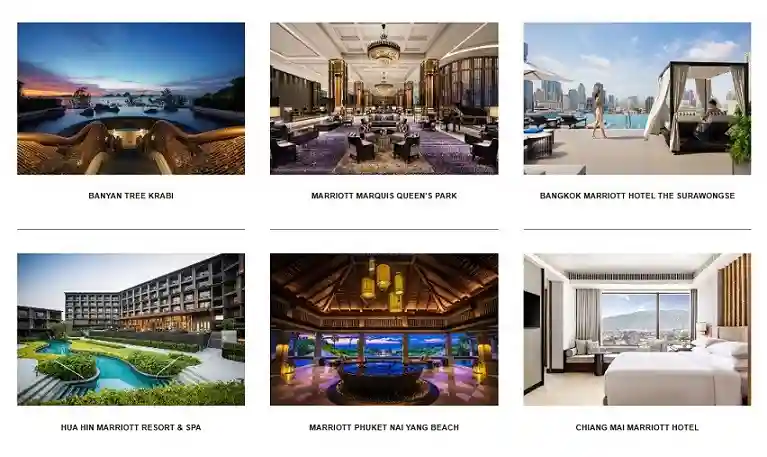
Image Credit: AWC
For AWR, investment performance would therefore depend on factors including the prices paid for properties, operating income, financing costs, leverage and the amount ultimately available for distribution to unit holders.
The challenge will be to demonstrate that every major addition to the portfolio strengthens its economics rather than merely increasing its headline valuation.
Financial Discipline Is Central to AWC’s Strategy
AWC’s expansion is not intended to come at the expense of financial stability.
Wallapa has said that the company maintains considerable focus on financial discipline and has been controlling its debt-to-equity ratio at approximately 0.9 while aiming to reduce it toward 0.6.
That objective helps explain why a capital recycling mechanism could become increasingly important.
Without such a structure, rapid development can leave increasing amounts of capital tied up in completed hotels and commercial properties. Financing additional projects can then require more borrowing, additional equity or other sources of capital.
Transferring appropriate stabilized properties into a REIT could potentially provide AWC with another source of development capital while allowing AWR to concentrate on income-producing assets.
The model therefore depends on the two organizations serving complementary rather than identical functions.
AWC Targets 35 Hotels and 9312 Rooms
The importance of that capital recycling strategy becomes much clearer when viewed against AWC’s development pipeline.
The company plans approximately 100 billion baht of investment from 2026 through 2030 as it expands its luxury hospitality and real estate portfolio in Thailand and potentially internationally.
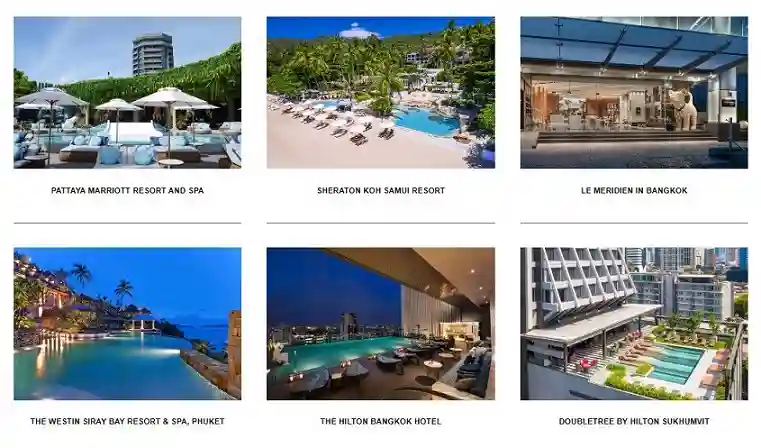
Image Credit: AWC
By 2030, AWC aims to have 35 hotels containing 9,312 rooms under 21 brands.
The company is also targeting total assets exceeding 300 billion baht. Its assets stood at approximately 208.338 billion baht as of June 30, 2026, meaning that reaching the stated objective would involve adding more than 90 billion baht to the company’s asset base within roughly four years.
Such expansion will require both substantial investment and successful execution.
AWC will have to develop new properties while ensuring that existing hotels and commercial assets produce sufficient earnings to justify their valuations.
International Hotel Brands Are Crucial to the Expansion
AWC’s hotel strategy relies heavily on partnerships with international hospitality groups.
The company works with major global operators and brands including Marriott, IHG, Hilton, Hyatt, Banyan Tree, Okura and Nobu. According to the supplied material, AWC’s international hospitality relationships encompass more than 200 brands and networks collectively reaching hundreds of millions of customers worldwide.
The strategy allows AWC to concentrate on property investment and development while hotel partners contribute their brands, operating systems, service expertise, international distribution and established customer bases.
Wallapa’s approach is based on bringing in specialist partners rather than attempting to perform every function internally.
For hotels, that can mean combining accommodation with restaurants, wellness services, workspaces, entertainment and other lifestyle components.
The objective is to transform properties from places where guests merely sleep into destinations where visitors spend substantially more time and money.
Pattaya Could Showcase AWC’s Destination Strategy
One of the clearest examples is Aquatique District Pattaya.
The project is designed to help transform the traditional image of Pattaya by incorporating luxury hospitality, sports, wellness, entertainment and leisure attractions into a larger destination.
The plans described in the supplied material include luxury hotels such as JW Marriott and Ritz-Carlton alongside water attractions and major entertainment components.
The underlying commercial strategy is important. Rather than depending exclusively on hotel room revenue, a destination can potentially generate spending from restaurants, entertainment, wellness, retail and other activities.
If successful, that can increase both the productivity of the underlying land and the operating value of the properties developed on it.
Mature assets from projects following this model could ultimately become candidates for AWR, creating another link between AWC’s development strategy and its proposed REIT platform.
Chiang Mai Will Focus on Culture and Experiences
AWC is pursuing a different destination strategy in Chiang Mai. The company’s plans seek to combine hospitality with Northern Thailand’s traditional arts and crafts, creating a cultural destination capable of attracting visitors rather than simply another hotel development.
Image Credit: AWC
The broader ambition is to strengthen Chiang Mai’s appeal as an essential destination for international travelers visiting Thailand.
AWC has also explored environmental and public-space components intended to make its developments relevant to local residents as well as tourists.
The concept illustrates an important element of Wallapa’s strategy: the long-term value of a property can depend on what happens around the building as much as what happens inside it.
Bangkok Presents a More Delicate Development Challenge
The historic Woeng Nakhon Kasem area in Bangkok represents another type of challenge.
Unlike developing an isolated new resort, the project involves an established urban area containing existing businesses, communities and historical identity.
The supplied material stresses that success should consequently not be judged solely by the new buildings created. The impact on surrounding communities and businesses must also be considered.
Pattaya, Chiang Mai and Bangkok therefore require very different development approaches, but they share the same underlying philosophy.
AWC wants to use strategically located real estate as the foundation and then introduce hotels, restaurants, attractions, international brands and other components that create additional reasons for people to visit and remain in a destination.
AWR Will Face Its Biggest Test After Launch
AWC demonstrated through its 2019 IPO that it could bring an enormous real estate portfolio into Thailand’s capital markets.
AWR will face a different test. Its success will ultimately depend on whether the properties transferred into the trust generate sustainable income at valuations that make economic sense for investors.
Acquisition prices, hotel performance, rental income, financing expenses, debt levels and distributions will therefore matter considerably more over the long term than the headline size of the trust.
AWC must also balance its own interests as developer and asset seller with the interests of future AWR unit holders.
That relationship will become increasingly important if AWR grows from an initial portfolio of up to approximately 50 billion baht toward the much larger 100 billion baht level envisioned by management.
A New Financial Engine for Thailand’s Hotel Expansion
The proposed AWR REIT represents much more than another property investment vehicle. It forms part of an attempt by AWC to create a continuous development and capital recycling ecosystem.
AWC would develop properties and destinations, establish their operations and grow their earnings. Mature assets could then potentially move into AWR, releasing capital that AWC could deploy into subsequent developments.
The strategy could become particularly powerful if AWC succeeds in delivering its planned 35 hotels, 9,312 rooms and extensive portfolio of commercial and destination properties by 2030.
However, the true measure of success will not simply be whether AWR reaches 50 billion baht or eventually approaches 100 billion baht. It will depend on whether the assets produce sustainable income, whether acquisition valuations remain disciplined, whether AWC can recycle capital without taking excessive financial risks and whether the arrangement creates lasting value for both AWC shareholders and future AWR unit holders. With approximately 100 billion baht of development investment planned through 2030, the proposed REIT could become a crucial financial engine behind one of Thailand’s most ambitious hospitality expansion programs.
References:
https://www.assetworldcorp-th.com/en/newsroom/news-activities/1121
For more on AWC, visit: https://www.assetworldcorp-th.com/en/home