

Key points
- Thailand remains one of Asia’s most important tourism markets, but this Thailand Hotel News report argues that the conventional Build-Operate-Sell, or BOS, formula can no longer be regarded as a reliably viable hotel strategy in its traditional form.
- What has changed is the assumption that a developer can repeatedly manufacture a hotel, stabilize it and expect the investment market to provide a sufficiently profitable exit almost on demand.
- What it cannot control is the investment climate several years into the future or the price that a buyer will then be willing to pay.
For years, the Build-Operate-Sell (BOS) model was regarded by some Thai hotel developers as an intelligent way to turn real estate development into a continuous capital-recycling machine. Buy the land, build the hotel, establish the operation, demonstrate its earnings potential and then sell the completed asset at a premium. The proceeds could then finance another development, allowing the company to repeat the cycle without keeping every property permanently on its balance sheet.
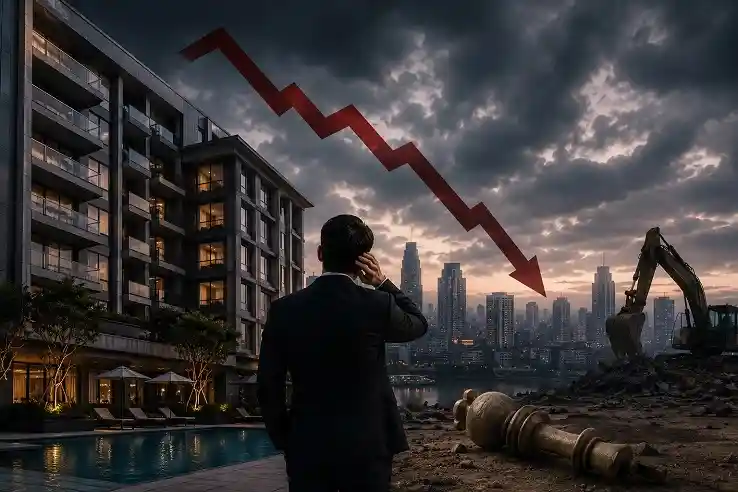
Image Credit: Thailand Hotel News
That strategy was highly attractive when land was cheaper, construction costs were manageable, tourism was expanding strongly and investors were prepared to compete for stabilized hospitality assets. Today, however, the economics are considerably less forgiving. Thailand remains one of Asia’s most important tourism markets, but this Thailand Hotel News report argues that the conventional Build-Operate-Sell, or BOS, formula can no longer be regarded as a reliably viable hotel strategy in its traditional form. The market has matured, development costs have increased, competition has intensified and the crucial final stage — finding a buyer prepared to pay the required price — has become considerably less predictable.
The important distinction is that hotels will continue to be built, operated and sold in Thailand. Quality assets will continue to attract investors, and exceptional transactions will still produce impressive returns. What has changed is the assumption that a developer can repeatedly manufacture a hotel, stabilize it and expect the investment market to provide a sufficiently profitable exit almost on demand.
A Business Model Built Around the Exit
The attraction of BOS has always been its simplicity. During the Build phase, a developer acquires land, secures financing, obtains approvals, designs the hotel and completes construction. During the Operate phase, the property establishes occupancy, Average Daily Rate, RevPAR, food-and-beverage income and operating profitability. The final Sell phase converts the development into cash, ideally at a valuation substantially above the project’s total cost.
When everything works, the model can be extremely capital efficient.
The problem is that the developer controls only part of the equation. It can control, within reasonable limits, what it builds, how much it spends, who operates the hotel, how the property is marketed and how efficiently the business performs. What it cannot control is the investment climate several years into the future or the price that a buyer will then be willing to pay.
That uncertainty matters more today because Thailand’s hotel development environment is substantially more competitive.
Bangkok Is Becoming a Much More Difficult Place to Build for Exit
Bangkok provides the clearest example of how the market has changed.
According to Cushman & Wakefield’s Q2 2026 Bangkok hotel data, total inventory reached 147,227 rooms during the quarter, up from 146,572 in Q1. The average occupancy rate declined from 77 percent in Q1 to 73 percent in Q2, while ADR fell from 3,730 baht to 3,660 baht and RevPAR declined from 2,872 baht to 2,672 baht.
Some of that movement reflects normal seasonality, so it would be misleading to describe those quarterly figures alone as evidence of structural deterioration. Nevertheless, they illustrate how sensitive hotel economics can become when developers are competing in an already large market.
The supply pipeline deserves even greater attention. JLL reported in August that, between July 2026 and the end of 2028, 7,495 new upscale hotel rooms alone are projected to enter Bangkok, representing 49 percent of anticipated new supply over that period.
Other market estimates point to similarly substantial expansion.
That is particularly relevant to BOS.
A developer does not simply need occupancy. It needs profitable occupancy at rates capable of supporting the eventual capital value of the hotel.
A hotel can therefore appear busy while simultaneously becoming less attractive as an investment if rooms are being filled through discounting.
More Rooms Change the Value of an Ordinary Hotel
In a market with limited supply, simply owning a well-located hotel can create scarcity value.
In a market containing tens of thousands of rooms and a continuing development pipeline, scarcity has to be created differently.
Location still matters enormously, but so do brand strength, design, distribution, operating efficiency, customer loyalty, restaurants, wellness facilities, digital reputation and the ability to command a meaningful rate premium over nearby competitors.
This creates an uncomfortable problem for developers pursuing a standardized BOS strategy.
If another comparable hotel can be built nearby, why should an investor pay an exceptional price for the existing one?
The hotel needs something difficult to replicate.
That might be an irreplaceable site, a globally recognized brand, outstanding historical performance, unusually strong margins, a valuable long-term land position or a distinctive concept capable of maintaining pricing power.
Without those characteristics, a newly constructed hotel risks becoming another commodity in an increasingly crowded accommodation market.
Land Prices Can Damage BOS Before Construction Even Begins
The economics become more challenging when the land is expensive. A hotel developer purchasing prime Bangkok land must recover not only the construction cost but the land acquisition price, financing expenses, professional fees, pre-opening expenses, furniture, fixtures and equipment, technology, working capital and other costs associated with getting the property operational.
The mathematics can become unforgiving.
Suppose the total development cost increases by 20 or 30 percent between the original feasibility assumptions and completion. The eventual buyer does not automatically pay 20 or 30 percent more simply because the developer spent more. Potential buyers typically do detailed evaluations and also peruse thru financial details very rigourously.
Investors value hotels largely according to their ability to generate sustainable future income and the return required on the capital invested.
That difference is fundamental. Development cost is what the owner spends. Investment value is what the market believes the resulting income is worth.
The two numbers do not necessarily move together. A beautifully constructed hotel costing 5 billion baht is not automatically worth 6 billion baht. If its sustainable earnings support a valuation of only 4 billion baht, the development has a problem regardless of how impressive the building may be.
This is precisely where a BOS strategy can unravel.
Thailand’s Tourism Numbers Are Sending a Warning
Another assumption underlying aggressive hotel development has traditionally been that Thailand’s tourism growth would eventually absorb additional supply.
Thailand unquestionably remains a tourism powerhouse, but the latest figures argue against complacency.
CBRE reported that international arrivals declined 8.1 percent year over year to 6.6 million during the second quarter of 2026. JLL reported that Thailand received 14 million international visitors during the first five months of 2026, a 2.3 percent year-over-year decline.
The Tourism Authority of Thailand has consequently recalibrated its expectations. TAT now projects approximately 30 million to 34 million international arrivals for 2026, rather than its earlier 36.7 million expectation. The authority has increasingly emphasized value over sheer visitor volume as economic uncertainty, geopolitical pressures, changing travel behavior and competition affect the market.
This does not amount to a tourism crisis. It does, however, undermine the idea that developers can continuously add hotel rooms and rely on rapidly expanding arrivals to absorb them.
Hotel feasibility needs to be based on realistic future demand rather than an assumption of permanently rising tourism.
Thailand Is No Longer Competing Only with Thailand
Another structural change is frequently underestimated: tourists have more choices.
Thailand’s competition does not end at the borders of Bangkok, Phuket, Pattaya, Chiang Mai or Samui.
Vietnam has become an increasingly formidable tourism competitor, offering major cities, beaches, resorts, cultural attractions and rapidly improving hospitality infrastructure. Malaysia offers sophisticated urban and resort tourism products. Indonesia’s opportunity extends far beyond Bali, while Japan remains one of the region’s most desirable destinations.
Even farther afield, experienced international travelers are increasingly exploring destinations across South America and other regions that previously sat outside mainstream Asian vacation patterns.
Thailand therefore faces competition at two levels. Hotels compete against other Thai hotels for guests once travelers have selected Thailand. But Thailand itself must first compete against other countries for the traveler’s decision.
That distinction is increasingly important.
CBRE’s midyear outlook specifically cited strong regional competition among the challenges facing Thailand’s hospitality industry in 2026.
Having Hotels for Sale Does Not Mean There Is a Liquid Market
This is where BOS faces perhaps its biggest structural challenge.
Hotels are regularly offered for sale in Thailand. Some are marketed publicly, while many others circulate quietly among brokers, family offices, private equity investors and hospitality specialists.
But the number of properties being offered does not tell investors whether the market is liquid.
A genuine transaction requires a buyer and seller to agree on value. The seller may think primarily about what was paid for the land, how much construction cost, the amount invested in furnishings and the appreciation expected over the ownership period.
The buyer approaches the calculation differently. The buyer studies EBITDA, ADR, occupancy, RevPAR, management expenses, required capital expenditure, renovation cycles, competitive supply, financing costs, future demand and the investment return available elsewhere.
That can produce a substantial gap.
The owner may insist that a property is worth 5 billion baht. Prospective investors may conclude that its income supports only 3.5 billion baht. The hotel is therefore technically “for sale,” but economically it may be nowhere near a transaction.
For a conventional owner prepared to hold for 20 years, that may be manageable.
For a BOS developer whose next project depends on recycling capital from the sale, it can become a major corporate problem.
The Entire BOS Machine Depends on One Word: Sell
This is the weakness that was easier to overlook during booming investment cycles.
-The Build stage consumes capital.
-The Operate stage is intended to create value.
-The Sell stage releases the capital.
If the third stage stops, the recycling mechanism stops with it.
A developer planning a five-year cycle may suddenly find itself holding an asset for seven or ten years. During that additional period, rooms age, furniture needs replacement, technology becomes obsolete, competitors open newer properties and major renovations move closer.
The company may also have loans to refinance. Instead of using proceeds from Hotel A to fund Hotel B, it may need additional capital merely to maintain Hotel A.
Build-Operate-Sell then becomes Build-Operate-Wait. And waiting can be expensive.
Buyers Are Still Interested — But They Can Afford to Be Selective
It would be equally wrong to claim that investors have abandoned Thailand.
They have not. JLL reported in June that Asia-Pacific luxury hotel transaction volumes reached approximately US$2.1 billion during 2025, with luxury properties representing almost 20 percent of regional hotel deals. Thailand recorded approximately 2.2 billion baht in luxury hotel transactions during 2025.
JLL also described Thailand as supply-constrained from an investment perspective because many desirable assets remain tightly held by long-term owners.
This apparently contradictory situation is extremely important.
Thailand can simultaneously have many hotels available for sale and a shortage of the specific assets investors actually want to buy at the prices owners will accept.
Investors still want good hotels. What they do not necessarily want are mediocre hotels at premium valuations.
That distinction may define the next phase of Thailand’s transaction market.
The Old Model Underestimated the Importance of Brand Equity
Another weakness in development-led BOS thinking is the tendency to view marketing and branding primarily as operating expenses.
In today’s hotel market, they should increasingly be regarded as components of asset value.
Two current developers that deploy the BOS model in Thailand, one owned and controlled by Sino-Thais and the other a Thai-Punjabi company totally lack any expertise in this arena of marketing brand building and while they might have succeeded in the past, their days are numbered.
A strong hotel business possesses more than rooms. It has a reputation. It has distribution. It has customer relationships. It has a recognizable position in the market. It has digital visibility, repeat guests, direct bookings, corporate accounts and potentially valuable restaurants, bars, wellness concepts and events businesses.
These characteristics contribute to earnings quality.
That matters because sophisticated investors are ultimately purchasing future cash flow.
A developer intending to sell after several years might historically have questioned the value of spending heavily on long-term brand development because a future owner would inherit the benefits.
That thinking is becoming increasingly dangerous. The future buyer will examine whether the hotel’s earnings are sustainable. If occupancy depends overwhelmingly on online travel agencies and discounting, the business carries different risks from one possessing strong direct demand, repeat customers and pricing power.
Marketing expenditure that creates durable commercial value can therefore contribute directly to the eventual investment proposition.
Financial Performance Will Matter More Than Marble
Thailand has no shortage of attractive hotels. That means attractive architecture alone is becoming less powerful as an investment differentiator.
Prospective buyers will increasingly focus on what sits behind the lobby.
They will want clean financial statements, sustainable EBITDA, controlled payroll, sensible management fees, healthy margins, diversified source markets and evidence that room rates can withstand competitive pressure.
This changes the priorities for developers.
The old mentality could be summarized as: build something impressive, stabilize it and find a buyer.
The emerging mentality needs to be: create a hotel business so financially compelling that an investor wants to own it.
Those are very different propositions.
A hotel with excellent financial performance can survive a weak transaction market because holding it still generates an acceptable return.
A poorly performing hotel dependent upon a future sale has far fewer options.
BOS Needs to Become Build-Brand-Operate-Optimize
The strongest hotel development strategy for the coming years may therefore require a fundamental modification of BOS.
Instead of Build-Operate-Sell, developers should increasingly think in terms of Build-Brand-Operate-Optimize, with selling becoming an option rather than a predetermined requirement.
The distinction sounds subtle, but financially it is profound.
Under traditional BOS thinking, the asset is developed with an eventual exit embedded in the business plan.
Under the more resilient approach, the hotel must work economically whether it is sold or retained.
That encourages better decisions.
Developers become more disciplined about land prices because they cannot depend on speculative appreciation. They invest more intelligently in branding because they may remain owners. They concentrate on operating margins because recurring earnings matter. They develop customer relationships because repeat business has long-term value.
Most importantly, they are not forced sellers.
If an investor offers an exceptional valuation, they can sell.
If the offer is inadequate, they can continue operating.
That is genuine financial optionality.
Recurring Revenue Could Become More Valuable Than Repeated Exits
Hotel companies may also need to reconsider where long-term corporate value is created.
Developing and selling hotels can generate large but irregular profits.
Management contracts, asset management, franchise arrangements, advisory services and other fee-generating activities can provide recurring income without requiring the same amount of capital.
This does not mean every developer should become an asset-light hotel operator.
It means companies should question whether corporate growth should depend predominantly on repeatedly purchasing increasingly expensive land, spending billions developing hotels and hoping future buyers will validate those investments.
Recurring revenue can make corporate earnings less dependent on transaction timing.
It can also improve financial statements, which becomes particularly important when lenders, shareholders and investors become more demanding about predictable cash flow.
A Profitable Past Does Not Guarantee a Profitable Future
Perhaps the greatest danger facing companies that succeeded with BOS is psychological rather than financial.
A strategy that worked repeatedly can begin to look permanent. It never is.
The hotels sold at substantial profits during earlier cycles were developed under the conditions of those cycles: different land prices, different financing costs, different room supply, different tourist volumes and different levels of investor appetite.
Today’s market is different.
Tomorrow’s will be different again.
Companies therefore cannot assume that because they generated exceptional returns from three or four previous hotel exits, the fifth will automatically produce the same outcome.
Historical success proves that the previous strategy worked in the previous market.
It does not prove that the market still supports the strategy.
Thailand’s Hotel Market Is Not Collapsing — It Is Becoming More Professional
There is an important difference between saying that the traditional BOS formula is losing viability and saying that Thailand’s hotel industry is failing.
The latter would be wrong. Thailand retains enormous advantages: global destination recognition, extensive aviation connections, outstanding hospitality expertise, established tourism infrastructure and internationally famous leisure destinations.
Bangkok itself has shown resilience. The message is therefore not that Thailand has too many hotels everywhere or that investors should abandon hospitality.
The message is that the margin for an average project is becoming thinner.
Excellent hotels will continue to succeed. Irreplaceable sites will remain valuable. Strong operators will outperform. Exceptional brands will command premiums. Well-capitalized investors will find opportunities.
But an undifferentiated hotel built on expensive land with aggressive financial assumptions and a mandatory exit date is becoming a considerably more dangerous proposition.
At present here are more than 127 hotels for sale just in Bangkok alone from one to 5-star properties, and some have been on the market for more than 3 years with no buyers!
The Hotel Must Work Even When the Buyer Does Not Arrive
This may ultimately become the defining investment principle of Thailand’s next hotel cycle.
A developer should ask a simple question before acquiring land:
If nobody buys this hotel after five years, would we still want to own it?
If the answer is yes, the project may have a sound underlying investment case.
If the answer is no, the development may depend too heavily on speculation about a future buyer.
That is why the conventional Build-Operate-Sell formula can no longer be regarded as a reliably viable standalone model for Thailand’s hotel industry. The problem is not building, and it is not necessarily operating. The vulnerability lies in assuming that selling at the required valuation will always be possible.
Thailand is entering a more demanding hospitality investment era in which land costs, competition, tourism volatility and investor selectivity are forcing developers to prove genuine economic value. The companies most likely to prosper will be those that build hotels capable of generating durable returns rather than properties whose financial success depends primarily upon an eventual exit.
BOS may have produced spectacular profits during earlier development cycles, and individual BOS transactions will undoubtedly continue to succeed. But the days when Build-Operate-Sell could be treated as a repeatable conveyor belt for hotel profits are fading. The stronger model now is to build carefully, establish a real brand, operate profitably, continually optimize the asset and retain the financial strength to hold it for as long as necessary.
In the new Thailand hotel market, the best exit strategy may therefore be having a hotel good enough that the owner does not need to sell it. That shift — from depending on capital gains to creating sustainable operating value — could prove to be one of the most important changes in Thailand’s hospitality investment industry over the remainder of this decade.
We will be hosting a private exploratory meeting for selected hotel developers and potential investors from America and Canada on the 8th of September at the RBSC, interested parties can email us for more details at mktwiz789@gmail.com
Visit Also: https://bangkokhotel.news/