

Key points
- Thailand’s tourism and hospitality sector is beginning to feel the effects of a controversial travel advisory issued by Russia’s Foreign Ministry, with hotels in major tourist destinations including Phuket, Pattaya, and Koh Samui reporting a growing number of booking cancellations from Russian travelers and tour groups for the coming months, including the crucial year-end high season.
- Several hotel operators in Phuket and Pattaya report that individual travelers and organized Russian tour groups have begun canceling reservations or delaying booking decisions until the situation becomes clearer.
- While there is currently no indication of a mass exodus of Russian travelers, the growing number of cancellations has become an early warning sign that the advisory may be influencing consumer behavior.
Thailand Hotel News: Thailand’s tourism and hospitality sector is beginning to feel the effects of a controversial travel advisory issued by Russia’s Foreign Ministry, with hotels in major tourist destinations including Phuket, Pattaya, and Koh Samui reporting a growing number of booking cancellations from Russian travelers and tour groups for the coming months, including the crucial year-end high season.
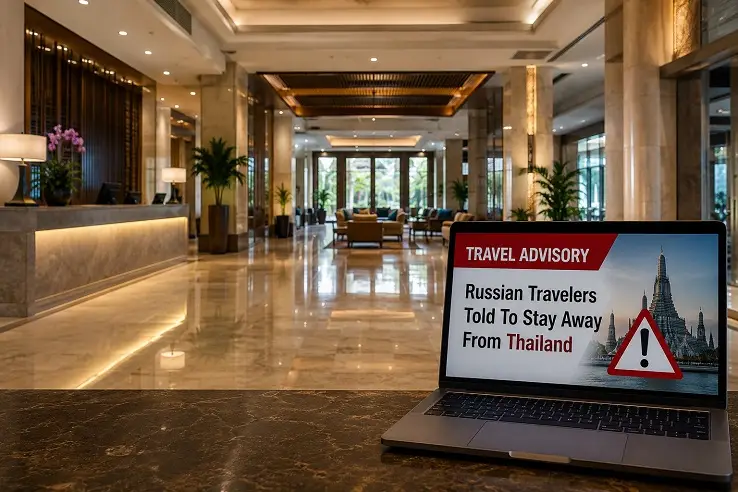
Image Credit: Thailand Hotel News
The warning, issued by Moscow, advises Russian citizens who believe they could face legal scrutiny from United States authorities to avoid traveling to Thailand or even transiting through Thai airports. The advisory has triggered concern among Russian holidaymakers, many of whom are now reconsidering travel plans to the kingdom. Industry insiders say the uncertainty has already started affecting forward bookings, with several hotels reporting cancellations and requests for postponements. In conversations with tourism operators, concerns have centered on claims that American authorities are increasingly using international legal cooperation mechanisms to target Russian nationals abroad. This Thailand Hotel News report covers the anxiety caused by the travel advisory among some Russian travelers who fear additional scrutiny during immigration procedures or while staying in Thailand.
Moscow Raises Alarm Over U.S. Influence
Russia’s Foreign Ministry warned that citizens who may be subject to criminal prosecution by U.S. authorities should avoid traveling to Thailand due to the risk of detention or extradition. The ministry pointed to Thailand’s extradition treaty with the United States and alleged that Washington has intensified efforts to pursue Russian nationals overseas.
In a strongly worded statement, Moscow claimed that Thailand has become one of the locations where American authorities are actively seeking Russian citizens. The advisory suggested that some individuals could be targeted without fully realizing they may be under investigation due to sanctions, financial activities, cybercrime allegations, or other legal matters connected to U.S. enforcement agencies.
The warning followed renewed attention surrounding several high-profile cases involving Russian nationals arrested in Thailand and later transferred to the United States. Russian officials also referenced past incidents, including the widely publicized arrest and extradition of Viktor Bout from Bangkok.
https://www.interfax-russia.ru/military/news_eng/213906
Hotels and Tour Operators Begin Feeling the Impact
Although Russian travel associations have emphasized that ordinary tourists have little reason to fear arrest or detention, the advisory has nevertheless sparked uncertainty among travelers.
Several hotel operators in Phuket and Pattaya report that individual travelers and organized Russian tour groups have begun canceling reservations or delaying booking decisions until the situation becomes clearer. Industry observers note that Russian tourists often make advance bookings for extended winter stays, making any slowdown particularly concerning for hotels that rely heavily on this market.
Tourism businesses catering specifically to Russian visitors are watching developments closely. Many resorts, restaurants, tour companies, and retail businesses in Thailand’s major beach destinations have invested heavily in Russian-language services and marketing campaigns over recent years due to the market’s rapid growth.
It was reported that many Russians are now considering travelling to countries like Vietnam, Malaysia, Indonesia and Japan for holidays.
Russian Market Remains Critical for Thailand
Russia has become one of Thailand’s most valuable long-haul tourism markets. More than 1.8 million Russians visit Thailand annually, with many choosing extended holidays lasting several weeks or even months.
Russian visitors contribute significantly to local economies in Phuket, Pattaya, and other resort destinations through hotel stays, dining, entertainment, transportation, and property rentals. Their importance became even more pronounced during periods when arrivals from other major markets fluctuated.
Tourism analysts warn that even a modest decline in Russian arrivals during the upcoming high season could affect occupancy rates, tourism revenue, and confidence across the hospitality sector. While there is currently no indication of a mass exodus of Russian travelers, the growing number of cancellations has become an early warning sign that the advisory may be influencing consumer behavior.
Thailand Seeks to Reassure Visitors
Thai authorities have sought to calm concerns by emphasizing that all visitors receive equal treatment under Thai law and that Thailand remains a safe and welcoming destination for international tourists.
Officials continue to stress the strong relationship between Thailand and Russia, particularly in tourism, trade, education, and cultural exchanges. At the same time, Thailand remains committed to its international legal obligations and cooperation agreements with partner nations.
For now, the full impact of Moscow’s warning remains uncertain. However, with the year-end peak season approaching, hotel operators, tourism businesses, and government agencies will be closely monitoring booking patterns and traveler sentiment. The situation highlights how geopolitical tensions can quickly spill over into the tourism industry, affecting travel decisions, hotel occupancy levels, and business confidence even in destinations that have long been considered among the world’s most popular holiday escapes. As stakeholders work to preserve confidence in the Thai tourism sector, the coming months will reveal whether the advisory becomes a temporary disruption or develops into a more significant challenge for one of Thailand’s most important international visitor markets.
For the latest on developments in the local Thai hospitality industry, keep on logging to Thailand Hotel News.