

Key points
- Thailand’s ongoing crackdown on illegal encroachment into protected forest land has entered a significant new phase, with authorities taking decisive action against hotels and resorts operating within Thap Lan National Park.
- The Department of National Parks, Wildlife and Plant Conservation is now preparing to deploy officers to carry out demolitions where owners fail to comply within the newly imposed deadline.
- During the next one to two months, approximately 100 additional hotels and resorts currently involved in legal proceedings over alleged encroachment within Thap Lan National Park are expected to be referred to AMLO for further investigation and possible legal action.
Thailand Hotel News: Thailand’s ongoing crackdown on illegal encroachment into protected forest land has entered a significant new phase, with authorities taking decisive action against hotels and resorts operating within Thap Lan National Park. Resort owners have now been given a strict 15-day deadline to remove buildings, crops, and all other developments constructed on protected land or face demolition by government authorities. The latest enforcement measures also include financial investigations, with assets linked to the alleged offences set to come under scrutiny by Thailand’s Anti-Money Laundering Office (AMLO).
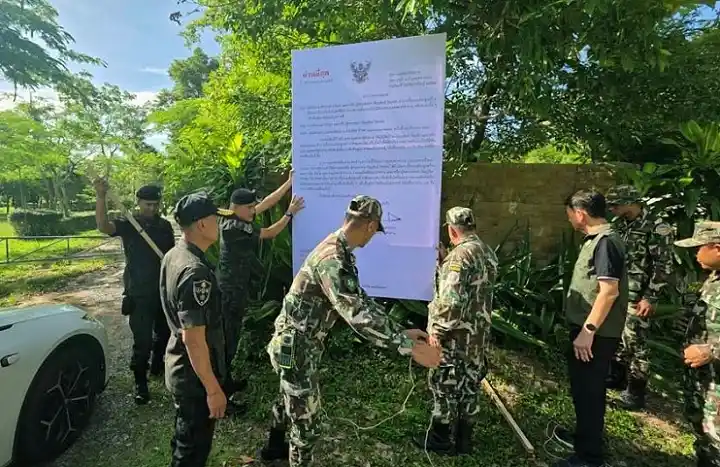
Image Credit: Thap Lan National Park Forest Officials
The latest move follows an urgent order signed on June 26 by Mr. Prawatichart Chanthep, Head of Thap Lan National Park, directing occupants to restore the affected land to its original natural condition. This Thailand Hotel News report comes as park officials continue strengthening enforcement after years of legal proceedings against businesses accused of occupying protected forest areas without authorization. Notices have now been posted at the affected resorts, officially informing operators that they have just 15 days from receipt of the order to comply before authorities intervene.
Earlier Orders Ignored
According to Thap Lan National Park, this is not the first time the affected businesses have been instructed to vacate the land. Officials revealed that an earlier notification was issued on December 15, 2017, providing resort operators with 30 days to demolish illegal structures and rehabilitate the encroached areas.
Despite that directive, authorities state that little or no action was taken over the following years. As a result, the Department of National Parks, Wildlife and Plant Conservation is now preparing to deploy officers to carry out demolitions where owners fail to comply within the newly imposed deadline. The costs associated with any government-led demolition will be recovered from those found responsible for the illegal developments.
Anti-Money Laundering Action Begins
Beyond the physical removal of illegal structures, authorities are also expanding the investigation into the financial aspects of the alleged offences.
Mr. Prawatichart confirmed that the names of the first three hotels and resorts currently facing prosecution have already been submitted to the Anti-Money Laundering Office for consideration under Thailand’s Anti-Money Laundering Act B.E. 2542 (1999). The move could allow investigators to examine assets believed to be connected to illegal encroachment activities.
Officials have also confirmed that this is only the beginning of a much wider enforcement campaign. During the next one to two months, approximately 100 additional hotels and resorts currently involved in legal proceedings over alleged encroachment within Thap Lan National Park are expected to be referred to AMLO for further investigation and possible legal action.
Protecting One of Thailand’s Most Important Forests
Thap Lan National Park covers more than 2,236 square kilometers, making it Thailand’s second-largest national park. The protected area stretches across Prachinburi Province, Nakhon Ratchasima Province and Buriram Province, encompassing important wildlife habitats and some of the country’s most valuable forest ecosystems.
Located roughly two to three hours northeast of Bangkok, the park forms part of the internationally recognized UNESCO Dong Phayayen-Khao Yai Forest Complex, one of Southeast Asia’s most significant conservation landscapes. The forest supports diverse wildlife populations and plays an essential role in protecting biodiversity, watersheds and natural resources for future generations.
Authorities have repeatedly stressed that reclaiming illegally occupied land is essential to restoring damaged ecosystems and safeguarding the integrity of Thailand’s protected national parks.
Responsible Tourism Matters
The latest enforcement campaign also serves as a timely reminder for travelers to exercise care when selecting accommodation located near protected forests or national parks. Visitors should carry out appropriate due diligence before making reservations and ensure that hotels or resorts operate legally and comply with environmental and land-use regulations. Supporting legitimate tourism businesses helps protect Thailand’s natural heritage while encouraging sustainable development that benefits both local communities and future generations. As authorities continue expanding investigations and enforcement across Thap Lan National Park, the outcome is expected to send a strong message that illegal encroachment into protected forests will not be tolerated.
For the latest developments in the Thai hospitality industry, keep on logging to Thailand Hotel News.