

Key points
- The global hospitality industry is riding a fresh wave of expansion, and Thailand is emerging as one of the strongest beneficiaries of this momentum.
- In the midst of this claimed encouraging outlook, this Thailand Hotel News report examines how changing travel patterns, the rise of the premium hotel category, and IHG’s aggressive expansion strategy are reshaping the hospitality landscape across the Kingdom.
- (Note that CoStar received lots of monies directly or indirectly by big hotel chains or brands to generate such reports so as to convince hotel owners to utilize the management services of such hotel management companies or brands).
Thailand Hotel News: The global hospitality industry is riding a fresh wave of expansion, and Thailand is emerging as one of the strongest beneficiaries of this momentum. Backed by claims of rising international travel demand, a resurgence of Chinese tourism, and changing consumer preferences, the country’s hotel sector is experiencing a significant transformation (…according to IHG Hotels). At the center of this evolution is IHG Hotels & Resorts, which has announced plans to add 39 new hotels across Thailand, nearly doubling its current footprint in one of Asia’s most dynamic tourism markets.
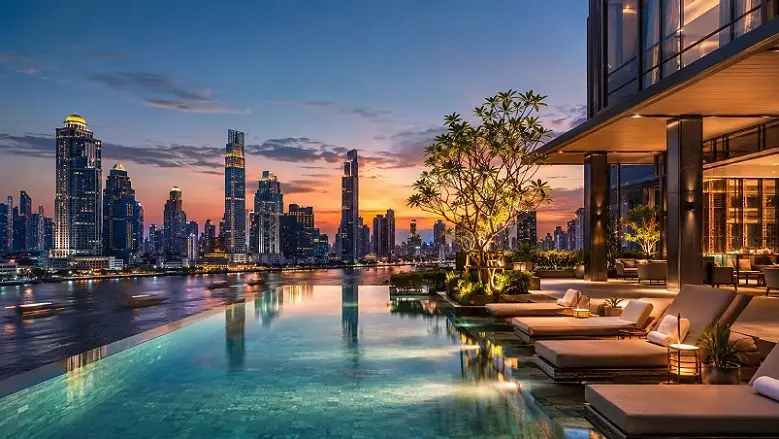
Image Credit: Thailand Hotel News
Recent industry data highlights the resilience of tourism worldwide. (Note that none of this data by STR is audited or verified by third parties.) According to STR’s Year-to-Date March 2026 figures, global revenue per available room (RevPAR) increased by 4.4 percent compared to the previous year. The ‘positive performance’ has been fueled by stronger travel activity across multiple regions and accommodation categories. In Thailand, the momentum has been particularly evident, with tourism demand continuing to expand despite global economic uncertainties. In the midst of this claimed encouraging outlook, this Thailand Hotel News report examines how changing travel patterns, the rise of the premium hotel category, and IHG’s aggressive expansion strategy are reshaping the hospitality landscape across the Kingdom.
Global Tourism Recovery Continues to Strengthen
The latest hospitality performance indicators point to a tourism sector that remains firmly on an upward trajectory. Across the globe, travelers are returning in greater numbers, supporting hotel revenues and occupancy levels. (According to IHG Hotels)
Within Asia, Thailand and China have emerged as two of the region’s most influential tourism engines. Thailand’s RevPAR increased by 2.9 percent, while arrivals from China surged by an impressive 23 percent. Domestic tourism also contributed to growth, expanding by 2 percent during the same period.
Industry analysts identify the top ten tourism source markets driving travel demand as China, Thailand, Japan, the United States, Russia, the United Kingdom, India, South Korea, Germany, and Singapore. Together, these markets continue to generate substantial visitor flows that support hotel operators across the region.
For Thailand, the resurgence of Chinese travelers represents a particularly important development. Chinese tourists have long been among the country’s most valuable visitor segments, and their return is helping sustain occupancy rates and room revenues across major destinations including Bangkok, Phuket, Pattaya, Chiang Mai, Krabi, and Koh Samui.
Premium Hotels Become the Industry’s New Growth Leader
While tourism demand is supposedly growing broadly, one hotel segment is outperforming all others: premium hospitality.
Traditionally, luxury hotels dominated discussions around growth and profitability. However, recent market performance suggests that upscale and upper-midscale properties are increasingly becoming the preferred choice for modern travelers.
Economic research from Oxford Economics indicates that lifestyle-driven households are expected to grow rapidly over the coming decade, reaching approximately 670 million households globally by 2035. These consumers are increasingly making travel decisions based on experiences, design, location, and value rather than simply seeking the most luxurious accommodation available.
This behavioral shift is producing measurable results.
According to the CoStar Hospitality National Report Thailand for May 2026, premium hotels have emerged as the strongest-performing category in terms of occupancy. (Note that CoStar received lots of monies directly or indirectly by big hotel chains or brands to generate such reports so as to convince hotel owners to utilize the management services of such hotel management companies or brands). The segment effectively bridges the gap between mainstream hotels and high-end luxury properties, offering elevated experiences at more accessible price points.
Demand growth has substantially exceeded new room supply within this category. Since the beginning of 2026, hotel room supply increased by only 0.8 percent, while accommodation demand expanded by 4.5 percent. This imbalance has created favorable operating conditions for hotel owners and operators focused on the premium market.
The occupancy figures clearly demonstrate the trend.
Over the last twelve months, premium hotels achieved an occupancy rate of 69.6 percent, outperforming both luxury and lifestyle properties at 66.8 percent and mainstream hotels at 64.4 percent. (Unverified by third parties)
The gap widened even further during the May Year-to-Date period. Premium hotels recorded occupancy of 78.7 percent, ahead of luxury and lifestyle properties at 76.1 percent and mainstream hotels at 72.4 percent.
Understanding the Modern Premium Traveler
The rise of premium hotels is closely linked to the changing expectations of today’s travelers.
One of the most influential drivers is the continued expansion of the global middle class, particularly in China. These travelers possess considerable spending power but are increasingly focused on maximizing value rather than pursuing luxury for its own sake.
Instead of extravagant experiences, many consumers now seek authentic local connections, distinctive design, personalized service, and memorable experiences that feel unique and meaningful.
Industry experts describe this behavior as both “experience-driven” and “cost-conscious.” Travelers want accommodations that reflect local culture, offer convenience, and provide lifestyle-oriented amenities while remaining reasonably priced.
Many premium hotels have successfully adapted to these expectations by offering sophisticated experiences with average room rates above US$100 per night, while avoiding the higher costs associated with luxury resorts.
Another major factor driving demand is the rise of “Blended Travel,” where business and leisure travel merge into a single trip. Guests increasingly seek properties that support both productivity and relaxation.
In response, hotel operators are redesigning rooms to include dedicated spaces for work, sleep, and leisure. Wellness-focused features are also becoming increasingly important, with guests prioritizing sleep quality, nutritious cuisine, fitness facilities, and overall wellbeing.
IHG Expands Aggressively Across Thailand
Recognizing these market dynamics, IHG Hotels & Resorts is moving aggressively to strengthen its presence in Thailand.
According to Vivek Balla, Managing Director for Southeast Asia and Korea at IHG Hotels & Resorts, the company remains highly optimistic about the future of tourism both globally and within Thailand.

Image Credit: IHG
IHG currently operates 42 hotels across Thailand under 11 brands. Its portfolio is divided among Mainstream properties representing 50 percent of the portfolio, Luxury and Lifestyle brands accounting for 40 percent, Premium properties contributing 5 percent, and Suites making up the remaining 5 percent.
To capitalize on future demand, the company plans to add 39 new hotels across the country.
Of these developments, approximately 41 percent—or 16 hotels—will belong to the Mainstream category. However, premium and lifestyle brands will play a major strategic role in helping the company capture emerging traveler preferences.
Key Brands Driving Future Growth
Several IHG brands are expected to serve as growth engines within Thailand over the coming years.
-voco Hotels
One of the fastest-growing brands within the IHG portfolio is voco Hotels, which focuses on converting independent hotels into internationally branded properties.
The company aims to reach 200 hotels worldwide within ten years of the brand’s launch in 2021.
Thailand has already welcomed voco Bangkok Surawong, formerly known as the Tawanna Hotel. Additional projects have been secured in Phuket, including voco Phuket Patong and voco Phuket Bang Tao, both expected to open within the next two to three years.
-Crowne Plaza
IHG is also strengthening its Crowne Plaza brand to capitalize on blended travel demand.
The brand’s room designs emphasize three distinct zones dedicated to work, sleep, and relaxation.
Within the next 12 to 18 months, two major properties are scheduled to open in Bangkok: Crowne Plaza Bangkok Rama 9 and Crowne Plaza Bangkok Grand Sukhumvit.
Both developments are expected to exceed 500 rooms, making them the largest Crowne Plaza hotels in Thailand.
-Ruby Hotels
Ruby Hotels represents IHG’s push into the urban lifestyle category.
Already operating around 40 properties across Europe and the United States, the brand intends to expand beyond 120 locations during the next decade.
Discussions regarding Thai expansion remain at an early stage, although Bangkok, Phuket Town, and Pattaya have emerged as locations of interest.
-Noted Collection
IHG’s Noted Collection focuses on preserving the unique identity of independent hotels while providing access to the company’s global systems, distribution network, and operational expertise.
The brand sees considerable opportunities in Thailand’s leading tourism destinations, including Bangkok, Phuket, Koh Samui, Krabi, Pattaya, and Chiang Mai.
Looking Beyond Geopolitical Uncertainty
While global conflicts continue to generate uncertainty, IHG believes its diversified international portfolio provides a strong buffer against regional disruptions.
Responding to questions regarding ongoing tensions in the Middle East, Vivek Balla acknowledged that certain markets dependent on Middle Eastern travelers have experienced some decline in visitor numbers.
However, he emphasized that strong performance across other regions continues to support overall business results. Markets such as China and India remain particularly promising, while Thailand’s domestic tourism sector provides an additional layer of stability.
The company therefore views current geopolitical challenges as temporary rather than structural obstacles.
Thailand’s tourism fundamentals remain robust, supported by strong international demand, expanding infrastructure, improving connectivity, and an increasingly diversified visitor base.
As premium hospitality continues to outperform traditional luxury segments, hotel operators are adjusting strategies to capture evolving consumer preferences. IHG’s decision to add 39 new hotels across Thailand reflects more than simple expansion—it signals confidence in the country’s ability to remain one of Asia’s premier tourism destinations for years to come. The combination of rising middle-class travel, growing demand for lifestyle-oriented accommodation, and the resilience of Thailand’s tourism ecosystem creates a favorable environment for sustained investment. With occupancy levels reaching record highs in the premium category and demand growing significantly faster than supply, the outlook remains exceptionally positive. As travelers increasingly seek value, authenticity, and flexibility, Thailand’s hotel industry appears well-positioned to benefit from the next chapter of global tourism growth, supported by major international operators that continue to place substantial bets on the Kingdom’s long-term potential.
For more on IHG Hotels, visit:
For the latest on developments in the local hospitality industry in Thailand, keep on logging to Thailand Hotel News.