

Key points
- The global travel and hospitality sector is entering a period of renewed uncertainty as escalating fuel prices, largely driven by the unresolved Middle-East crisis, begin to ripple across multiple industries.
- This dual impact is placing hotel operators in a difficult position, as they struggle to balance pricing strategies with maintaining occupancy levels.
- The surge in fuel prices is not only affecting airlines and hotels but also contributing to inflationary pressures across the global economy.
Hotel News: Global Turbulence Begins to Reshape Travel Demand
The global travel and hospitality sector is entering a period of renewed uncertainty as escalating fuel prices, largely driven by the unresolved Middle-East crisis, begin to ripple across multiple industries. Airlines, which are highly sensitive to fluctuations in jet fuel costs, are among the first to react. Many carriers are now raising ticket prices while simultaneously cutting less profitable routes, reducing overall flight capacity worldwide. This contraction in air travel availability is already having a noticeable knock-on effect on tourism-dependent sectors, particularly hotels. As accessibility becomes more limited and travel costs rise, consumers are increasingly reconsidering discretionary trips.
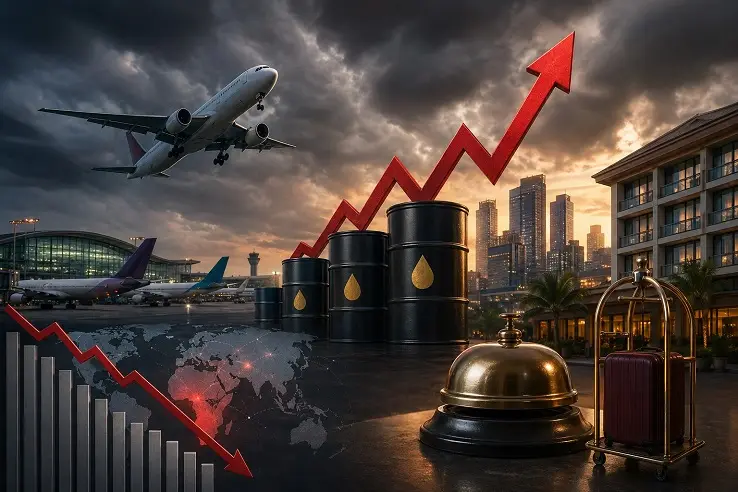
Image Credit: Thailand Hotel News
Airlines Tighten Operations as Costs Surge
In response to sustained increases in fuel expenses and ongoing supply chain disruptions, airlines are adopting aggressive cost-control strategies. This Hotel News report observes that carriers across Asia, Europe, and North America have begun scaling back flight frequencies, especially on long-haul and secondary routes. Budget airlines, which operate on thinner margins, are particularly vulnerable and have been among the first to implement route cuts. At the same time, premium carriers are shifting toward higher fares to protect profitability, placing additional financial pressure on travelers. As ticket prices climb, leisure travel demand—especially among middle-income groups—is beginning to soften, creating a cascading impact on global tourism flows.
Hotels Face Declining Occupancy and Revenue Pressure
Hotels around the world, especially those heavily reliant on international tourists, are starting to feel the strain. With fewer flights available and higher travel costs, occupancy rates in many key destinations are showing early signs of decline.
Urban hotels and resort properties that previously benefited from strong inbound tourism are now facing booking slowdowns. Business travel, while more resilient, is also being reassessed as companies tighten budgets in response to broader economic pressures. This dual impact is placing hotel operators in a difficult position, as they struggle to balance pricing strategies with maintaining occupancy levels. The result is growing concern among investors about the near-term outlook for hotel stocks.
Wider Economic Impact Intensifies Industry Concerns
The surge in fuel prices is not only affecting airlines and hotels but also contributing to inflationary pressures across the global economy. Transportation costs are rising, supply chains are becoming more expensive to maintain, and consumer spending power is being gradually eroded. These factors collectively reduce the willingness and ability of individuals to travel. In many markets, households are prioritizing essential expenses over leisure activities, further dampening demand for hotel stays. As inflation persists, the hospitality sector could face a prolonged period of subdued growth, particularly in regions heavily dependent on international arrivals.
Investor Sentiment Turns Cautious
Against this backdrop, market analysts are increasingly advising caution when it comes to hotel stocks. The combination of reduced travel demand, higher operational costs, and ongoing geopolitical instability is creating a challenging investment environment. Many investors are shifting their focus toward more stable sectors, while others are adopting a wait-and-see approach. Expectations are growing that the current situation may not resolve quickly, with some forecasts suggesting that elevated fuel prices and travel disruptions could persist for several years.
The evolving situation highlights the interconnected nature of global industries and underscores how geopolitical tensions can quickly translate into economic consequences. For the hospitality sector, adaptability will be critical, but the road ahead remains uncertain. Investors and operators alike are bracing for continued volatility as the industry navigates this complex and shifting landscape, with recovery timelines becoming increasingly difficult to predict.
For the latest on the global hospitality industry, keep on logging to Thailand Hotel News.