

Key points
- Thailand’s seizure of more than two tonnes of premium French meat and animal products at Suvarnabhumi Airport has raised serious concerns about imported food safety and the potential involvement of luxury hotels, upscale restaurants, and foreign chefs in purchasing products that allegedly entered the country without mandatory veterinary inspections.
- Sorawut Nuengchamnong, secretary to the agriculture and cooperatives minister and commander of the joint operations center, explained that the shipment’s documentation authorized only fishery products, not the meat and animal products discovered during inspection.
- Claims involving a prominent French chef and alleged customer food-poisoning from steaks and burgers served at his restaurants have also circulated, but no verified evidence currently establishes a connection between those complaints and the confiscated shipment.
Thailand’s seizure of more than two tonnes of premium French meat and animal products at Suvarnabhumi Airport has raised serious concerns about imported food safety and the potential involvement of luxury hotels, upscale restaurants, and foreign chefs in purchasing products that allegedly entered the country without mandatory veterinary inspections.
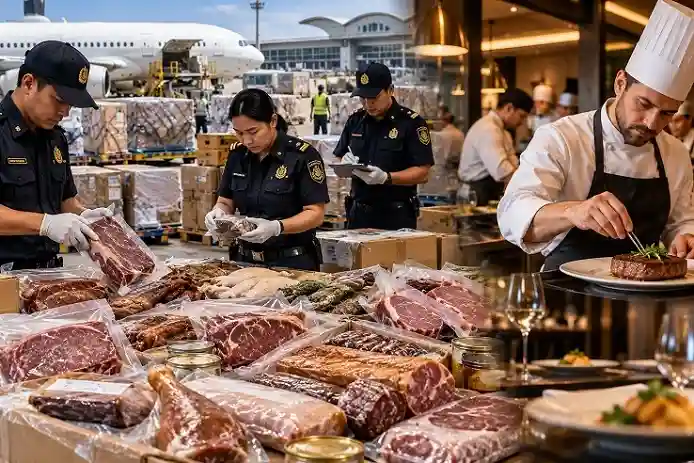
Image Credit: Thailand Hotel News
The confiscated shipment, valued at approximately 1.2 million baht, has brought renewed attention to Thailand’s food import regulations and questions surrounding the sourcing practices of establishments serving expensive imported meats.
Major Airport Operation Uncovers Unauthorized French Meat Imports
The operation was conducted by the Agriculture and Cooperatives Ministry’s Phaya Phirun Joint Operations Centre for Agricultural and Food Security, working alongside the Department of Livestock Development and the Customs Department.
Authorities acted on intelligence concerning a prominent premium meat importer suspected of bringing animal products into Thailand without obtaining the necessary livestock permits or completing mandatory disease and hygiene inspections. The company was well-known for supplying food products to numerous hotels in Bangkok and across Thailand and even for prominent food events.
Officers inspecting an inbound cargo warehouse at Suvarnabhumi Airport discovered substantial quantities of French animal products mixed with fishery and agricultural shipments.
Sorawut Nuengchamnong, secretary to the agriculture and cooperatives minister and commander of the joint operations center, explained that the shipment’s documentation authorized only fishery products, not the meat and animal products discovered during inspection.
Officials subsequently confiscated 21 categories of animal products weighing more than 2,000 kilograms, with a declared value of 1,201,851.50 baht.
Premium Meats Intended for Thailand’s Luxury Dining Market
The seized products included salted beef, wild boar meat, wild boar liver, smoked pork cheeks, smoked turkey breast, chilled quail, pigeon carcasses, duck meat, duck breast, duck legs, bone-in lamb loin, canned beef ham, salami, and Parma ham.
Many of these products are commonly associated with European fine dining and specialty restaurant menus.
Authorities indicated that the imported goods were allegedly intended for hotel restaurants and upscale dining establishments, where premium European meats can command substantial prices.
This Thailand Hotel News report highlights the broader implications for Thailand’s hospitality industry, particularly establishments relying on imported specialty meats to attract affluent customers and international visitors.
Questions Emerge Over Hotel and Restaurant Purchasing Practices
The seizure has prompted questions about whether businesses previously purchasing products from the importer adequately verified their suppliers’ regulatory compliance.
Investigations have revealed that several prominent Bangkok hotels, hotel restaurants, and European dining establishments may have maintained purchasing relationships with the company.
Hotels or restaurants found purchasing such products could face criminal charges while chefs found having dealings with the concerned company and buying such meats could face criminal charges and deportations.
The name of the food importer and the hotels and restaurants involved will be made public in a few days’ time.
Claims involving a prominent French chef and alleged customer food-poisoning from steaks and burgers served at his restaurants have also circulated, but no verified evidence currently establishes a connection between those complaints and the confiscated shipment.
Investigators would need to establish relevant facts, including the products purchased, applicable legal obligations, and whether individual businesses or chefs knowingly participated in unlawful activities.
Food Safety Concerns Extend Beyond Import Documentation
Livestock inspectors collected samples from the confiscated products for laboratory analysis to determine potential disease and safety risks.
Officials warned that unauthorized animal imports could introduce serious livestock diseases, including foot-and-mouth disease, lumpy skin disease, and African swine fever.
Such outbreaks could cause substantial economic damage to Thailand’s agricultural sector while undermining confidence in food supply chains.
Although these diseases present different risks to livestock and humans, the absence of mandatory inspections raises legitimate concerns about product traceability, handling, and regulatory oversight.
Nevertheless, improperly documented imports should not automatically be characterized as contaminated or responsible for food poisoning without supporting laboratory findings.
The entire confiscated shipment remains detained pending destruction, while the relevant departments pursue legal proceedings.
Criminal Penalties and Potential Immigration Consequences
Authorities indicated that the suspected import violations could fall under Section 31 of the Animal Epidemics Act 2015 and provisions of the Customs Act 2017.
Businesses or individuals found to have knowingly participated in unlawful importation or related offenses could face prosecution, depending on the evidence and applicable legislation.
Foreign nationals convicted of relevant offenses could also encounter immigration consequences and deportation.
The investigation underscores why hotels and restaurants should maintain verifiable supplier records, confirm import documentation, and conduct appropriate food safety checks.
Stronger Enforcement Across Thailand
Animal quarantine checkpoints nationwide have been instructed to intensify surveillance and enforcement against unauthorized livestock and animal-product imports.
Members of the public and businesses can report suspected violations through the Department of Livestock Development’s DLD 4.0 application.
For Thailand’s hospitality industry, the incident reinforces the importance of transparent procurement and regulatory compliance. While the seizure itself is significant, any wider allegations involving hotels, restaurants, or individual chefs must be supported by documented evidence before responsibility can be established.
Protecting consumer confidence requires thorough investigations, reliable laboratory findings, and fair enforcement that distinguishes deliberate violations from businesses unknowingly affected by an importer’s conduct.