

Key points
- As part of a major enforcement initiative, the Bangkok Metropolitan Council, working under the Bangkok Metropolitan Administration (BMA), has announced that it will begin comprehensive inspections of hotels and tourist accommodation businesses across the capital.
- This Thailand Hotel News report highlights how the inspections will be carried out in cooperation with the Royal Thai Police and other relevant government agencies to verify hotel licensing, examine building and structural compliance, investigate suspected foreign nominee arrangements used to illegally own hotels or accommodation properties, and ensure operators are complying with Thailand’s building control and hotel legislation.
- The issue has become significant enough for the Bangkok Metropolitan Council to establish a special committee tasked with monitoring, investigating and supervising the misuse of buildings throughout the capital.
Over the last few years, Bangkok’s tourism recovery has brought renewed energy to the Thai capital, with visitor numbers continuing to climb though sometimes fluctuating and accommodation demand rising across some of the city’s most popular districts. However, alongside this resurgence has emerged an increasingly serious concern over illegal hotels, unauthorized building conversions, and potential foreign nominee ownership structures that authorities believe could undermine public safety, fair business practices, and confidence in the tourism industry.
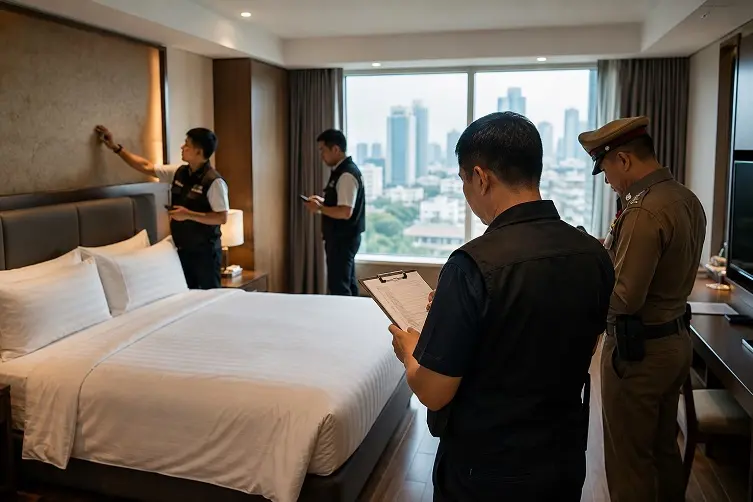
Image Credit: Thailand Hotel News
As part of a major enforcement initiative, the Bangkok Metropolitan Council, working under the Bangkok Metropolitan Administration (BMA), has announced that it will begin comprehensive inspections of hotels and tourist accommodation businesses across the capital. This Thailand Hotel News report highlights how the inspections will be carried out in cooperation with the Royal Thai Police and other relevant government agencies to verify hotel licensing, examine building and structural compliance, investigate suspected foreign nominee arrangements used to illegally own hotels or accommodation properties, and ensure operators are complying with Thailand’s building control and hotel legislation.
Tourism Boom Brings New Challenges
The recovery of Thailand’s tourism sector has transformed Bangkok into one of Asia’s busiest travel destinations once again. Popular areas including Phra Nakhon, Yaowarat, Sampeng, Sukhumvit, Silom and communities along the Chao Phraya River continue to attract increasing numbers of both domestic and international visitors.
The strong growth in arrivals has naturally increased demand for hotel rooms, serviced apartments, guesthouses and short-term accommodation. While many licensed operators have benefited from the tourism recovery, authorities have become increasingly concerned that some property owners have sought to capitalize on the surge by illegally converting commercial buildings, residential properties and ageing structures into unlicensed hotels or daily rental accommodation.
Officials believe this growing trend not only breaches Thailand’s Hotel Act and Building Control Act but also introduces significant risks for guests, neighboring residents and emergency services should an accident occur.
Special Committee to Lead Extensive Investigations
The issue has become significant enough for the Bangkok Metropolitan Council to establish a special committee tasked with monitoring, investigating and supervising the misuse of buildings throughout the capital.
The committee will conduct investigations without a fixed completion date, allowing members to pursue cases thoroughly while identifying broader patterns of illegal activity. Its responsibilities extend beyond simply identifying unlicensed hotels and include examining whether buildings have undergone unauthorized renovations, structural alterations or changes in their intended use without official approval.
Investigators have already expressed concerns that many buildings have been modified in violation of the Building Control Act of 1979, with alterations affecting structural integrity, fire protection systems, emergency exits and engineering standards that were never designed to accommodate hotel operations.
Authorities believe that comprehensive inspections will help identify unsafe properties before serious incidents occur while also strengthening compliance across Bangkok’s rapidly expanding accommodation sector.
Structural Safety Remains a Major Priority
Building safety has become one of the central focuses of the investigation.
Officials note that Bangkok has experienced numerous incidents over the years involving ageing buildings, including balcony collapses, falling advertising signs and structural failures that have often been linked to unauthorized additions, excessive loading beyond original engineering specifications or inadequate maintenance.
When buildings originally designed for commercial or residential use are converted into hotels without proper engineering assessments, additional occupants, new plumbing systems, heavier electrical demands and interior modifications can significantly increase structural stress.
Fire prevention measures also become a major concern. Buildings that lack properly designed evacuation routes, fire-resistant construction, sprinkler systems or adequate emergency access can place both guests and surrounding communities at considerable risk during emergencies.
Inner Bangkok Presents Unique Risks
Some of the greatest concerns center on older commercial districts where traditional shophouses have increasingly been transformed into boutique hotels, hostels and short-term tourist accommodation.
Neighborhoods featuring narrow alleyways and densely packed buildings often provide limited access for fire engines, ambulances and rescue personnel. Should a major fire or structural emergency occur, emergency responders could face significant delays reaching affected properties.
Authorities also warn that several buildings have been converted into businesses with substantial electrical consumption, including factories and commercial enterprises operating alongside accommodation facilities. Such combinations may substantially increase fire hazards while placing additional strain on ageing electrical infrastructure.
Nominee Ownership Under Close Scrutiny
Beyond licensing and structural compliance, investigators will also examine allegations that some foreign investors may be using Thai nominee arrangements to illegally control hotel businesses or accommodation properties.
Thai law places restrictions on foreign ownership in various business sectors, including certain hospitality-related operations. Authorities therefore intend to investigate ownership structures carefully to determine whether nominee arrangements have been established to circumvent legal requirements.
The inspections are expected to include reviews of company registrations, ownership documentation and operational control to ensure businesses comply fully with existing legislation.
Online Rentals Creating Enforcement Difficulties
Authorities acknowledge that enforcement has become increasingly challenging as many operators advertise rooms through online booking platforms while avoiding formal hotel licensing requirements.
Instead of registering as hotels, some property owners reportedly rent rooms on a daily basis while classifying their buildings as residential or commercial properties. This creates legal complexities for district offices attempting to suspend operations, even when accommodation businesses clearly function as hotels under Thai law.
Officials also recognize that complaints regarding illegal building use have often resulted in slow enforcement due to staffing and resource limitations, allowing some operators to continue operating despite repeated concerns from local communities.
The new coordinated inspections are intended to improve enforcement efficiency while increasing accountability among all agencies responsible for overseeing building safety and hotel regulation.
Protecting Bangkok’s Reputation as a Global Tourism Destination
The Bangkok Metropolitan Council believes that strengthening enforcement is essential if Bangkok is to maintain its reputation as a safe, world-class tourism destination.
While tourism growth continues to generate employment, investment and substantial economic benefits, authorities stress that expansion must never come at the expense of public safety or legal compliance. Licensed hotel operators who invest in meeting regulations should also be protected from unfair competition posed by illegal accommodation businesses that avoid licensing costs and safety requirements.
The upcoming inspections are therefore expected to play an important role in identifying unsafe buildings, ensuring hotels operate legally, detecting suspected nominee ownership arrangements and reinforcing confidence among visitors choosing Bangkok as their destination.
Strong tourism growth and strict regulatory enforcement must go hand in hand if Bangkok is to continue attracting visitors while safeguarding residents, businesses and tourists alike. By combining comprehensive inspections, stronger inter-agency cooperation, improved accountability and consistent application of the law, city authorities aim to create a safer accommodation sector that supports sustainable tourism growth for many years to come.
For the latest developments in the hospitality industry in Thailand, keep on logging to Thailand Hotel News.