

Key points
- Speaking at the Democrat Party headquarters, Deputy Leader and party-list MP Chaichana Dechdecho said current estimates indicate that Thailand has only around 20,000 legally registered and licensed hotels, while more than 80,000 establishments remain unlicensed, representing approximately 70 to 80 percent of the country’s accommodation sector.
- The findings, he argued, expose weaknesses in Thailand’s ability to accurately monitor foreign arrivals and movements, particularly when tens of thousands of unlicensed accommodation providers are believed to be operating entirely outside the official reporting framework.
- Travelers should always check before making a booking if a hotel is properly licensed as even certain international brand name 4- and 5-star hotels in Thailand that are on common online booking platforms are unlicensed.
Thailand Hotel News: Thailand’s accommodation sector has come under renewed scrutiny after a senior Democrat Party politician claimed that around 80,000 hotels and accommodation providers across the country are operating without the required licenses. The figures, revealed on July 7, 2026, have sparked fresh debate over regulatory enforcement, visitor safety, national security and the long-standing challenge of bringing thousands of informal accommodation businesses into the legal system.
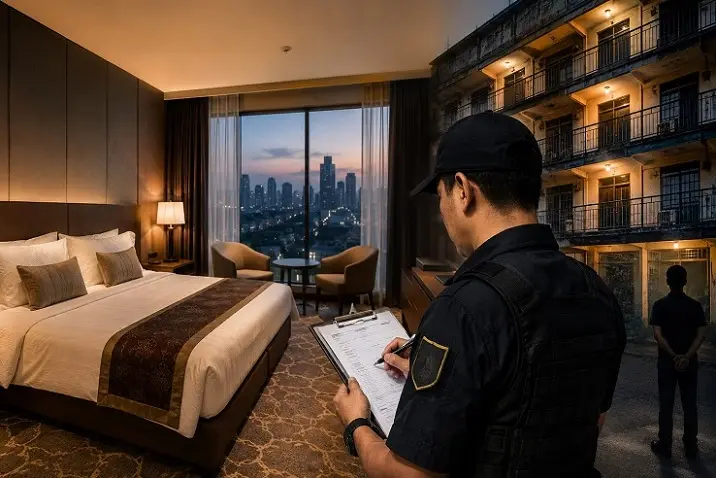
Image Credit: Thailand Hotel News
Speaking at the Democrat Party headquarters, Deputy Leader and party-list MP Chaichana Dechdecho said current estimates indicate that Thailand has only around 20,000 legally registered and licensed hotels, while more than 80,000 establishments remain unlicensed, representing approximately 70 to 80 percent of the country’s accommodation sector. This Thailand Hotel News report comes as concerns continue to grow over gaps in monitoring foreign visitors, illegal business operations and the potential exploitation of accommodation providers by organized criminal networks.
Concerns Over Registration and Reporting
According to Chaichana, the issue extends well beyond licensing alone. He said complaints received from members of the public concerning the activities of some foreign visitors prompted a closer examination of compliance with existing reporting requirements.
Under Thai law, hotels accommodating foreign nationals are required to report guest details to both the Department of Provincial Administration and the Immigration Bureau. However, Chaichana claimed investigations found that even among the country’s estimated 20,000 licensed hotels, only around 12,000 regularly submitted the required guest information.
He stated that approximately 70 percent of those complying with reporting obligations used electronic systems, while the remaining 30 percent relied on paper-based submissions. The findings, he argued, expose weaknesses in Thailand’s ability to accurately monitor foreign arrivals and movements, particularly when tens of thousands of unlicensed accommodation providers are believed to be operating entirely outside the official reporting framework.
Majority of Accommodation Said to be Unlicensed
Chaichana described the reported scale of unlicensed accommodation as deeply concerning, saying that between 70 and 80 percent of hotels and accommodation providers nationwide are currently operating without proper registration.
He urged the Ministry of Interior and the Department of Provincial Administration to accelerate enforcement efforts aimed at bringing these establishments into full legal compliance.

Image Credit: StockShots
According to the Democrat Party deputy leader, authorities should strengthen registration procedures while establishing a comprehensive and reliable database covering foreigners entering Thailand for tourism, employment and other purposes.
He stressed that improving compliance would not only strengthen regulation within the tourism industry but also assist law enforcement agencies responsible for immigration and public security.
Bonafide Travelers and Tourists Could Face Insurance Claim Issues in Situation of Accidents, Thefts, Fire or Health Issues
Experts also warned that bonafide travelers or tourist staying in unlicensed hotels could face insurance claims issues if ever there were incidences of thefts, fires, accidents or health issues.
Travelers should always check before making a booking if a hotel is properly licensed as even certain international brand name 4- and 5-star hotels in Thailand that are on common online booking platforms are unlicensed! Always ask for a copy of the relevant hotel documents or proof that they have a valid license when making a booking.
Fears Criminal Networks Could Exploit Loopholes
A significant focus of Chaichana’s remarks centered on concerns that criminal organizations could exploit weaknesses in Thailand’s accommodation sector.
He warned that unlicensed hotels and accommodation providers may provide opportunities for transnational criminal groups to establish operational bases while avoiding detection by authorities.
Among the criminal activities highlighted were illegal call center operations, online scam syndicates and organized fraud networks that have increasingly targeted Thai citizens and victims across the region.
Chaichana said stronger enforcement measures are needed to prevent accommodation loopholes from becoming safe havens for criminal enterprises and called for coordinated action involving the Ministry of Interior, the Department of Provincial Administration, immigration officials and other national security agencies.
Wider Debate on Hotel Regulation
The latest comments also arrive as Thailand continues reviewing broader reforms to its hotel regulatory framework. Authorities have been examining possible amendments to hotel regulations aimed at making legal registration easier for smaller accommodation operators while maintaining safety, taxation and reporting standards.
At the same time, enforcement agencies have continued carrying out inspections and crackdowns on suspected illegal hotels in several major tourism destinations following complaints involving unlicensed operations, alleged nominee ownership arrangements, money laundering investigations and other regulatory breaches.
Industry observers have long noted that simplifying compliance requirements for smaller operators could encourage more businesses to enter the formal economy while improving oversight and strengthening consumer confidence. However, officials also continue to emphasize that licensing requirements and mandatory reporting obligations remain essential components of Thailand’s tourism management and national security framework.
Chaichana’s latest statements have again placed the spotlight on the significant gap between licensed and unlicensed accommodation providers, while raising questions over enforcement capacity and the effectiveness of existing monitoring systems. Whether the reported estimates ultimately lead to intensified inspections, legislative reforms or new compliance initiatives remains to be seen.
Nevertheless, the issue underscores the importance of maintaining accurate accommodation records, ensuring operators comply with legal obligations and protecting both Thailand’s tourism reputation and public safety. Government agencies are now being urged to work together to strengthen oversight, close regulatory loopholes and ensure accommodation providers operate within the country’s legal framework.
For the latest on the Thai hospitality industry, keep on logging to Thailand Hotel News.