

Key points
- A hotel management company that began its journey in Thailand a decade ago is now setting its sights on one of the most ambitious expansion plans in the hospitality sector.
- Koko Global Hospitality (KGH), the company behind the growing Kokotel brand, is aiming to expand its portfolio to an impressive 1,000 hotels across 10 countries by 2035, building on a business model that has already transformed the management of mid-sized hotels in Thailand and beyond.
- Amid growing competition within the hospitality industry, this Thailand Hotel News report finds that KGH’s confidence stems from a highly specialized management model designed specifically for hotel owners who often struggle to operate properties in the mid-sized segment.
Thailand Hotel News: A hotel management company that began its journey in Thailand a decade ago is now setting its sights on one of the most ambitious expansion plans in the hospitality sector. Koko Global Hospitality (KGH), the company behind the growing Kokotel brand, is aiming to expand its portfolio to an impressive 1,000 hotels across 10 countries by 2035, building on a business model that has already transformed the management of mid-sized hotels in Thailand and beyond.

Image Credit: Kokotel
Founded in Thailand by Japanese entrepreneurs, KGH has steadily expanded its footprint over the past ten years through a combination of owner-operated properties and management contracts. Chief Executive Officer Rei Matsuda outlined the company’s philosophy, growth strategy, and international ambitions. Amid growing competition within the hospitality industry, this Thailand Hotel News report finds that KGH’s confidence stems from a highly specialized management model designed specifically for hotel owners who often struggle to operate properties in the mid-sized segment.
A Decade of Growth Across Three Nations
According to Matsuda, KGH currently operates 34 hotels across Thailand, the Philippines, and Japan under a variety of brands, with Kokotel serving as the flagship name. The brand itself originates from the Japanese word “kokoro,” meaning heart, reflecting the company’s emphasis on hospitality delivered with genuine care.
The company’s first property was Kokotel Surawong in Bangkok. Today, its portfolio includes 30 hotels in Thailand, three in the Philippines, and one in Japan. Combined, these properties account for more than 2,200 rooms. When ongoing projects currently in the development pipeline are included, the room count is expected to exceed 3,000.
Among the existing portfolio, four properties are directly owned by the group, including Kokotel Bangkok Surawong, Kokotel Chiang Mai Nimman, Kokotel Phuket Patong, and Kokotel Krabi Ao Nang. The remaining properties operate under management agreements with hotel owners.
Matsuda explained that direct investment in selected markets serves a strategic purpose. By establishing and operating hotels in new destinations, the company creates real-world case studies that demonstrate the effectiveness of its management approach to prospective investors and property owners. Once a market has been established, KGH focuses primarily on expanding through management contracts rather than direct ownership.
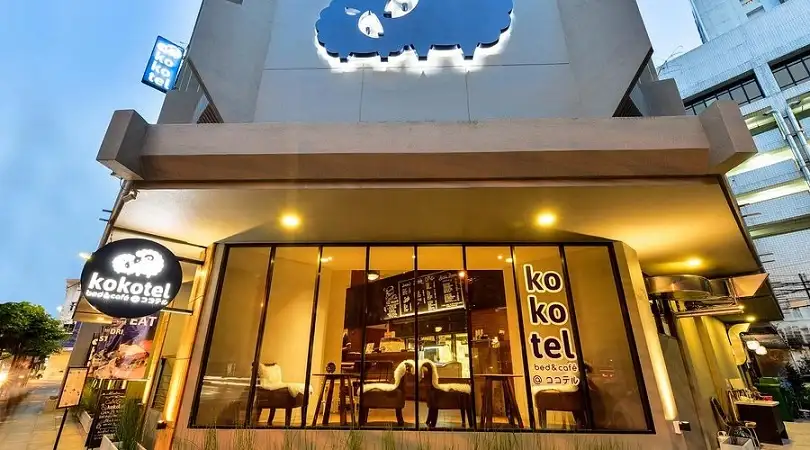
Image Credit: Kokotel
Solving the Mid-Sized Hotel Challenge
One of the defining characteristics of KGH’s strategy is its focus on mid-sized hotels, typically ranging from 50 to 150 rooms.
Matsuda believes this segment represents one of the most underserved areas of the hospitality industry. Large hotels with hundreds of rooms can justify employing full management teams and specialized departments, while smaller boutique properties can often be managed directly by their owners. Mid-sized hotels, however, frequently find themselves caught between these two models.
When Matsuda first entered the Thai market, she observed that most hotel management training and industry expertise were geared toward large-scale operations. As a result, owners of mid-sized hotels often lacked access to management solutions tailored to their unique operational needs.
Recognizing this gap, KGH developed systems specifically designed to help these property owners improve efficiency, increase profitability, and maintain service quality without the burden of excessive staffing costs.
Building Affordable Family-Friendly Experiences
At the heart of the Kokotel brand is a philosophy centered on delivering exceptional value for families and groups of friends.
Rather than positioning itself as a traditional budget hotel chain, Kokotel focuses on affordability combined with comfort, safety, and memorable guest experiences. Research conducted by the company indicated that many travelers, particularly female travelers, often spend more than expected during their trips. As a result, KGH aims to provide accommodations that allow guests to enjoy quality stays without significantly increasing overall travel expenses.
The company emphasizes three core pillars across its managed properties: strong safety standards, memorable “wow” experiences, and competitive pricing. Most Kokotel properties operate at room rates averaging around 1,800 baht per night, placing them in an attractive value-for-money segment that continues to appeal to both domestic and international travelers.
Centralized Operations Drive Efficiency
A major factor behind KGH’s success has been its centralized management model.
Instead of relying on large operational teams at individual hotels, many critical functions are handled through a centralized back-office structure. Accounting, human resources, sales, marketing, and operational support are coordinated centrally, enabling hotels to operate more efficiently while reducing costs.
This approach allows hotel managers to focus on guest experiences and revenue generation while benefiting from the expertise of specialized support teams.
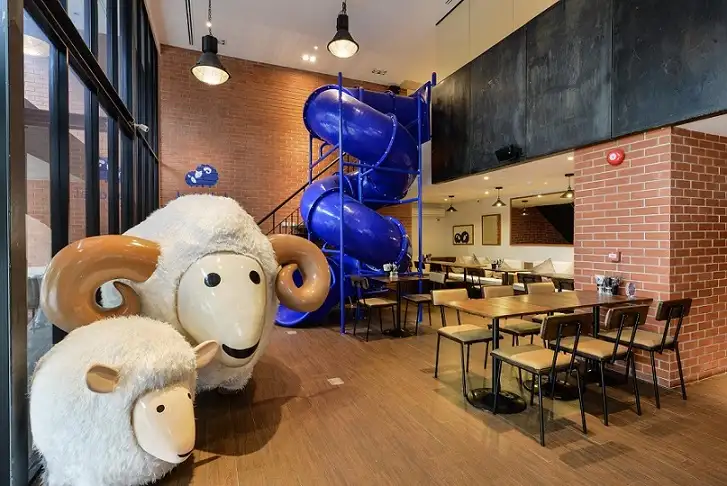
Image Credit: Kokotel
Another important component is KokoHub, the company’s centralized procurement and distribution platform. Through collective purchasing and professional supplier negotiations, partner hotels gain access to lower-cost goods and services. The resulting economies of scale help improve profitability for hotel owners while maintaining service standards for guests.
Expanding Beyond the Kokotel Brand
While Kokotel remains the company’s best-known brand, KGH has broadened its portfolio to accommodate different market segments and owner preferences.
One example is VIVTEL, a premium four-star lifestyle hotel brand that emphasizes contemporary design and elevated guest experiences. Properties under this banner include VIVTEL Phuket Patong, while The Rich Residence Sukhumvit Nana represents one of the largest hotels currently managed within the group’s premium portfolio.
The company also manages independent hotel brands, preserving their unique identities while applying professional operational expertise behind the scenes.
Looking ahead, KGH is developing an entirely new economy-focused hotel concept. This upcoming brand will target travelers seeking even lower room rates than those offered by Kokotel, with average pricing expected to be around 1,000 baht per night. The hotels will generally be smaller in size but designed to meet growing demand for affordable accommodation options.
Matsuda stressed that brand development is largely driven by the needs of property owners. Some owners seek complete rebranding, while others wish to retain their existing identity while benefiting from professional management services. KGH’s expanding brand portfolio is intended to address these varying requirements.
Notably, the company has no plans to enter the luxury five-star segment, believing that market is already well served by established international hotel management companies.
Global Ambitions with Thailand at the Center
Perhaps the most striking aspect of KGH’s future vision is its target of operating 1,000 hotels in 10 countries across six continents by 2035.
The company’s next potential expansion markets include India, the United Arab Emirates, and Australia, all of which are currently being evaluated. Meanwhile, Thailand remains a key growth market.
Several new projects are already being explored in destinations such as Krabi, Koh Samui, Hat Yai, Khon Kaen, and Udon Thani. Bangkok also continues to offer significant opportunities due to its strong tourism demand and growing hospitality sector.
Despite its international ambitions, KGH intends to keep its headquarters in Thailand. Matsuda emphasized that the company’s centralized operating structure will continue to be based in the kingdom, creating opportunities for talented Thai professionals to participate in global hospitality operations and build international careers.
As the hospitality industry continues to evolve, KGH’s journey demonstrates how a company that began with a focus on solving practical challenges for hotel owners can grow into an emerging international player. By concentrating on underserved mid-sized hotels, leveraging centralized operations, and developing flexible branding solutions, the group has carved out a distinct niche in a highly competitive sector. If its expansion strategy succeeds, the next decade could see a Thailand-based hospitality management company become one of the most widely recognized hotel operators across multiple continents, while continuing to place Thailand at the center of its global operations.
For more details on Kokotel Global Hospitality, visit:
https://www.kokoglobalhospitality.com/
For the latest on Kokotel Hospitality Group, keep on logging to Thailand Hotel News.