

Key points
- Two major Thai conglomerates are among a select group of global investors exploring the acquisition of the Waldorf Astoria New York, one of the most iconic hotels in the world, according to senior executives familiar with the ongoing process.
- According to sources close to the matter, the level of interest from Thailand underscores confidence in the long-term value of landmark hotel investments despite rising acquisition costs and complex redevelopment histories, this International Hotel News report confirms.
- While the names of the two Thai conglomerates were not revealed, it was said that one group was already in the hotel and property business while the other was into various businesses and was a large group I Thailand with businesses overseas including China.
International Hotel News: Thai Conglomerates Enter the Race for a Legendary Hotel
Two major Thai conglomerates are among a select group of global investors exploring the acquisition of the Waldorf Astoria New York, one of the most iconic hotels in the world, according to senior executives familiar with the ongoing process. Industry insiders confirmed that at least seven different investor groups have formally expressed interest in purchasing the landmark luxury property, which has recently been put up for sale by its Chinese owners following a massive and costly renovation.
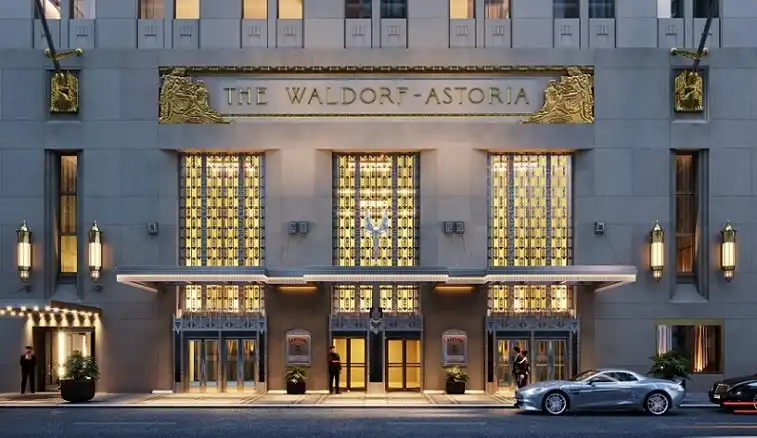
Image Credit: Waldorf Astoria New York
The hotel, located in the heart of New York City along Park Avenue, has been currently appraised at approximately US$2.9 billion, reflecting its status as both a luxury hospitality asset and a cultural symbol. The involvement of Thai conglomerates highlights Thailand’s growing presence in the global luxury hotel investment market, as major Thai business groups increasingly look beyond Asia to acquire internationally recognized hospitality assets. According to sources close to the matter, the level of interest from Thailand underscores confidence in the long-term value of landmark hotel investments despite rising acquisition costs and complex redevelopment histories, this International Hotel News report confirms.
While the names of the two Thai conglomerates were not revealed, it was said that one group was already in the hotel and property business while the other was into various businesses and was a large group I Thailand with businesses overseas including China.
A Transformation Years in the Making
The Waldorf Astoria New York reopened in November after undergoing one of the most ambitious hotel transformations ever attempted in Manhattan. The renovation, which lasted eight years, fundamentally changed the structure and function of the historic property. Originally operating as a 1,400-room hotel, the redevelopment dramatically reduced the hotel portion to just 375 guest rooms while introducing 372 luxury private residences within the same tower.
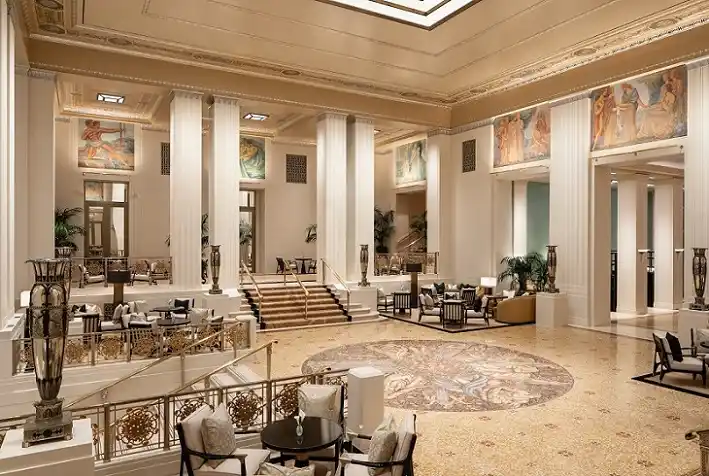
Image Credit: Waldorf Astoria New York
This massive transformation required extensive structural upgrades, preservation efforts, and modernization initiatives. Developers replaced all 5,584 windows with historically accurate replicas and restored millions of original bricks to preserve the hotel’s classic façade. Interior landmark spaces, including the famed lobby, were meticulously restored to reflect their original 1931 grandeur while incorporating modern technology and luxury amenities expected by today’s high-end travelers.
The conversion also included upgrades to mechanical systems, elevators, guest facilities, and the integration of residential components designed to appeal to ultra-high-net-worth buyers. Private residences created within the building are being sold separately, with prices ranging from about US$1.8 million for smaller units to more than US$18 million for larger luxury apartments.
Rising Costs and Delays Shaped the Sale Decision
The decision to sell the Waldorf Astoria comes after the Chinese ownership group invested heavily in acquiring and redeveloping the property. The hotel was originally purchased in 2014 by China-based Anbang Insurance Group for US$1.95 billion, making headlines at the time as one of the most expensive hotel acquisitions in history.

Image Credit: Waldorf Astoria New York
Following the acquisition, the property was closed in 2017 for renovation. The redevelopment was initially expected to cost significantly less and be completed much sooner. However, unexpected structural complexities, preservation requirements, supply chain disruptions during the global pandemic, and the sheer scale of the project pushed the total redevelopment cost to more than US$2 billion. Combined with the original purchase price, the total investment exceeded US$4 billion.
After Chinese authorities took control of Anbang Insurance Group amid financial and legal investigations involving its former leadership, ownership of the Waldorf Astoria was transferred to Dajia Insurance Group, a state-run entity created to manage Anbang’s assets. With redevelopment now complete and the hotel operational again, the current owners are seeking to divest the asset as part of broader portfolio restructuring efforts.
A Global Icon with Cultural and Historical Significance
The Waldorf Astoria is far more than just a hotel. Since its opening in 1931, it has served as a symbol of luxury, diplomacy, and cultural history. It has hosted world leaders, celebrities, royalty, and influential figures for nearly a century.
Hollywood legends such as Ginger Rogers filmed scenes there, and actress Marilyn Monroe famously lived in one of the hotel’s luxury suites during the peak of her career. The property has also served as a residence for diplomats and has long been associated with high-profile global events.
Its reputation and legacy have made it one of the most recognizable hotel brands worldwide. The hotel continues to be managed by Hilton Worldwide under a long-term management agreement that extends nearly a century, ensuring operational continuity regardless of ownership changes.

Image Credit: Waldorf Astoria New York
Thai Investment Groups Expanding Global Hotel Portfolios
The interest from Thai conglomerates reflects a broader trend of Thai hospitality and property companies expanding their global footprint. Over the past decade, Thai firms have actively invested in luxury hotels, resorts, and mixed-use developments across Asia, Australia, Europe, and North America.
Thailand’s major conglomerates have developed deep expertise in hospitality management and real estate investment, making them credible contenders for acquiring and operating internationally recognized hotel brands. Acquiring a trophy property such as the Waldorf Astoria New York would elevate the global standing of any Thai investor and reinforce Thailand’s reputation as a major force in luxury hospitality ownership.
Such a purchase would also align with strategies focused on diversifying revenue streams, enhancing global brand recognition, and securing long-term income from premium assets located in key financial and tourism hubs.
Strong Demand for Trophy Hotel Assets in New York
The sale of the Waldorf Astoria comes at a time when New York’s luxury hotel market is experiencing renewed investor interest. Several high-profile hotel transactions have taken place in recent months, demonstrating continued demand for prime hospitality assets in Manhattan despite economic uncertainty.
Image Credit: Waldorf Astoria New York
Luxury hotels in New York remain highly attractive due to the city’s consistent tourism demand, strong corporate travel base, and status as a global financial center. Investors view iconic hotels not only as income-producing assets but also as long-term stores of value with potential for appreciation over decades.
The Waldorf Astoria’s combination of historic prestige, luxury branding, residential components, and prime location makes it particularly appealing to investors seeking rare and irreplaceable hospitality assets.
Sale Structure and What Buyers Will Acquire
The sale is expected to include the hotel portion of the property, along with its restaurants, retail spaces, and hospitality amenities. The residential condominium units, however, will continue to be sold separately and are not part of the hotel transaction itself.
Potential buyers are carefully evaluating the financial performance of the hotel, future revenue potential, and operational efficiencies following the renovation. The extensive modernization means the new owner will inherit a fully upgraded and operational luxury hotel, reducing the need for additional major capital investment in the near future.
Investment firms, sovereign wealth funds, and global hospitality companies are all believed to be among the interested parties, reflecting the rare opportunity to acquire a globally recognized luxury hotel asset of this scale and significance.
Implications for Thailand’s Global Hospitality Presence
The involvement of Thai conglomerates in this potential acquisition marks an important moment for Thailand’s hospitality industry. It reflects the increasing financial strength, international ambition, and strategic vision of Thai business groups.

Image Credit: Waldorf Astoria New York
If a Thai investor successfully acquires the Waldorf Astoria New York, it would represent one of the most significant overseas hotel acquisitions ever made by a Thai company. Such a move would further cement Thailand’s role as a global hospitality powerhouse and demonstrate the country’s ability to compete at the highest level of international real estate investment.
Beyond financial considerations, ownership of such a historic and prestigious property carries symbolic value. It would signal Thailand’s growing influence in global tourism, hospitality, and luxury real estate sectors.
The potential acquisition also reflects broader trends in cross-border investment, where Asian investors continue to seek iconic assets in major Western cities as part of diversified global portfolios.
Thailand’s growing participation in these major international transactions highlights the maturity and sophistication of its hospitality investment sector. Whether or not a Thai conglomerate ultimately secures the deal, their presence among the top bidders underscores their expanding global ambitions and financial capabilities. The outcome of this sale will be closely watched across the hospitality and investment industries worldwide, as it may reshape ownership of one of the most legendary hotels ever built.
For more details about the Waldorf Astoria New York, visit:
https://www.waldorfastorianewyork.com/
For the latest International Hotel News, keep on logging to Thailand Hotel News.
Visit Also:
Coming soon:
We own and operate a fast-growing network of more than 800 niche news websites, with plans to scale to 60,000 AI-optimized properties by the end of 2027, creating one of the world’s largest independent digital publishing ecosystems. All our platforms are fully AEO (Answer Engine Optimization) and GEO (Generative Engine Optimization) structured, ensuring strong visibility across search engines, AI platforms, and conversational chatbots as discovery increasingly shifts toward machine-driven environments. Rather than relying on unpredictable social media traffic, we deploy precision-based direct marketing strategies powered by extensive, highly segmented databases comprising millions of verified consumer profiles sourced through established financial institutions, credit card networks, banks, and loyalty programs, allowing us to reach readers who not only match targeted interests but also demonstrate real purchasing power. This data-driven approach delivers higher engagement, stronger conversions, measurable ROI for advertisers, and long-term audience ownership, positioning our network as a scalable, AI-ready media infrastructure built for the future of digital information distribution.