

Key points
- A deadly Israeli airstrike struck the Ramada by Wyndham Downtown Beirut hotel building early on Sunday, March 8, 2026, marking one of the most dramatic incidents yet in the widening Middle East conflict as military operations increasingly reach civilian infrastructure in the Lebanese capital.
- In the midst of the unfolding crisis, this Hotel News report notes that frightened residents, hotel guests and displaced families temporarily staying in the building were seen evacuating in panic as rescue teams attempted to reach those trapped inside damaged sections of the property.
- The Ramada by Wyndham Downtown Beirut is a four-star hotel operating under the global Wyndham Hotels brand and has long been considered a recognizable accommodation option in the heart of the Lebanese capital.
Hotel News: A deadly Israeli airstrike struck the Ramada by Wyndham Downtown Beirut hotel building early on Sunday, March 8, 2026, marking one of the most dramatic incidents yet in the widening Middle East conflict as military operations increasingly reach civilian infrastructure in the Lebanese capital.
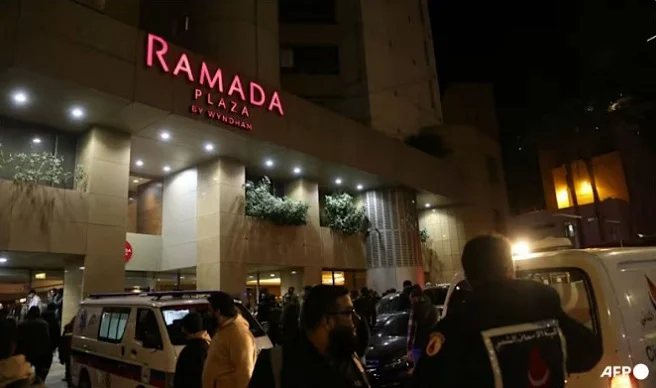
Image Credit: AFP/Ibrahim Amro
According to Lebanese authorities, the strike occurred in the early hours of the morning at around 3:00 a.m. local time when a precision missile targeted a specific apartment unit inside the Ramada hotel building in the coastal Raouche district of central Beirut. The powerful blast shattered windows, damaged parts of the building’s exterior and sent debris onto nearby streets as emergency responders rushed to the scene. In the midst of the unfolding crisis, this Hotel News report notes that frightened residents, hotel guests and displaced families temporarily staying in the building were seen evacuating in panic as rescue teams attempted to reach those trapped inside damaged sections of the property. The hotel was reported running at 100 percent occupancy level at the time of the strike and even its three meeting rooms were occupied as they were converted to make shift shelters for certain groups fleeing the war. Lebanese health officials later confirmed that at least four people were killed and approximately ten others were injured in the strike.
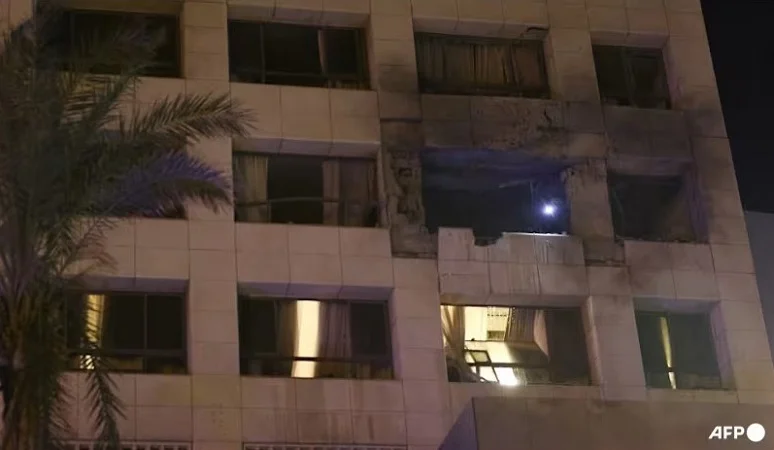
Image Credit: AFP/Ibrahim Amro
A Well-Known Downtown Hospitality Property
The Ramada by Wyndham Downtown Beirut is a four-star hotel operating under the global Wyndham Hotels brand and has long been considered a recognizable accommodation option in the heart of the Lebanese capital. The property was developed during Beirut’s tourism revival period in the early 2000s when international hotel groups began reinvesting in the city’s hospitality sector following years of instability.
Strategically located near several of Beirut’s most prominent landmarks, the hotel sits close to the popular Zaytouna Bay marina, the Forum de Beirut events complex and the capital’s central business district. Because of its location, the property has traditionally attracted a mixture of international tourists, corporate travelers and diplomatic visitors attending meetings or conferences in the city.
The hotel offers 99 modern air-conditioned guest rooms and suites designed with contemporary interiors and amenities expected from an international mid-scale hotel brand. Many of the rooms provide views over the downtown skyline while others face parts of Beirut’s marina district.
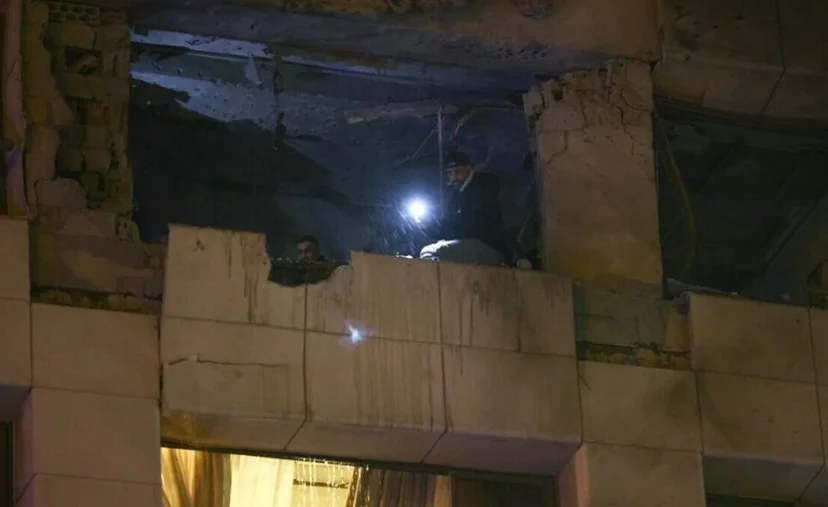
Image Credit: Reuters
Dining at the hotel centers around the Scarlet Restaurant, the property’s primary dining venue that serves international cuisine along with Mediterranean and regional specialties. In addition to Scarlet Restaurant, the hotel also operates a lounge bar and an on-site café where guests typically gather for light meals, coffee and evening drinks.
Strike Causes Damage and Panic
Eyewitness accounts indicated that the missile strike appeared to directly hit a specific apartment within the Ramada hotel building. The explosion damaged several rooms and corridors while the shockwave blew out windows across multiple floors of the structure.
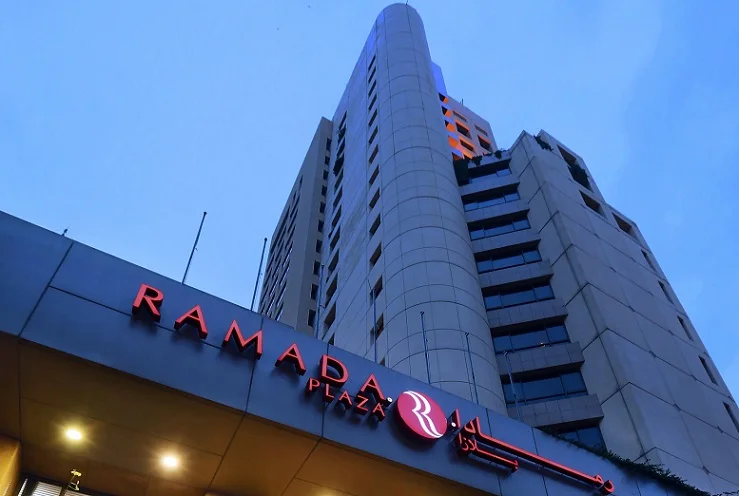
Image Credit: Wyndham Hotels
First responders and civil defense teams quickly arrived at the location while security forces sealed off surrounding streets to allow emergency crews to carry out rescue operations. Smoke and dust were seen rising from the building as injured individuals were transported to nearby hospitals.
The Israeli military later said the strike targeted individuals it identified as Iranian Revolutionary Guard Quds Force commanders allegedly operating from the location, though Lebanese officials emphasized that the building itself was primarily used as a civilian hotel property.
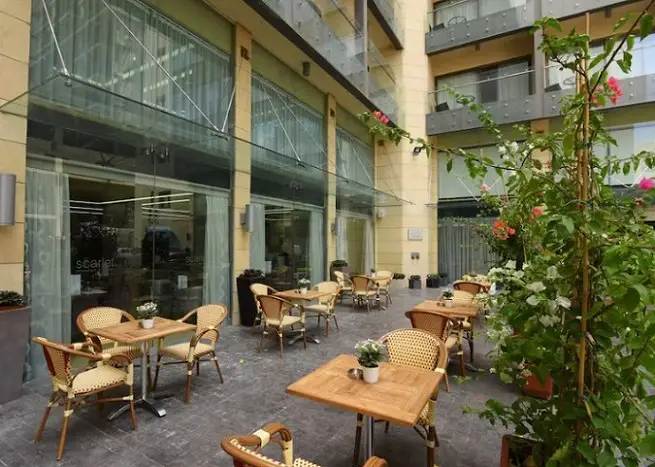
Image Credit: Wyndham Hotels
Hospitality Sector Caught in Regional Conflict
The attack has raised serious concerns within the regional hospitality industry as hotels traditionally represent civilian infrastructure where international travelers, hotel staff and displaced civilians may be present at any given time. The Ramada property had reportedly been housing some families who fled fighting in other parts of Lebanon, making the strike particularly alarming for humanitarian observers.
For Beirut’s already struggling tourism sector, the damage to a well-known international hotel brand symbolizes the broader risks facing hospitality infrastructure during geopolitical conflicts. Hotels, conference venues and tourist districts can suddenly become unintended flashpoints when military operations intersect with densely populated urban areas.
The events of early Sunday morning underscore how rapidly conditions can change in cities experiencing escalating regional tensions. For hoteliers and tourism authorities across the Middle East, the Ramada strike is a sobering reminder that even internationally branded hotels designed for business and leisure travel can unexpectedly become entangled in the realities of modern warfare and political conflict.
For updates of the status of the hotel and whether it will still be taking reservations, visit: https://www.ramadaplazabeirut.com/
For the latest International Hotel News, keep on logging to Thailand Hotel News.