

Key points
- The opening of yet another cigar bar tucked away in a hotel in a Sukhumvit soi near the EM district sparked not excitement, but laughter and disbelief among seasoned hospitality professionals who have seen the same ideas recycled endlessly across Bangkok and other major cities.
- While guests may reliably turn up for breakfast, numerous surveys and internal hotel studies have shown that most will only try other dining outlets once or twice during their stay s they want to try Thai street food or local restaurants or bars/pubs or the restaurants at the mall.
- As far as I far concerned there are 13 such firms operating in Bangkok including a few affiliated with some architect and interior design firms, but 6 of these firms operating in Bangkok are the key players in the local market.
Thailand Hotel News: Thailand’s hotel industry is once again at a crossroads when it comes to food and beverage innovation, and many industry watchers are openly questioning whether some owners are paying attention to what today’s travelers, residents, and expatriate communities actually want. The opening of yet another cigar bar tucked away in a hotel in a Sukhumvit soi near the EM district sparked not excitement, but laughter and disbelief among seasoned hospitality professionals who have seen the same ideas recycled endlessly across Bangkok and other major cities.
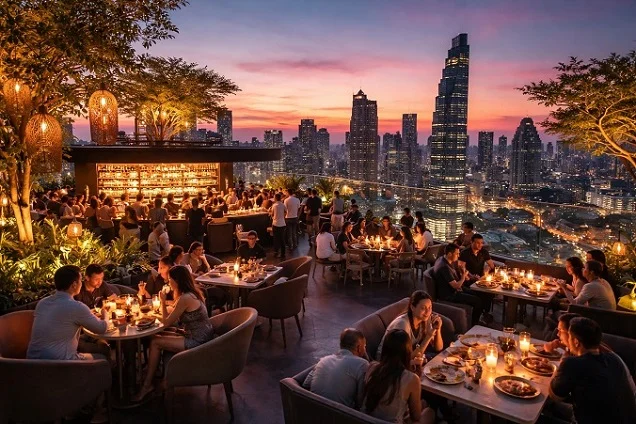
Image Credit: Thailand Hotel News
At a time when travelers are more adventurous, socially aware, and value-driven than ever before, the persistent return to predictable concepts such as cigar lounges, Indian restaurants, or generic rooftop bars suggests a troubling lack of imagination. More importantly, it reflects a disconnect between hotel decision-makers and the realities of modern dining behavior in Thailand’s highly competitive urban markets.
Local And Expat Diners Drive Real Revenue
One uncomfortable truth that many hotel owners still refuse to fully accept is that international travelers are not the primary revenue drivers for most hotel restaurants and bars. While guests may reliably turn up for breakfast, numerous surveys and internal hotel studies have shown that most will only try other dining outlets once or twice during their stay s they want to try Thai street food or local restaurants or bars/pubs or the restaurants at the mall. In contrast, local residents and expatriates often account for nearly 62 percent of regular patrons at hotel dining venues, making their preferences crucial to long-term success.
Ignoring these audiences leads to empty dining rooms, heavy discounting, and short-lived concepts that quietly disappear within a year or two. This reality makes the continued launch of uninspired venues all the more puzzling, particularly in a city like Bangkok where diners are exposed to global culinary trends almost in real time.
Consultants Abound but Results Remain Questionable
The rise in food and beverage consultancy firms in Bangkok was meant to address this innovation gap. Beyond the in-house development teams operated by international hotel chains such as Accor, IHG, Hyatt, and Hilton, several independent consultancies now pitch themselves as concept creators and trend experts. Yet a closer look at the track records of some of these firms raises serious concerns. As far as I far concerned there are 13 such firms operating in Bangkok including a few affiliated with some architect and interior design firms, but 6 of these firms operating in Bangkok are the key players in the local market.
One long-established consultancy run reportedly boasts an extensive portfolio, but many of its past projects have already closed or were never really successful. The most notable exception is a rooftop bar at a certain sleezy Soi in Sukhumvit, infamous less for its creativity and more for its reputation as a pickup venue catering largely to single male tourists. The bar is successful because it is located in a spot famous for the late-night pick-up scenes and many Thai female office workers or professionals go there to moonlight or its packed with the Kathoeys! Another newer consultancy, run by a British expatriate, appears rooted in a colonial-era hotel aesthetic that has largely fallen out of favour even in the United Kingdom. (Most hotels there are already doing badly unless off course if they are catering for the illegal Muslim immigrants!) His fetish for cigar bars, leather upholstery etc is totally obsolete but some ignorant Thai-Punjabi hotel owners were still hoodwinked into his outdated concepts! There are more than 68 hotels across the whole sukhumvit stretch that are owned by Thai-Punjabi owners and many need help getting the right consultants and management firms to properly manage their properties.
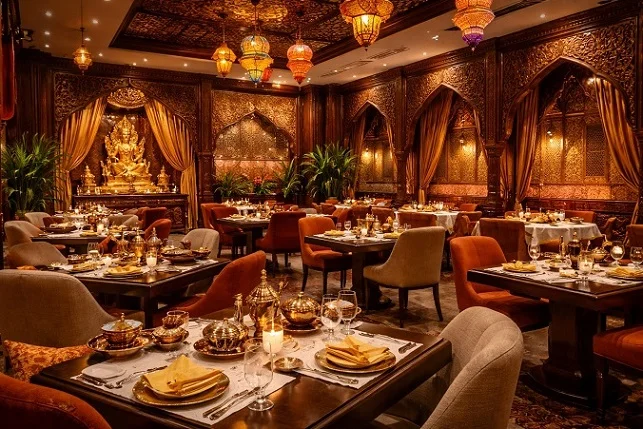
Image Credit: Thailand Hotel News
The remaining players in the consultancy space (about 4 of them), mostly local operators with a few expats working with them, struggle to distinguish themselves in an increasingly crowded field. What is missing across the board is a demonstrable commitment to deep market research, cultural sensitivity, and a genuine understanding of evolving dining psychology.
In the middle of these industry observations, this Thailand Hotel News report highlights how little accountability exists when failed concepts are quietly erased from marketing decks and replaced by glossy new pitches.
Repetition Is Not Innovation
Bangkok, Phuket, Chiang Mai, and Pattaya simply do not need more Indian restaurants inside hotels, nor do they need additional cigar bars aimed at a shrinking niche audience. The city is already saturated with both, many operating at a fraction of capacity. Innovation does not mean copying what worked ten years ago and hoping a new coat of paint will make it relevant again.
There are countless untapped ideas in immersive dining, wellness-focused cuisine, community-driven spaces, rotating pop-up collaborations, and hyper-local storytelling concepts. These approaches require courage, patience, and a willingness to move beyond the comfort zone of familiar formats. Unfortunately, too many owners prefer perceived safety over genuine differentiation.
Promotions Stuck in The Past
The lack of creativity is not limited to venue concepts alone. Promotional strategies at many hotels remain painfully predictable. Seasonal buffets for Thanksgiving, Christmas, Valentine’s Day, or generic festive set menus continue to dominate marketing calendars year after year. While such promotions may offer short-term spikes, they do little to build loyalty or excitement.
Bars, in particular, represent a missed opportunity. Innovative pop-ups, thematic takeovers, cultural collaborations, and experiential events are widely used in global hospitality hubs, yet remain rare in Thailand’s hotel scene. When food and beverage revenues decline, the blame is often shifted to market conditions rather than internal stagnation. (I truly recommend some of these hotel owners visit Ibiza in Spain for some inspirational ideas.)

Image Credit: Thailand Hotel News
Leadership And Creativity Gaps
A recurring issue raised by industry insiders is the lack of creative drive among some food and beverage directors. Many are operationally competent but creatively disengaged, content to maintain the status quo rather than challenge assumptions. Marketing communications and public relations teams fare no better in some properties, producing lifeless campaigns that fail to resonate with modern audiences. Many hotel PR staff are so content with simply posting on Facebook and Instagram or running some online ads without understanding that times have changed and these platforms no longer work…not only is there less engagements but here are literally zero conversions as the people with money and who can afford and like hotel dining and drinks are not there!
The combination of conservative leadership and uninspired messaging creates a cycle of mediocrity that no amount of discounting can fix. Hotels cannot afford to complain about poor performance while refusing to evolve.
A Turning Point for Thai Hospitality
Thailand’s hotel sector has proven its resilience time and again, but resilience alone is no longer enough. Dining and social spaces must be treated as strategic assets, not afterthoughts. Owners who invest in genuine research, diverse creative talent, and bold experimentation are far more likely to capture the attention of both locals and global travelers seeking something memorable.
As competition intensifies and consumer expectations rise, standing still is effectively moving backwards. The future belongs to hotels willing to challenge convention, abandon tired formulas, and embrace concepts that reflect how people actually live, eat, and socialize today. Those who fail to adapt risk becoming irrelevant in a market that rewards originality and authenticity over repetition, and this reality should serve as a wake-up call for the entire industry.
For the latest on the hotel food and beverage industry, keep on logging to Thailand Hotel News.
(PS: For hotel owners, GMs or food and beverage directors seeking some fresh ideas, contact me via email at mktwiz789@gmail.com…..I have 3 decades of branding, PR and marketing expertise for hotels and f & b concepts and have been involved in the past in numerous projects in Singapore, New York, France, Sydney and Spain and in Thailand with a number of hotels and even culinary schools in the past)
Read Also:
https://thailandwellness.news/
https://www.thailandmedical.news/
etc etc…more than 800 plus news websites)