

Key points
- Thailand Hotel News – The escalating conflict in the Middle East is sending shockwaves far beyond the immediate battle zones, raising serious concerns for Thailand’s tourism and hotel industry at a time when the kingdom is still consolidating its post-pandemic recovery.
- When households in Europe, the United States, or the Middle East perceive economic risk, discretionary spending such as overseas holidays is often the first expense to be reduced.
- The Middle-East war could have effects on the global tourism industry and also Thailand’s hotel and tourism sectorsImage Credit.
Thailand Hotel News – The escalating conflict in the Middle East is sending shockwaves far beyond the immediate battle zones, raising serious concerns for Thailand’s tourism and hotel industry at a time when the kingdom is still consolidating its post-pandemic recovery. With military operations intensifying and diplomatic efforts showing limited progress, analysts increasingly believe the war could be prolonged, creating sustained volatility in global markets, aviation networks, and consumer confidence worldwide.

Image Credit: Thailand Hotel News
Airspace Closures and Global Travel Disruptions
One of the most immediate impacts of the conflict has been widespread airspace restrictions across key Middle Eastern corridors that connect Asia, Europe, and North America. Major carriers have been forced to reroute or suspend flights to avoid high-risk zones, increasing flight times and operational costs. Several Gulf hubs, long regarded as critical transit points for global travelers, are experiencing schedule disruptions that ripple across international aviation networks.
This Thailand Hotel News report notes that Thailand is particularly exposed due to its heavy reliance on long-haul visitors who transit through Middle Eastern hubs. As flights become longer and more expensive, leisure travelers may delay or cancel trips, while business travel budgets are reassessed amid growing geopolitical uncertainty. Even minor scheduling instability can significantly affect forward hotel bookings, especially in resort destinations that depend on advanced reservations.
Rising Oil Prices and Economic Pressures
Beyond aviation logistics, the war has triggered renewed volatility in global energy markets. Oil prices have climbed amid fears of supply disruptions and broader regional instability. Higher fuel costs inevitably increase airline ticket prices, raise transportation expenses, and contribute to inflationary pressures worldwide. For Thailand’s tourism sector, this means higher operating costs for hotels, tour operators, and transport providers.
Global economic uncertainty also dampens consumer confidence. When households in Europe, the United States, or the Middle East perceive economic risk, discretionary spending such as overseas holidays is often the first expense to be reduced. Thailand’s hospitality sector, which thrives on international leisure demand, could therefore face softer occupancy rates, especially in the higher-spending segments.
Vulnerability of Key Source Markets
Thailand has long benefited from diversified visitor markets, including strong arrivals from Europe, the Middle East, and North America. However, prolonged instability in the Middle East could disrupt outbound travel from the region and indirectly affect European travel sentiment as well. Travel advisories, insurance concerns, and general anxiety about international security may alter booking behavior.
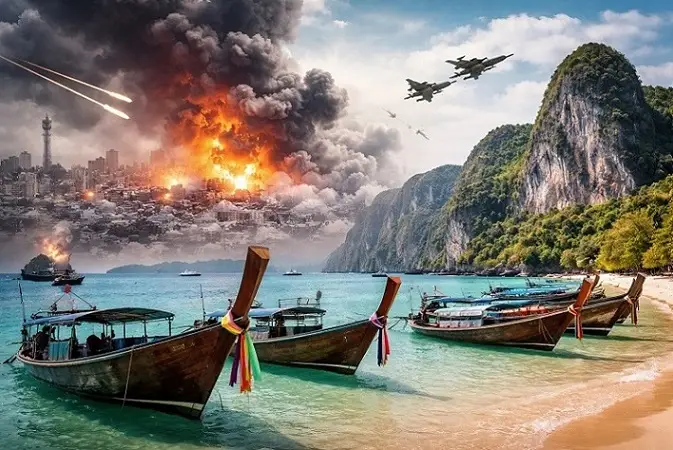
Image Credit: Thailand Hotel News
Luxury resorts and upscale city hotels may feel disproportionate pressure, as high-net-worth travelers from affected regions reassess travel plans. Meanwhile, tour groups and long-haul package travelers could shift to closer-to-home destinations, reducing average length of stay and overall tourism receipts for Thailand.
Industry Response and Strategic Adjustments
Thai hotel operators are already exploring mitigation strategies. Flexible cancellation policies, targeted promotions in unaffected Asian markets, and intensified digital marketing campaigns are being deployed to sustain forward bookings. Some operators are also diversifying their customer base by focusing more aggressively on regional travelers and emerging markets less directly tied to the conflict.
Government tourism authorities may accelerate efforts to reassure international travelers of Thailand’s safety and stability. Enhanced communication campaigns emphasizing the country’s peaceful environment, robust infrastructure, and world-class hospitality could play a crucial role in preserving traveler confidence during uncertain times.
The longer the conflict persists, the more pronounced its indirect effects on global tourism flows are likely to become. Thailand’s hotel industry must therefore prepare for a scenario in which elevated energy prices, volatile currency movements, and cautious consumer behavior create headwinds that extend well beyond the immediate crisis. While Thailand remains geographically distant from the battlefield, the interconnected nature of today’s global economy means no major tourism destination is immune to geopolitical turbulence. Strategic flexibility, diversified markets, and prudent cost management will be essential in navigating what could be an extended period of uncertainty for the sector.
For the latest on how the Middle-East war is disrupting Thailand’s Hotel and Tourism Industry, keep on logging to Thailand Hotel News.