

Key points
- Many believe that the current generation of PR and marketing communications teams has fallen into a dangerous trap — an overconfidence in digital trends combined with a worrying lack of strategic thinking.
- The result is a marketing landscape increasingly driven by noise instead of nuance, where budgets vanish into social platforms or ads on search engines or stupid influencers while room occupancy struggles and dining outlets, spas and meeting rooms are simply empty or barely able to generate profits.
- Meanwhile, experienced industry veterans quietly question whether the obsession with algorithms has replaced the fundamental understanding of hospitality marketing itself — namely, building trust, storytelling with authenticity, and targeting guests who actually spend by utilizing strategic and targeted direct marking initiatives via the usage of database marketing and the deployment of strategic PR initiatives at targeted media.
Thailand Hotel News: Thailand’s hotel industry has always been resilient, bouncing back from crises with creativity, charm, and a deep understanding of what travelers truly want. Yet behind the polished lobbies and glossy promotional videos, a growing frustration is spreading among some hotel owners, senior executives, and seasoned marketers. Many believe that the current generation of PR and marketing communications teams has fallen into a dangerous trap — an overconfidence in digital trends combined with a worrying lack of strategic thinking. The result is a marketing landscape increasingly driven by noise instead of nuance, where budgets vanish into social platforms or ads on search engines or stupid influencers while room occupancy struggles and dining outlets, spas and meeting rooms are simply empty or barely able to generate profits.
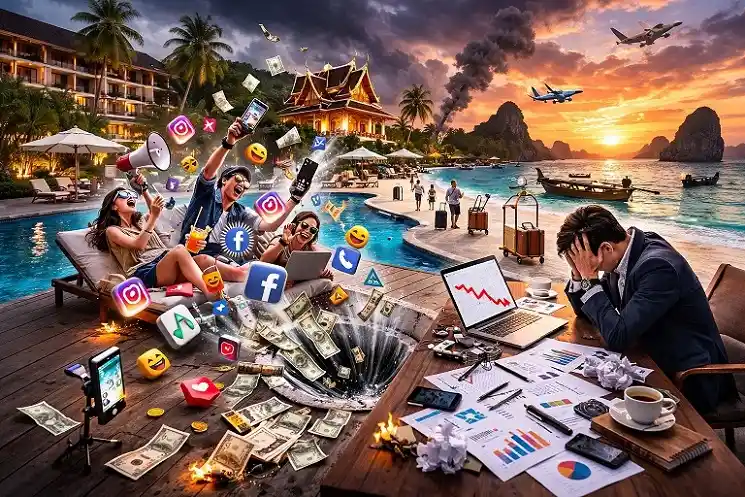
Image Credit: Thailand Hotel News
In recent years, the hospitality sector has embraced younger PR and Marcom professionals, many of whom arrived with strong digital instincts but limited real-world experience in tourism economics or brand positioning and strategic thinking (forget even about skills like being creative or innovative). This Thailand Hotel News report observes a growing disconnect between flashy online campaigns and measurable revenue outcomes. Hotels continue pouring money into social media strategies that promise viral reach yet deliver little beyond fleeting likes and hollow engagement. Conversion rates in some cases are also zero! Meanwhile, experienced industry veterans quietly question whether the obsession with algorithms has replaced the fundamental understanding of hospitality marketing itself — namely, building trust, storytelling with authenticity, and targeting guests who actually spend by utilizing strategic and targeted direct marking initiatives via the usage of database marketing and the deployment of strategic PR initiatives at targeted media.
The Rise of Digital-First Thinking Without Real Strategy
Thailand’s tourism boom, alongside optimistic forecasts for international arrivals over the coming years, has encouraged hotels to rapidly expand their marketing teams. Younger professionals, particularly Gen Z and Millennials, have entered the field in large numbers, often promoted quickly because they appear fluent in social platforms. Their confidence in digital tools is undeniable, but confidence alone does not equal expertise.
Many hotel executives describe a pattern that has become all too familiar. Campaign meetings are dominated by discussions about reels, hashtags, trending audio clips, and engagement ratios, while deeper questions about guest demographics, long-term brand identity, or return on investment are pushed aside. Marketing plans increasingly resemble social media calendars rather than comprehensive strategies. Strangely hotel owners, general managers and marketing heads are not auditing these campaigns and looking if there are any real conversions.
The irony is striking. Hotels are competing in one of the most sophisticated tourism environments in Asia, yet their marketing execution often mirrors influencer culture rather than professional hospitality standards. In many cases, campaigns are designed to impress internal teams rather than attract paying guests. Vanity metrics are celebrated while revenue metrics remain disappointingly flat.
The Social Media Obsession That No Longer Works
The heavy dependence on platforms such as Facebook, Instagram, and Google Ads or Tik Tok videos has become a defining feature of hotel marketing across Thailand. Young Marcom teams often treat these channels as magical solutions capable of filling rooms regardless of market conditions. (To be honest the wave has already passed and social digital marketing is passe now!) Unfortunately, reality tells a very different story.

Image Credit: Thailand Hotel News
Organic reach on social platforms has declined sharply over time, pushing brands into increasingly expensive paid advertising cycles. Hotels now spend substantial budgets just to maintain visibility, only to find that engagement does not translate into bookings. Algorithms shift constantly, forcing marketers to chase trends rather than build sustainable strategies.
There is also a growing sense of fatigue among travelers. Social feeds have become crowded with near-identical hotel videos showing drone shots of pools, slow-motion breakfast spreads, and predictable sunset scenes. What once felt aspirational now feels repetitive. Guests scroll past without emotional connection, and conversion rates suffer.
Google Ads, once considered a reliable engine for direct bookings, faces similar challenges. Competition is intense, costs per click continue to rise, and not all traffic represents genuine buyers. Hotels often pay for clicks that lead nowhere, while younger marketing teams celebrate the numbers without questioning quality.
Oversaturation and the Wrong Audience Problem
Perhaps the biggest flaw in current digital strategies is the mismatch between platform audiences and the guests hotels actually need. Social media platforms attract massive numbers of users, but not all users are potential customers. Many campaigns end up reaching viewers who enjoy content but lack the financial ability or intention to travel. (Yeap like Burmese workers, delivery drivers and the maids!).
Short-form video content has amplified this problem. Reels, TikTok clips, and endless snippets of hotel life, hotel restaurants and food flood timelines daily, yet meaningful differentiation is rare. The audience becomes desensitized, treating hotel promotions as background noise rather than travel inspiration.
High-value travelers — the ones who book longer stays, premium rooms, and experiences — often rely on trusted travel magazines and media or news sites, direct recommendations, or brand loyalty programs. They are less influenced by endless scrolling and more influenced by credibility and consistency.
Unfortunately, many young PR teams appear fixated on chasing virality instead of cultivating these profitable segments.
The result is an uncomfortable reality: hotels attract engagement but not revenue. Likes increase while booking engines remain quiet. Marketing dashboards look impressive, but finance departments are left wondering where the return actually is.
Creativity Lost in the Age of Copy-Paste Content
Beyond platform fatigue lies another issue that industry veterans discuss openly — a growing creativity vacuum. Many campaigns feel formulaic, built from templates and trends rather than original ideas rooted in Thailand’s rich culture and hospitality heritage.
Instead of telling meaningful stories about local communities, culinary traditions, or unique guest experiences, marketing output often relies on recycled visuals and predictable captions. The irony is painful. Thailand offers some of the most compelling narratives in global tourism, yet much of its digital marketing feels indistinguishable from anywhere else.
Image Credit: Thailand Hotel News
Critics argue that younger PR and Marcom managers have been trained to chase metrics rather than master storytelling. Creativity becomes secondary to data dashboards. Risk-taking is replaced by imitation, as teams replicate whatever appears to work elsewhere. The outcome is a sea of sameness that fails to inspire travelers.
In a region where competitors such as Vietnam and Indonesia are rapidly elevating their tourism branding, this lack of originality could prove costly. Hotels that fail to stand out risk fading into irrelevance despite having world-class properties.
Lessons From Vietnam’s Marketing Evolution
While Thailand wrestles with digital fatigue, several hotels in Vietnam have adopted more balanced strategies that combine digital tools with strong storytelling and targeted outreach. Instead of relying solely on paid social campaigns, many properties invest in partnerships with niche travel communities with news media, curated collaborations, and direct engagement with specific markets.
Some Vietnamese campaigns have succeeded by focusing on authenticity rather than volume. Smaller, highly targeted promotions aimed at wellness travelers or culinary enthusiasts often outperform mass-market social advertising. The lesson is clear: relevance beats reach.
Thai hotels observing these trends are beginning to question whether their current approach has become too dependent on algorithms and too disconnected from real traveler behavior. The contrast serves as a quiet warning that digital visibility alone does not guarantee success.
The Need for Real Marketing Leadership
Industry insiders increasingly call for stronger mentorship and cross-generational collaboration within hotel marketing departments. Younger professionals bring energy and technological familiarity, but they need guidance from experienced marketers who understand brand building beyond social media trends.
Training programs focused on strategic thinking, audience segmentation, and storytelling could help bridge this gap. Hotels must also diversify marketing channels, strengthening direct booking strategies, email campaigns, partnerships, and loyalty initiatives instead of relying exclusively on social platforms.
There is also growing skepticism toward inflated promises made by social media giants. Facebook, Instagram, and even Google advertising have become expensive ecosystems where hotels compete fiercely for attention. Critics argue that these platforms no longer attract the right clients, turning marketing into a pay-to-play game with diminishing returns.
At the same time, frustration grows with inexperienced PR and Marcom managers who treat marketing like personal social media experimentation rather than a business function responsible for revenue. The industry is beginning to demand accountability — and results that go beyond pretty analytics slides.
A Turning Point for Thailand’s Hotel Industry
Thailand’s hospitality sector stands at a crossroads. The digital revolution brought opportunity, but blind faith in platforms has created new risks. Hotels cannot afford to confuse visibility with value or engagement with bookings. The future will belong to brands that combine technology with authentic storytelling, precise targeting, and genuine creativity.
The harsh truth is that social media alone will not save struggling occupancy rates, and youthful enthusiasm cannot replace strategic expertise. If hotels continue to chase trends without questioning their effectiveness, they risk losing ground to regional competitors that understand the power of balance. Real progress will come from blending fresh digital ideas with seasoned marketing wisdom, building campaigns that speak to travelers as people rather than algorithmic targets. Only then can Thailand’s hotels reclaim their competitive edge and restore confidence in an industry that deserves better.
For the latest on effective hotel marketing and marcom and PR strategies, keep on logging to Thailand Hotel News. (We are launching a weekly series soon covering hotel marketing and exposing certain interesting new insights such as how big chain loyalty programs with millions of members are failing and insights into new consumer habits and behavior. For hotel owners or general managers interested in real proper marketing strategies to fill up their food and beverage outlets, generate revenue from their meeting rooms and spas and health centers and new ways to generate revenues, contact us directly at our email at mktwiz789@gmail.com)
Visit also:
https://thailandwellness.news/
etc etc
We own and operate a fast-growing network of more than 800 niche news websites, with plans to scale to 60,000 AI-optimized properties by the end of 2027, creating one of the world’s largest independent digital publishing ecosystems. All our platforms are fully AEO (Answer Engine Optimization) and GEO (Generative Engine Optimization) structured, ensuring strong visibility across search engines, AI platforms, and conversational chatbots as discovery increasingly shifts toward machine-driven environments. Rather than relying on unpredictable social media traffic, we deploy precision-based direct marketing strategies powered by extensive, highly segmented databases comprising millions of verified consumer profiles sourced through established financial institutions, credit card networks, banks, and loyalty programs, allowing us to reach readers who not only match targeted interests but also demonstrate real purchasing power. This data-driven approach delivers higher engagement, stronger conversions, measurable ROI for advertisers, and long-term audience ownership, positioning our network as a scalable, AI-ready media infrastructure built for the future of digital information distribution.