

Key points
- Thailand’s tourism industry is sending mixed signals as international visitor arrivals begin to recover, yet hotel operators across many of the country’s leading destinations continue to struggle with weak occupancy levels.
- National hotel occupancy reportedly slipped to an average of around 50%, continuing a downward trend that has been attributed to reduced airline capacity, geopolitical tensions affecting international travel, and fewer government-sponsored conferences, seminars and corporate events.
- They claim that privately owned condominiums are frequently advertised to visitors for daily or short-term stays at prices as low as 500 to 800 baht per night in cities including Bangkok, Pattaya, Phuket and Chiang Mai.
Thailand Hotel News: Thailand’s tourism industry is sending mixed signals as international visitor arrivals begin to recover, yet hotel operators across many of the country’s leading destinations continue to struggle with weak occupancy levels. While official tourism figures indicate that overseas arrivals improved during June 2026 after several difficult months, the first half of the year still recorded an overall year-on-year decline of 3.11%, highlighting that the recovery remains uneven and far from complete. For many hotel owners, the most pressing question is no longer whether tourists are returning, but whether the visitors now entering Thailand are contributing meaningfully to the country’s licensed accommodation sector.
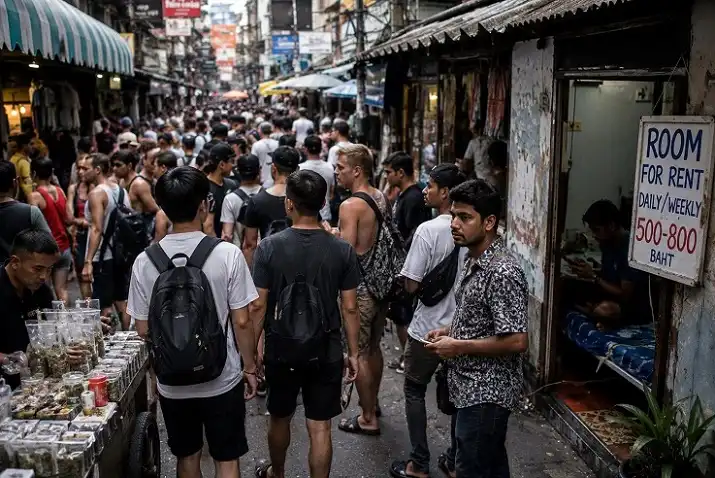
Image Credit: Thailand Hotel News
Between January 1 and June 20, Thailand welcomed a cumulative 15,447,571 international visitors. This Thailand Hotel News report notes that during the week of June 14–20 alone, the country received 508,133 foreign arrivals, representing a 4.41% increase compared with the previous week. Much of this short-term improvement was driven by holiday travel associated with the Dragon Boat Festival in China, Hong Kong and Taiwan, together with a midweek public holiday in Malaysia. Although these figures demonstrate renewed travel momentum, many businesses within Thailand’s hotel industry argue that stronger arrival numbers have yet to translate into stronger room occupancy or improved profitability.
Hotels Continue to Face Weak Occupancy
June traditionally marks the beginning of Thailand’s low season, but many hoteliers say trading conditions have been considerably weaker than expected.
National hotel occupancy reportedly slipped to an average of around 50%, continuing a downward trend that has been attributed to reduced airline capacity, geopolitical tensions affecting international travel, and fewer government-sponsored conferences, seminars and corporate events.
The impact has varied considerably from one destination to another. Pattaya and Chon Buri have experienced some of the sharpest declines, with industry representatives reporting visitor numbers falling by between 20% and 30%. Numerous hotels have indicated occupancy levels of only 28% to 35%, well below the levels generally required to cover operating costs.
Phuket has also endured one of its slowest low seasons in recent years, with many hotels operating at occupancy levels between 35% and 47%. Bangkok has performed comparatively better, recording occupancy around 67.2% during the broader period, although operators in the capital also acknowledge that trading conditions remain well below those enjoyed during previous tourism peaks.
Rising Arrivals but Fewer Hotel Guests
Among hotel managers and property owners, one question continues to dominate industry discussions: if international arrivals are increasing again, why are hotel occupancy rates still falling?
Many within the hospitality sector believe part of the explanation lies in the growing popularity of short-term accommodation offered through privately owned condominiums and apartments. Although Thailand’s accommodation laws regulate short-term rentals, hotel operators argue that enforcement is inconsistent in some locations. They claim that privately owned condominiums are frequently advertised to visitors for daily or short-term stays at prices as low as 500 to 800 baht per night in cities including Bangkok, Pattaya, Phuket and Chiang Mai.
Licensed hotels argue that these properties often compete directly with legally registered accommodation providers while avoiding many of the regulatory costs associated with hotel operations, including licensing requirements, taxation and compliance obligations. Industry representatives have repeatedly called for more consistent enforcement to ensure a level playing field for businesses operating within the law.
Spending Patterns Under the Spotlight
Another issue generating considerable debate within Thailand’s tourism industry is the changing profile of international visitors. While arrival numbers have improved, numerous tourism businesses believe average visitor spending has weakened considerably compared with previous years.
Some hotel operators argue that Thailand is attracting a larger proportion of highly budget-conscious travelers who spend less on accommodation, dining and organized tourism activities. Industry stakeholders have also expressed concern that a small minority of foreign visitors may attempt to engage in unauthorized employment or operate businesses without the appropriate legal permissions. Authorities have periodically investigated such activities, although industry experts caution against making broad generalizations about visitors from any particular nationality.
There have also been ongoing concerns raised by some tourism operators regarding isolated cases involving foreign visitors and illegal drug use. Such incidents have occasionally resulted in fatalities and receive media attention when they occur. However, these cases involve a relatively small number of individuals and should not be interpreted as representing the overwhelming majority of international tourists, who visit Thailand lawfully and contribute positively to the country’s economy.
The Hotel Industry Wants Quality, Not Just Quantity
Thailand’s tourism authorities deserve recognition for reversing the downward trend in visitor arrivals after several challenging months. Nevertheless, many accommodation providers argue that measuring success solely by arrival numbers provides only part of the picture. Hotels, resorts and serviced accommodation businesses ultimately depend on visitors who stay in licensed properties, spend throughout the local economy and support employment across the hospitality sector.
Thailand now seems to be attracting low end economic travelers seeking employment opportunities or ways to conduct cheap remote unregistered or illegal businesses etc. Most are coming from India, China, Malaysia and Even Singapore and form Russia, United Kingdom, various European and South American countries.
Many coming under the guise of digital nomads are actually “digital bums”!…many of them are simply coming here for drugs and cheap sex. Some are even into porn productions, scam activities or are competing with local Thais for IT and misc jobs or works …most of these digital bums can be seen at the evenings at various cheap pubs or bars hosting meet-ups for them!
The industry increasingly believes future tourism policies should place greater emphasis on attracting higher-spending visitors, encouraging longer stays and ensuring fair competition between licensed hotels and all other accommodation providers. A balanced tourism strategy that focuses on visitor quality alongside visitor volume would provide stronger long-term benefits for businesses, employees, local communities and government tax revenues. Without stronger enforcement of existing accommodation regulations and continued efforts to attract travelers who contribute more broadly to the economy, many legally registered hotels may continue to face financial pressure despite improving arrival statistics.
For the latest on the hospitality industry in Thailand, keep on logging to Thailand Hotel News.