

Key points
- Extended stays once sat on the periphery of the market – a niche product bundled with discounted weekly rates and spartan studios aimed at budget travelers.
- Midscale and upscale hotels from Bangkok to Chiang Mai now report that 30–90-day bookings are slowly edging up occupancy and providing a welcome hedge against volatility in tour groups and corporate segments.
- Guests want a space they can live in for a month not just crash in for a night and developers are listening.
Thailand Hotel News: A New Guest Profile Emerges
Thailand’s hotel sector is moving through one of its quiet but most significant transformations in years as properties pivot from short-break tourists to a growing wave of digital nomads and longer-term guests. Extended stays once sat on the periphery of the market – a niche product bundled with discounted weekly rates and spartan studios aimed at budget travelers. Today they are becoming a central strategy as operators battle shifting source markets and evolving guest expectations.
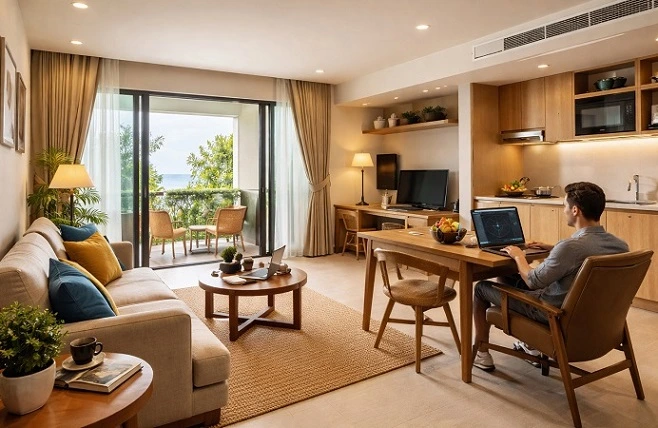
Hotels across Thailand are retooling rooms and services to win month-long digital nomad guests
Image Credit: Thailand Hotel News
The move is driven by converging forces, remote work freedoms, residency visas, revamped airline links and a pandemic-era realization that travelers no longer want to pack up every few days. Midscale and upscale hotels from Bangkok to Chiang Mai now report that 30–90-day bookings are slowly edging up occupancy and providing a welcome hedge against volatility in tour groups and corporate segments. This Thailand Hotel News report captures a decisive moment when long-stay demand is no longer a side business but a core revenue pillar.
Redesigning the Room Blueprint
Unlike traditional hotel renovations focusing on lobbies and pools, the current spend is flowing directly into guestrooms. Operators are enlarging wardrobes, carving out fully equipped kitchenettes and installing desks with ergonomic seating and fast hard-wired connectivity. Many are treating their rooms more like small apartments by adding blackout curtains, acoustic panels for video calls, multipurpose dining tables and even smart printers on request. Guests want a space they can live in for a month not just crash in for a night and developers are listening.
One Phuket beachfront hotel recently swapped out 40 percent of its inventory creating hybrid suites that convert from leisure layouts to work pods. In Chiang Mai a boutique chain now offers sprint rooms purpose-built for two remote workers with extra power outlets under-desk cable management and balcony daybeds. These redesigns signal a long-term belief that nomadic workers form a durable customer segment not a passing fad.
Beyond the Guestroom New Expectations
The shift extends far beyond accommodation hardware. Hotels are reshaping services and programming to suit a slow-travel lifestyle. Housekeeping cycles stretch to weekly intervals, laundry rooms replace expensive laundry menus and communal kitchens appear alongside cafés that double as co-working lounges.
Some operators are quietly launching subscription passes that come bundled with gym access, breakfast credits, airport transfers and flexible extension terms. In Bangkok, lifestyle hotels are experimenting with social calendars to build community among long-stayers—taco nights, language swaps and curated weekend hikes—responding to solo travelers who value connection as much as comfort. Properties near Thailand’s beach hubs are adding surf lockers, communal tool sheds and mini-libraries while northern retreats are offering garden plots and longer-term bicycle rentals.
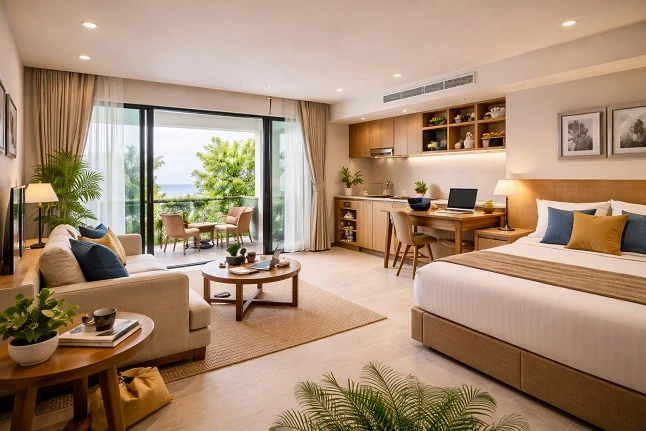
Many hotels across Thailand are now redesigning and renovating their rooms to accommodate long-term guests
Image Credit: Thailand Hotel News
A Sticky Business Model
Hotels that secure a base of 30–90-day residents report smoother cash flow and sturdier off-season demand especially in cities that depend heavily on international arrivals. Nomads often travel outside traditional peak periods or mix work with leisure over several months – a pattern that reduces reliance on promotions and flash sales. Hoteliers also note that long-stay guests tend to spend more onsite over time once they settle into routines using cafés, bars, meeting rooms and wellness facilities like locals.
Industry analysts caution that competition is rising quickly. Serviced apartments, branded residences and condo-hotels are crowding into the same opportunity space and remote workers are becoming more selective about speed reliability of internet and rental flexibility. The winners will likely be the properties that offer hybrid value comfort function and community wrapped in a brand experience distinct from generic monthly rentals.
A Market Redrawn by Choice
As Thailand competes with Bali, Da Nang, Penang and Lisbon for roaming professionals, the long-stay wave may rewrite operating assumptions across the country’s biggest hotel clusters. Domestic chains and international brands alike are concluding that if they can win loyalty from travelers who stay a month – they may gain returning guests for years.
Ultimately this evolving travel rhythm points to a market where guests move slowly, live lightly and treat hotels as temporary homes. For many properties the future no longer lies in chasing nightly occupancy but in crafting spaces that people want to inhabit shape and revisit. The most compelling promise of the long-stay shift may be that it produces steadier businesses, more vibrant communities inside hotels and a Thailand travel story paced less like a sprint and more like a grounded journey—and that is a shift with potential to outlast every cycle of seasonal demand.
For the latest hospitality and travel trends, keep on logging to Thailand Hotel News.